✅ Authentic & Original Products | ⭐ Trusted by Thousands | 💵 Cash on Delivery | 🚚 Pan India Delivery | 🔒 Secure Payments
✅ Authentic & Original Products | ⭐ Trusted by Thousands | 💵 Cash on Delivery | 🚚 Pan India Delivery | 🔒 Secure Payments








Diwali Decoration Ideas That Follow Vastu: Where Every Diya Actually Belongs
Diwali Decoration Ideas That Follow Vastu: Where Every Diya Actually Belongs
Most Diwali decoration guides are about aesthetics. This one is about placement, because the tradition has always treated where you put things as more important than how they look, and the two goals rarely conflict anyway.
With Diwali 2026 falling on Sunday, 8 November, here is how to prepare the house, where the diyas belong, and what vastu says about the entrance.
Start With What You Remove
Cleaning before Diwali is treated as part of the ritual rather than preparation for it, and vastu is specific about what should go.
Broken items. Cracked mirrors, chipped crockery, non-working clocks and broken furniture are all traditionally cleared before the festival. Broken idols in particular should be respectfully retired rather than kept.
Clutter at the entrance. This is the one that matters most. Shoe racks, dustbins, stacked boxes and drying laundry at the main door are held to obstruct what enters. The doorway should open fully and stand clear.
Dead plants. Dried or dying plants are removed before the festival and replaced if possible.
Accumulated paper. Old newspapers, expired documents and unused packaging, particularly in the north east, which vastu treats as the most sensitive zone of the home.
The house should be finished by Choti Diwali on 7 November, leaving the main day free.
The Main Entrance
Vastu treats the mukhya dwar as the most significant point of the home, and Diwali decoration concentrates there for a reason.
Rangoli goes just outside the threshold, not inside it. Traditional designs use closed patterns rather than open-ended ones, on the principle that what enters should be held rather than passing through. Lotus, footprint and geometric motifs are the conventional choices, and Lakshmi’s footprints are drawn facing inward, toward the house.
Toran hangs above the door frame. Fresh mango leaves and marigold are traditional, and both are considered auspicious in their own right. Replace it if last year’s is still hanging and has dried.
Diyas at the entrance are placed on both sides of the door, in pairs. This is the single most important lamp placement of the night.
A permanent guardian is often installed at this time of year, since Diwali and griha pravesh are considered auspicious for it. Our Kirti Mukh placement guide covers the rules, and the copper Main Door Vastu Yantra is the other traditional choice.
On Diwali night, the main door is traditionally left open for a period after the puja, since Lakshmi is said to enter through it.
Where Diyas Belong, by Direction
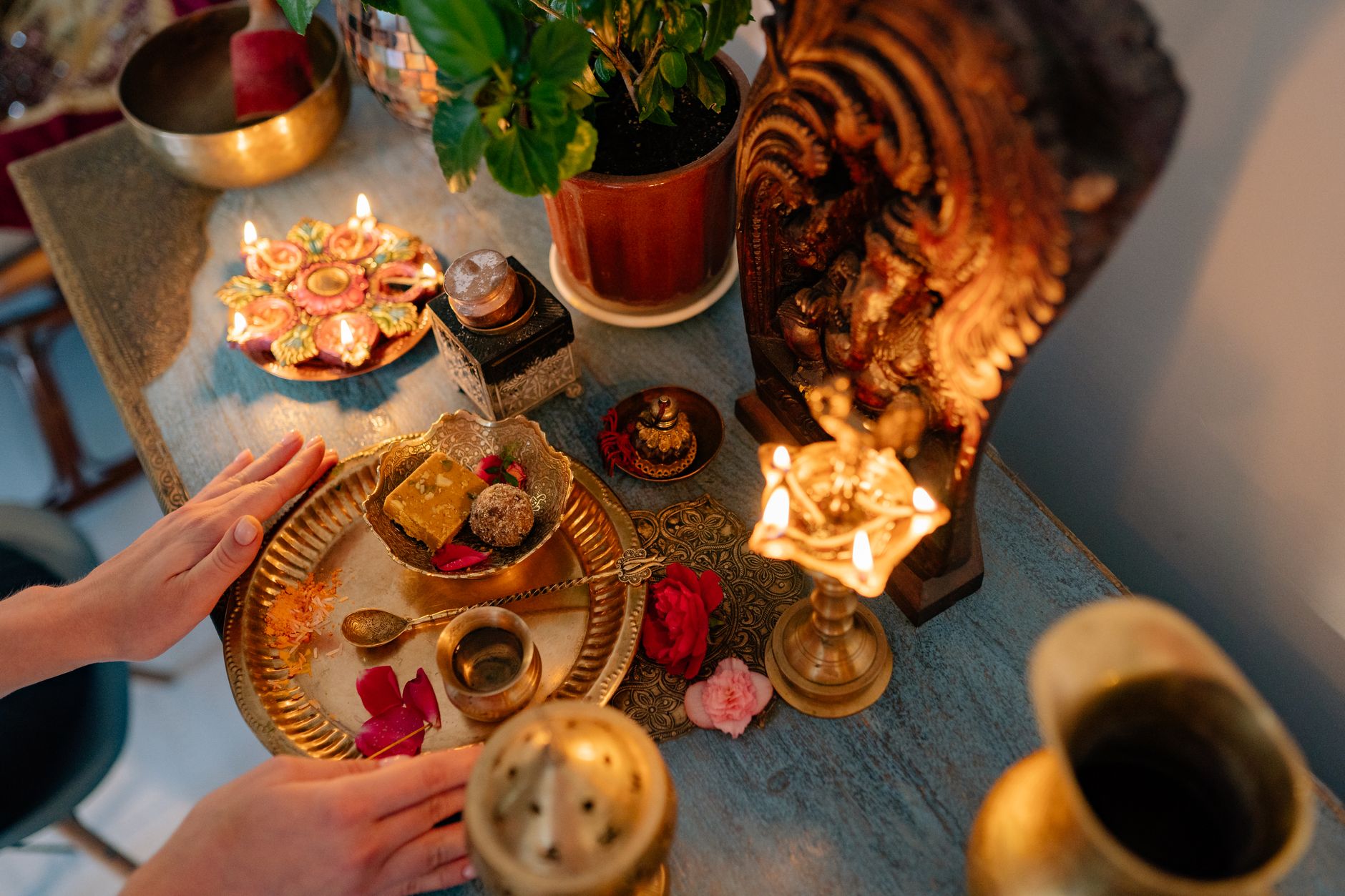
The convention is to light lamps throughout the house rather than only in the puja room, and vastu assigns significance to each placement.
Main entrance: in pairs on either side. The most important placement of all.
North east: the zone associated with the divine, and where the puja space ideally sits. A ghee lamp belongs here, and it is the one traditionally kept burning through the night.
North: associated with Kubera and wealth. A lamp here is customary on Diwali and Dhanteras.
Tulsi plant: if you keep one, a diya at its base is traditional and among the oldest customs of the festival.
Kitchen: the seat of Annapurna, and a lamp is placed near the cooking area.
Water source: near the tap or water storage, honouring Varuna.
Balconies, windows and terrace: along the outer edges of the home, which is where the visual effect comes from.
South: generally left without lamps on Diwali night, with the exception of the Yama Deepam on Dhanteras, which is deliberately placed facing south.
On numbers, thirteen is customary on Dhanteras, and households light anywhere from eleven to over a hundred on Diwali night. There is no fixed requirement, and using an odd number is the more common practice.
Ghee or Oil?
Ghee lamps are considered the most auspicious and are used for the main puja lamp and the north east. Sesame oil is the traditional choice for the remaining lamps, and mustard oil is used for the Yama Deepam on Dhanteras.
Practically, ghee burns cleaner and longer, which matters for the lamp you intend to keep alight through the night.
The Puja Space
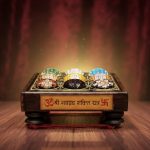
The puja area belongs in the north east where the layout allows it. Idols face east or west, with the worshipper facing east or north.
A few placement points worth knowing: idols should not face each other directly, should not be placed under a staircase or against a bathroom wall, and should sit on a raised platform rather than directly on the floor.
Our Lakshmi Puja vidhi guide covers the full setup in detail.
Crystals and Vastu Items for Diwali
Diwali is a common time to install or refresh vastu items, since the house has just been cleaned and the year is turning.
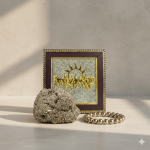
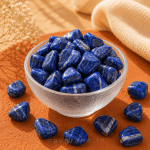
A Navgraha Crystal Tree carries stones for all nine planets and is usually placed in the living room or north east. Pyrite and citrine are kept in the north or with the cash box for prosperity. Black tourmaline sits at the entrance or in corners for grounding, and black obsidian tumbles work the same way through the rest of the house.
If you already keep crystals, Diwali is a good point to cleanse them. A selenite plate overnight is the simplest method, and every bracelet in our crystal bracelet collection ships with one.
The wider range sits in our Yantras and Vastu Items collection.
Keeping It Practical
Two closing points that matter more than any of the above.
Diyas are open flames. Keep them away from curtains, on stable surfaces, and out of reach of children and pets. Terrace and balcony lamps need shelter from wind.
And nothing here is a checklist you must complete. A clean house, a lit entrance, and lamps placed with attention are the whole of it. The elaboration is optional.
Frequently Asked Questions
Where should diyas be placed on Diwali?
In pairs at the main entrance first, then in the north east near the puja space, the north for Kubera, at the base of the Tulsi plant, in the kitchen, near the water source, and along balconies and windows. The south is generally left without lamps on Diwali night.
How many diyas should be lit on Diwali?
There is no fixed number. Thirteen is customary on Dhanteras, and households light anywhere from eleven to over a hundred on Diwali night. Odd numbers are the more common practice.
Should rangoli be inside or outside the door?
Just outside the threshold. Traditional designs use closed rather than open-ended patterns, and Lakshmi’s footprints are drawn facing inward toward the house.
Should the main door be left open on Diwali?
Traditionally yes, for a period after the puja, since Lakshmi is said to enter through the main door. The entrance should also be kept clear of shoe racks, dustbins and clutter throughout the festival.
What should be removed from the home before Diwali?
Broken items including cracked mirrors, chipped crockery and non-working clocks, dead plants, accumulated paper particularly from the north east, and any clutter blocking the main entrance. Broken idols should be respectfully retired.
Should ghee or oil be used in Diwali diyas?
Ghee is considered most auspicious and is used for the main puja lamp and the north east, since it also burns cleaner and longer. Sesame oil is traditional for the remaining lamps, and mustard oil for the Yama Deepam on Dhanteras.
Before the Lamps Are Lit
A house prepared properly does most of the work. Clear the entrance, retire what is broken, and place the lamps with some thought about where they sit rather than only how they look.
Our Dhanteras 2026 guide and Diwali gifting guide cover the rest of the five days.
Vastu guidance described here follows traditional practice and varies by region and family. Diyas are open flames; keep them on stable surfaces away from fabric and out of reach of children and pets.