✅ Authentic & Original Products | ⭐ Trusted by Thousands | 💵 Cash on Delivery | 🚚 Pan India Delivery | 🔒 Secure Payments
✅ Authentic & Original Products | ⭐ Trusted by Thousands | 💵 Cash on Delivery | 🚚 Pan India Delivery | 🔒 Secure Payments









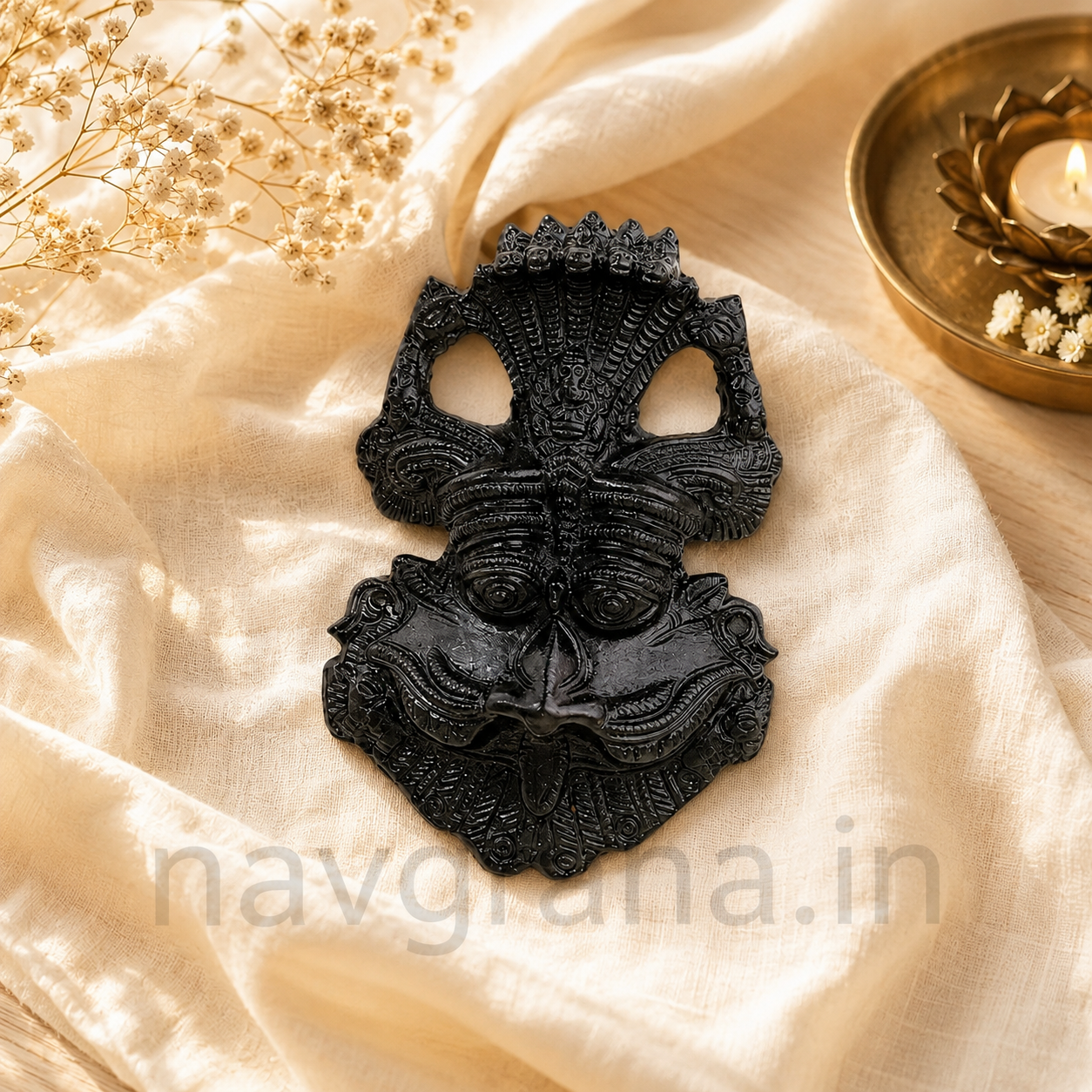
Kirti Mukh: The Meaning, the Story Behind It, and Exactly Where to Place It at Your Main Door
Kirti Mukh: The Meaning, the Story Behind It, and Exactly Where to Place It at Your Main Door
If you have visited an old Hindu temple, you have walked underneath a Kirti Mukh without necessarily knowing its name. It is the fierce face carved above the doorway, all bulging eyes and bared teeth, staring down at everyone who enters. Most visitors assume it is decorative. It is not. It is a guardian, and the story of how it came to sit above temple doors is one of the strangest and most striking in the Puranas.
This guide covers what Kirti Mukh means, the mythology behind it, why it is placed at entrances, exactly where and how to install one at home, and the mistakes that undo the whole purpose.
What Does Kirti Mukh Mean?
Kirti Mukh, also written Kirtimukha, translates from Sanskrit as “face of glory.” Kirti means glory or fame, and mukha means face. The name is deliberately ironic, because what it names is a fearsome lion-like face with wide eyes, a gaping mouth and prominent fangs, usually shown with no lower jaw and no body at all.
You will find it carved above the entrances of temples across India and much of Southeast Asia, from Khajuraho to Angkor Wat. In Vastu Shastra it serves a specific function: it is placed at a threshold so that whatever crosses it is met first by the guardian rather than by the household.
The Story from the Shiva Purana
The mythology explains the form, and it is worth telling properly because it is what gives the object its meaning.
The demon king Jalandhara, grown arrogant with power, sent Rahu as his messenger to Lord Shiva with an outrageous demand: that Shiva surrender Goddess Parvati to him. Rahu delivered the message.
Shiva’s response was immediate. From his third eye burst a terrifying lion-headed being, ravenous with hunger, which advanced on Rahu to devour him. Rahu, seeing what was coming, threw himself on Shiva’s mercy and begged protection. Shiva, bound by the principle that a supplicant must be spared, called the creature off.
This left a problem. The being had been created with overwhelming hunger and now had nothing to consume. It appealed to Shiva, who gave an answer of remarkable severity: if you are hungry, eat yourself.
And it did. The creature began consuming its own body, working upward from the feet, until nothing remained but the face. Shiva, watching this act of total obedience, was moved. He declared that this face would be called Kirtimukha, the face of glory, and that it would be placed above the doorway of every one of his temples. No devotee who failed to acknowledge Kirtimukha first would receive his blessings.
The symbolism is direct. Kirti Mukh represents the complete consumption of ego, hunger and desire, the total surrender that comes before entering sacred space. Placed at a threshold, it is a reminder to leave those things outside.
Why Kirti Mukh Is Placed at the Main Door
In Vastu Shastra the main door, the mukhya dwar, is treated as the most energetically significant point in a home. It is where energy enters, both the kind you want and the kind you do not. This is why Indian households have traditionally marked entrances with toran, swastik, nazar battu, footprints and the like.
Kirti Mukh belongs to that same tradition but occupies a different role from most of them. Where a swastik invites auspiciousness in, Kirti Mukh’s function is to filter what arrives. It is placed high above the door, looking outward, so it encounters everything before your family does.
Three reasons it is chosen for entrances:
Filtering at the threshold. The guardian faces outward and meets incoming energy first, which is the entire logic of threshold protection in Vastu.
Nazar and drishti dosh. Kirti Mukh is traditionally used to deflect the ill effects of envious or ill-wishing attention, which is why it is so common on homes and shops in North and West India.
A marker of transition. Passing under it separates the outside world from the space you have made your own, in the same way it separates the courtyard from the sanctum in a temple.
For a wider look at entrance protection, see our Vastu and Feng Shui collection.
Why Black Tourmaline Kirti Mukh?
Traditional Kirti Mukh was carved in stone, cast in brass, or moulded in terracotta. Modern crystal versions add a second layer, and Black Tourmaline is the most common choice for reasons that fit the object’s purpose closely.
Black Tourmaline has been used across traditions as the primary grounding and shielding stone, thought to absorb negativity rather than reflect it back. Pairing that with a form whose function is guardianship makes the material and the symbolism agree with each other, which is not true of every crystal version on the market.
Our Kirti Mukh and Vastu Owl combo pairs the guardian with an owl, a Vastu symbol of wisdom and foresight. For a fuller setup, the Kirti Mukh and Navgraha Tree combo combines entrance protection with a Navgraha Crystal Tree that carries stones for all nine planets.
Where and How to Place a Kirti Mukh
Position
Above the main door frame, centred, on the outside face. Kirti Mukh must look outward, away from the home. A guardian facing inward is watching the wrong direction, and this is the most frequent installation error.
Height
Above eye level, on the lintel or just above it. Anyone entering should pass beneath it rather than alongside it.
Direction
The main door direction matters less than most people assume, because Kirti Mukh is tied to the entrance rather than to a compass point. It works on a door facing any direction. That said, Vastu treats North, North East and East facing entrances as the most auspicious generally, and South and South West facing doors as benefiting most from protective measures, which makes Kirti Mukh especially worth having on those.
Which Door
The main entrance only. Placing one on every internal door dilutes the meaning, since a threshold guardian marks the boundary between outside and inside, and your bedroom door is not that boundary.
When to Install
Traditional practice favours Tuesday or Saturday, the days associated with Mangal and Shani, both connected with protection. Amavasya is generally avoided for new installations. Festival days including Diwali, Navratri, Akshaya Tritiya and Gudi Padwa are all considered auspicious, as is a griha pravesh.
Simple Installation Ritual
Nothing elaborate is required. Clean the entrance area thoroughly. Wipe the Kirti Mukh with a clean dry cloth. Light a diya and some incense at the doorway. Offer a short prayer or the Om Namah Shivaya mantra according to your practice. Fix it in place, and mark it with kumkum or haldi if that is your family custom.
Six Mistakes to Avoid
Facing it inward. The single most common error, and it defeats the object’s entire purpose.
Placing it below eye level. A threshold guardian belongs above the threshold, not beside it.
Putting it on every door. One main entrance, one guardian.
Leaving it dusty. A neglected, cobwebbed guardian is treated in Vastu as worse than none at all. Wipe it weekly along with the rest of the entrance.
Crowding the entrance. Kirti Mukh, plus lemon and chilli, plus a mirror, plus three toran and a horseshoe adds clutter rather than protection. Choose one or two and keep the doorway clean.
Blocking the doorway itself. Vastu is unambiguous that the main door must open fully and stay unobstructed. Shoe racks, dustbins and stacked boxes at the entrance undo everything you place above it.
Kirti Mukh Compared with Other Entrance Remedies
Nazar battu (lemon and chilli). Widely used and inexpensive, but needs replacing every week or two. Kirti Mukh is permanent.
Swastik. Invites auspiciousness rather than filtering what arrives, so the two serve complementary purposes and are often used together. Our brass Swastik Om Trishul wall hanging pairs naturally with it.
Main door yantra. Works through sacred geometry rather than a guardian form. The copper Main Door Vastu Yantra is the traditional choice, and many households use both.
Bagua mirror. A Feng Shui remedy that reflects negativity back toward its source. Kirti Mukh absorbs rather than reflects, which is the gentler approach and the one that fits Indian tradition.
Extending Protection Beyond the Doorway
Kirti Mukh guards the entrance. If you want the same principle applied through the home, a few additions work alongside it.
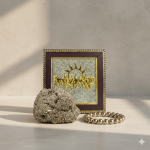
Black Obsidian tumble stones placed in the corners of rooms extend grounding beyond the threshold. A Black Tourmaline Maala carries the same stone into daily japa practice. A Pyrite Vastu Owl is commonly placed in the North for wisdom and prosperity. For personal rather than household protection, see our guide to rashi bracelets.
The full range sits in our Yantras and Vastu Items collection.
Frequently Asked Questions
What is Kirti Mukh?
Kirti Mukh, or Kirtimukha, means “face of glory” in Sanskrit. It is a fierce guardian face traditionally carved above the entrances of Hindu temples and placed at the main doors of homes for protection.
Which direction should Kirti Mukh face?
Always outward, away from the home, mounted on the outside face of the main door above eye level. Facing it inward defeats its purpose as a threshold guardian.
Can I place Kirti Mukh inside my home?
It is meant for the main entrance. Placing it on internal doors or on interior walls does not align with its traditional function, which is to guard the boundary between outside and inside.
Which day is best to install Kirti Mukh?
Tuesday and Saturday are traditionally preferred, being associated with Mangal and Shani. Festival days such as Diwali, Navratri, Akshaya Tritiya and Gudi Padwa are also considered auspicious, as is a griha pravesh. Amavasya is generally avoided.
What is the difference between Kirti Mukh and a nazar battu?
Both are entrance protections. A nazar battu of lemon and chilli needs replacing every week or two, while a Kirti Mukh in stone, brass or crystal is a permanent fixture that requires only regular cleaning.
Does Kirti Mukh need any pooja or maintenance?
No elaborate ritual is required. Clean it weekly along with the entrance, since a neglected guardian is considered worse than none. Many families mark it with kumkum during festivals.
Bringing a Guardian to Your Entrance
Kirti Mukh has watched over doorways for well over a thousand years, from temple gateways to ordinary homes, carrying the same idea throughout: leave your ego at the threshold, and let the guardian handle what tries to follow you in.
Our Kirti Mukh and Vastu Owl combo pairs protection with wisdom, while the Kirti Mukh and Navgraha Tree combo extends the same protection to nine-planet harmony throughout the home. Both are made from natural Black Tourmaline, energetically cleansed before dispatch, and available with cash on delivery across India.
Spiritual and astrological benefits described here are based on traditional beliefs and practices. Individual experiences vary according to personal faith, practice and intention. These products are not intended to diagnose, treat, cure or prevent any medical condition.