✅ Authentic & Original Products | ⭐ Trusted by Thousands | 💵 Cash on Delivery | 🚚 Pan India Delivery | 🔒 Secure Payments
✅ Authentic & Original Products | ⭐ Trusted by Thousands | 💵 Cash on Delivery | 🚚 Pan India Delivery | 🔒 Secure Payments












Bringing Ganpati Home for the First Time
Bringing Ganpati Home for the First Time
Most guides start with the puja vidhi. First-time households need the decisions before that: how many days, what size idol, where it goes, what the ten days actually involve, and whether bringing Ganpati home once commits you to doing it every year.
That last question has a short answer, so it goes first. It does not. More on it below.
The Decisions, In Order
How many days
The first and most consequential choice, and it is made before you buy anything, because it is stated in the sankalp at installation.
The options are one and a half days, three, five, seven, ten or eleven. All are traditional and none is a lesser observance.
For a first year, a day and a half is the sensible choice. It is a full observance, it is what a very large number of households keep, and it lets you find out what the ritual actually involves before committing to ten days of it. Our guide to choosing a visarjan day covers each option and how the commitment works.
What size idol
Smaller than instinct suggests.
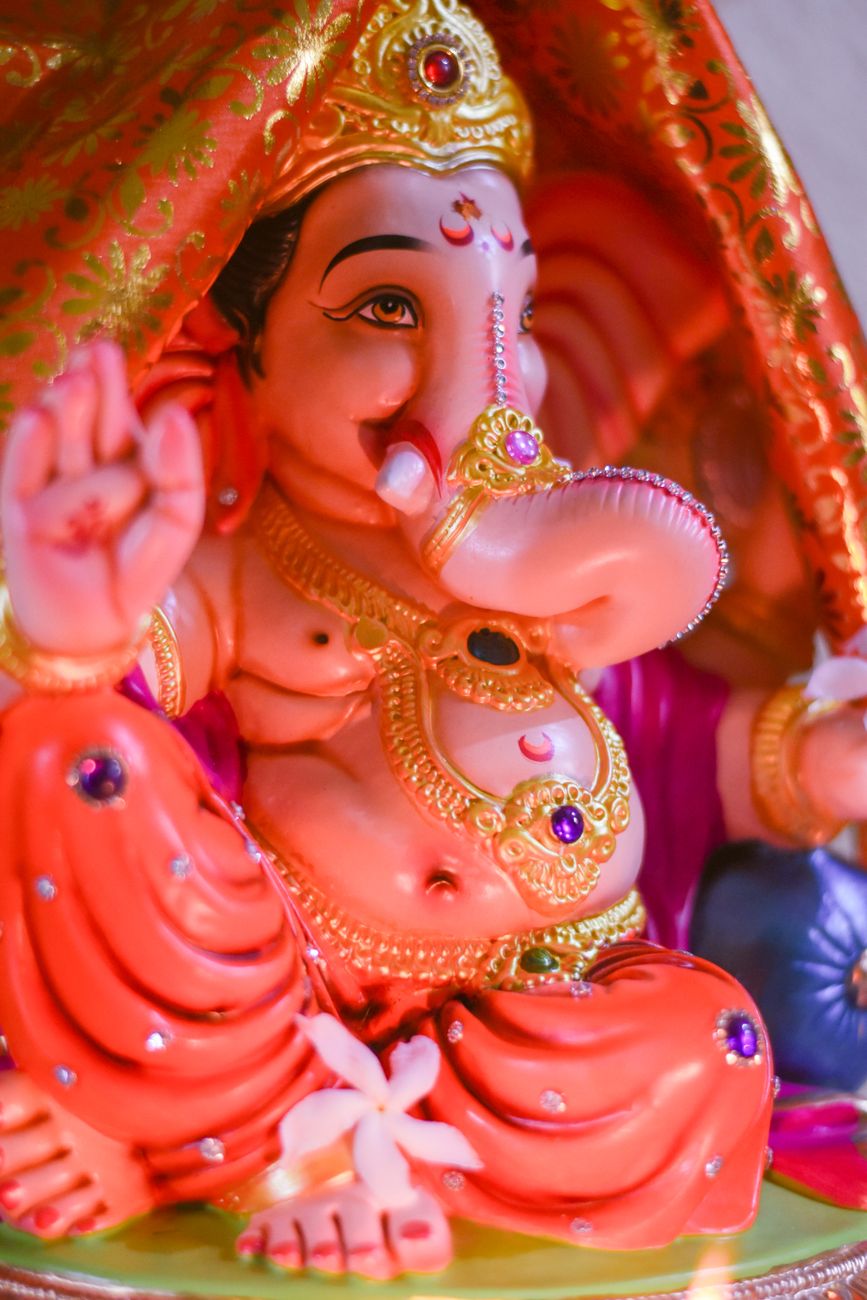
The traditional guidance is that a household idol should be no taller than the span from your elbow to your fingertips, and for a flat, considerably less than that is easier. A ten to fifteen centimetre idol is entirely proper and is what most urban households keep.
Practical reasons beyond tradition: you have to carry it home, you have to carry it to visarjan, and a large idol in a small flat dominates a room for ten days.
Our guide to choosing a Ganesh idol covers size, posture and what to look for.
Clay or plaster of Paris
Buy clay, shadu mati, and it matters for a practical reason as much as an environmental one: a clay idol dissolves in a bucket at home, which means you are not dependent on finding an immersion site.
Plaster of Paris does not dissolve, is banned or restricted in several cities, and turns visarjan into a logistical problem.
Telling them apart before you pay: clay is heavier for its size, feels cool and slightly rough, and has muted colours. Plaster is light, smooth, and takes bright glossy paint. If it looks too white and too shiny for the price, it is plaster.
Our eco-friendly visarjan guide covers the materials and the home immersion method in detail.
Trunk direction
Buy a left-curved trunk, Vamamukhi, for a household. It is the standard household idol and carries ordinary worship requirements.
A right-curved trunk, Dakshinamukhi, is held to require stricter and more exacting daily observance, which is why temples keep them and homes generally do not. Our guide to trunk direction covers the distinction properly.
Where it goes
North east, east or north of the room, raised on a chowki, with the idol facing east or west. Not in a bedroom, not under a staircase, not facing directly at a bathroom door.
Our vastu guide covers the zones and our guide to awkward layouts covers what to do when the ideal spot is unavailable, which it often is in a flat.
For a genuinely small space, our guide to Ganpati in a rented flat or small home covers setting up without a dedicated room.
What to Buy
The full list. Prices are indicative and most of this is inexpensive.
The idol. Clay, left trunk, modest size.
A chowki or raised platform, and a clean red or yellow cloth to cover it.
A puja thali with the basics: a diya, an incense holder, small bowls, a bell and a spoon. Our Pooja Essentials collection covers the set.
Kalash, a metal vessel for water, with a coconut and mango or betel leaves.
Consumables: haldi, kumkum, chandan, akshat, camphor, incense, ghee or oil, cotton wicks.
Offerings: durva grass, red flowers, modak or any sweet, fruit, betel leaves and nut, a coin.
Decoration: a toran for the doorway, marigold, rangoli colours, and lights if you want them.
Our brass deity idols and religious gift items cover the permanent pieces, and our guide to buying without being cheated covers checking quality before you pay, which matters most in festival week when everything sells fast.
The Day Before
Clean the house thoroughly, which is traditional and also makes the ten days easier.
Set up the mandap or platform, the cloth and the decoration. Draw a rangoli at the entrance and hang the toran. Our decoration guide covers placement by direction and the same principles apply.
Arrange all the puja items within reach of where you will sit.
Bring the idol home covered, and keep it covered until the installation.
Installation Day
Ganesh Chaturthi 2026 falls on Monday, 14 September, with the Madhyahna sthapana muhurat running roughly 11:00 AM to 1:30 PM.
Our muhurat guide covers the timings, why midday rather than morning, and what to do if you miss the window, which is a common enough situation to be worth reading in advance.
Our pran pratishtha guide covers the installation itself step by step, and it can be performed by the household without a priest.
One thing to know before the day: do not look at the moon on Chaturthi. This catches first-timers every year and our guide to the moon restriction covers the story behind it and the remedy if you have already seen it.
What Each Day Involves
Less than people fear, and the same each day.
Morning: bathe, clean the space, fresh flowers and durva, light the lamp and incense, offer naivedya, perform aarti.
Evening: light the lamp again, offer a sweet or fruit, perform aarti.
That is the whole daily obligation. Fifteen to twenty minutes twice a day. Our aarti guide covers the method and our mantras guide the recitations.
Do not leave the space empty. The traditional expectation is that the household does not leave the idol unattended for the duration, which is one practical reason a shorter observance suits a working household better.
Visitors. People will come. Offering prasad to anyone who visits is customary and it is much of what makes the festival what it is.
What not to offer: tulsi is not offered to Ganesha, and there is a story behind it. Our guide to what is never offered covers this and the other exclusions.
Concluding and Visarjan
Uttar puja is performed before visarjan, and it is the step most first-timers do not know exists. It formally concludes the hosting and asks the deity to depart, and skipping it is the most common omission of the whole festival. Our uttar puja guide covers it.
Home visarjan in a bucket or drum is entirely proper for a small clay idol and is increasingly the norm in cities. Our visarjan guide covers the method and what to do with the water afterwards.
Nirmalya, the flowers and leaves, are composted or returned to soil rather than binned.
Is It a Lifelong Commitment?
The question that worries first-time households most, and the answer is straightforward.
Bringing Ganpati home once does not oblige you to do it every year. Households start and stop for all sorts of reasons: moving, illness, work, a death in the family, or simply circumstances changing.
Where a family has kept an unbroken annual observance for generations, that continuity carries weight within that family, and a household beginning fresh is not entering into that.
What is expected is that having installed the idol, you keep the observance for the days you declared and conclude it properly. That is the commitment, and it lasts as long as the sankalp you made.
A related note: if there has been a death in the family this year, different rules apply. Our guide to Ganesh Chaturthi during sutak covers it, and our guide to the period after a death covers the wider question.
What It Costs
Worth stating plainly, since first-timers overestimate it.
A modest clay idol, a cloth, a basic puja thali, consumables, flowers and decoration comes to well under what most people expect. The single largest cost is usually the idol, and a small clay one is inexpensive.
Nothing about the observance requires spending more. Our guide to keeping a practice without spending covers what the tradition actually asks for, which is considerably less than the market suggests.
Frequently Asked Questions
How many days should we keep Ganpati the first time?
A day and a half is the sensible first-year choice. It is a full observance, a very large number of households keep it, and it lets you find out what the ritual involves before committing to ten days. The options are one and a half, three, five, seven, ten or eleven days, and none is a lesser observance.
What size Ganesh idol is right for a home?
Traditional guidance is no taller than the span from your elbow to your fingertips, and for a flat, considerably less is easier. Ten to fifteen centimetres is entirely proper and is what most urban households keep. You also have to carry it home and carry it to visarjan.
How do I tell a clay idol from plaster of Paris?
Clay is heavier for its size, feels cool and slightly rough, and has muted colours. Plaster is light, smooth and takes bright glossy paint. If it looks too white and too shiny for the price, it is plaster. Clay also dissolves in a bucket at home, so you are not dependent on finding an immersion site.
Does bringing Ganpati home commit you to doing it every year?
No. Households start and stop for all sorts of reasons. What is expected is that having installed the idol, you keep the observance for the days you declared in the sankalp and conclude it properly.
What does each day of the festival involve?
Morning: bathe, clean the space, fresh flowers and durva, light the lamp and incense, offer naivedya, perform aarti. Evening: light the lamp, offer a sweet or fruit, perform aarti. Fifteen to twenty minutes twice a day. The household is traditionally expected not to leave the idol unattended for the duration.
Where should the Ganpati idol be placed at home?
North east, east or north of the room, raised on a chowki, facing east or west. Not in a bedroom, not under a staircase, and not facing directly at a bathroom door.
Start Small, Finish Properly
A modest clay idol, a day and a half, and a proper uttar puja before visarjan is a complete first observance. It is also considerably more likely to become an annual one than an ambitious ten days that nobody enjoyed.
Our muhurat guide covers the timing, our pran pratishtha guide the installation, and our main festival guide the overview. Our brass deity idols, Pooja Essentials and religious gift items cover what you need, with cash on delivery across India.
Practices vary considerably by region, community and family; follow your own household tradition where it differs. Festival dates and muhurat timings follow tithi and vary by city; confirm against a local panchang.