✅ Authentic & Original Products | ⭐ Trusted by Thousands | 💵 Cash on Delivery | 🚚 Pan India Delivery | 🔒 Secure Payments
✅ Authentic & Original Products | ⭐ Trusted by Thousands | 💵 Cash on Delivery | 🚚 Pan India Delivery | 🔒 Secure Payments










Pran Pratishtha at Home: The Full Method, Step by Step
Pran Pratishtha at Home: The Full Method, Step by Step
This is the part first-time households find daunting, and it should not be. Pran pratishtha is a sequence of about a dozen steps, it takes under an hour, and a household can perform it without a priest.
What follows is the full method with an explanation of what each step is doing, because a procedure you understand is one you can perform calmly.
What Pran Pratishtha Actually Is
Literally, the establishment of life. It is the ritual that changes a murti from an object into a presence that is being hosted.
Before it, the idol is clay or brass. After it, the household is treating it as a guest who has been formally invited, which is why the offerings that follow are the offerings you would make to a guest: a seat, water, a bath, clothes, food.
Understanding that one point makes the whole sequence make sense, because the sixteen offerings stop being an arbitrary list and become an act of hospitality in order.
Do You Need a Priest?
For a household installation, no.
Household puja in this tradition has always been performed by householders. The elaborate temple pratishtha is a different and far more extensive procedure, and the domestic version is designed to be done by the family.
Where a family wants a priest, that is a preference and a good one, particularly for a first installation or a permanent idol. It is not a requirement, and no tradition holds that a household installation performed sincerely is defective.
A note on who may perform it: the person who leads the household puja does. There is no restriction by gender in domestic practice, and women perform household pran pratishtha routinely across India.
Before You Begin
Bathe and wear clean clothes. Where a bath is not possible, washing hands, face and feet is the accepted minimum. Our guide to adapting practice covers the accommodations in full.
Clean the space and set the chowki, raised and covered with a clean red or yellow cloth.
Position it in the north east, east or north, with the idol facing east or west. Our vastu guide covers the zones.
Arrange everything within reach before starting, since getting up mid-sequence to find the haldi is the most common disruption.
Keep the idol covered until the installation, and uncover it as part of the ritual.
Face east or north yourself while performing the puja.
What You Need
The full list, though see the section at the end on what to do when something is missing.
For the setup: chowki, clean cloth, rice or akshat, a kalash of water, mango or betel leaves, a coconut.
For the offerings: haldi, kumkum, chandan, akshat, red flowers preferably hibiscus, durva grass, a lamp with ghee or oil, incense, camphor, modak, fruit, betel leaves and betel nut, a coin, and a small piece of cloth or sacred thread.
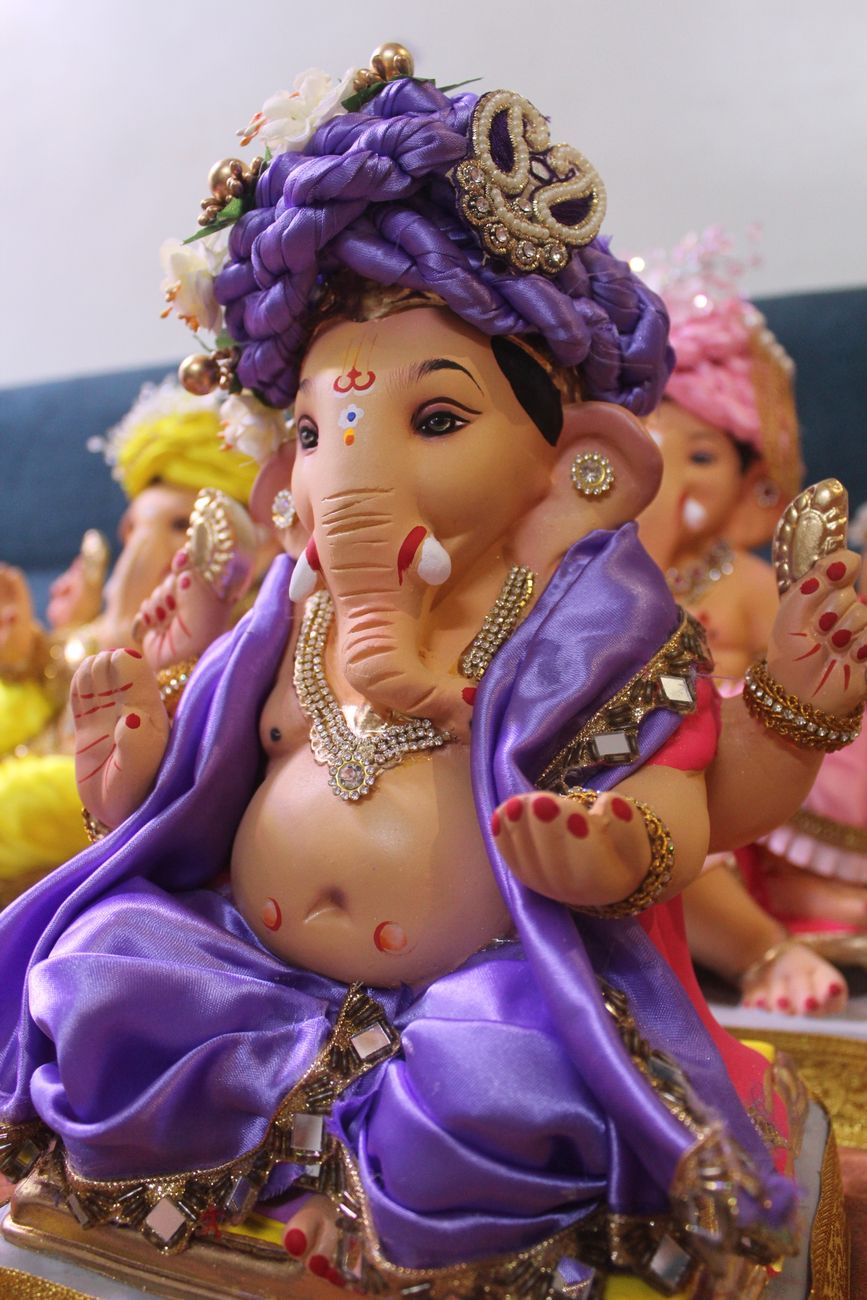
Our Pooja Essentials collection covers the pieces and our guide to choosing a Ganesh idol covers the idol itself, including how to tell clay from plaster of Paris.
The Sequence
1. Light the lamp
The lamp is lit first, before anything else, and stays lit throughout. Place it to the right of the idol’s position.
2. Achamana
Sip water three times from the right palm. This is the purification of the person performing the puja, and it opens almost every ritual in the tradition.
3. Ganesh smaran
The opening invocation, which is offered to Ganesha even when Ganesha is the deity being installed, since nothing begins without it. Our Ganesh mantras guide covers the mantra and why Ganesha is invoked first in every undertaking.
4. Sankalp
The statement of intention, and the step most often skipped and most worth keeping.
Holding water, rice and a flower in the right hand, state aloud who you are, where you are, the date, and what you are undertaking and why. It can be said in your own language. Then release the water.
The sankalp is what turns a set of actions into an observance. It is also, practically, the moment where a household states how long it is keeping the idol, which our guide to choosing a visarjan day covers.
5. Kalash sthapana
Fill a vessel with water, place mango or betel leaves around the rim and a coconut on top. Set it to the right of where the idol will sit. The kalash represents the presence of the sacred waters and the cosmos in miniature.
6. Place the idol
Place a small heap of akshat on the chowki and set the idol on it. Uncover it now.
7. Pran pratishtha
The central act. Touch the idol lightly at the heart with a flower dipped in water, or with durva grass, and recite the invocation asking the deity to be present in the murti.
The traditional formula invites the pranas, the vital breaths, and the senses to be established in the image. Where the full Sanskrit is not known, the invocation may be made in your own language, stating the request plainly, and this is a widely accepted practice for household installation.
Then offer akshat and a flower, and consider the deity present. Everything after this is hospitality.
8. The sixteen offerings
Shodashopachara. In order, and each is exactly what its name says.
Asana, a seat, offered with akshat. Padya, water for the feet. Arghya, water for the hands. Achamaniya, water to sip. Snana, a bath, sprinkling water, followed by panchamrit where the household keeps that. Vastra, clothing, offered as a small cloth or sacred thread. Yajnopavita, the sacred thread. Gandha, chandan and kumkum applied to the idol. Pushpa, flowers, and durva grass here. Dhoop, incense. Deep, the lamp, shown to the idol. Naivedya, food, modak and fruit. Tambulam, betel leaf and nut. Dakshina, a coin. Pradakshina, circumambulation, or turning in place where there is no room. Namaskar, prostration.
If sixteen feels like a lot, the shortened panchopachara of five offerings, being gandha, pushpa, dhoop, deep and naivedya, is a recognised abbreviated form and is entirely acceptable.
9. Durva and the twenty-one
Durva grass is offered in bunches, traditionally twenty-one blades in eleven bunches, and it is Ganesha’s particular offering. Our durva guide covers the story behind it and how to identify and offer it.
10. Aarti
Light camphor and circle it clockwise before the idol. Our aarti guide covers the method, the number of circles and what each is doing.
11. Prarthana and kshama
A closing prayer, and then the request for forgiveness for any error in the procedure.
This last step matters more than it appears. It is the tradition’s own acknowledgement that household puja will contain mistakes and that this is expected and forgiven. Anyone anxious about performing the ritual incorrectly should note that the ritual itself contains a step for exactly that.
If Something Is Missing
Substitution is long-established and is not a compromise.
No durva: any clean green leaf, though durva is worth the effort to find.
No hibiscus: any red flower, or any flower.
No modak: any sweet. Jaggery alone is traditional.
No panchamrit: water alone is sufficient for the snana.
No sacred thread: a length of clean cotton.
No coconut for the kalash: the kalash of water alone.
Nothing at all: the Gita’s list of a leaf, a flower, a fruit or water is a complete offering in itself. Our guide to keeping a practice without spending covers this and why sincerity ranks above expense in every classical source.
Our guide to keeping a practice abroad covers substitutions for the items that are hardest to source outside India.
The Same Method, Other Installations
Worth knowing, since this procedure is not specific to Ganesh Chaturthi.
The same sequence installs any idol in a household shrine, whether at a griha pravesh or simply when a new murti comes into the house. Our griha pravesh guide covers the new home version.
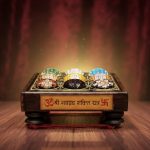
Yantras require the same pran pratishtha, and this is the step most commonly skipped, which is why so many yantras sit on shelves as decoration. Our yantra guide covers what installation involves for a yantra specifically.
An idol that was already in worship and is being moved does not need reinstallation. It is returning to use rather than being installed new. Our guide to moving a puja space covers this.
Frequently Asked Questions
Can I perform pran pratishtha myself without a priest?
Yes. Household puja in this tradition has always been performed by householders, and the domestic version of the installation is designed to be done by the family. The elaborate temple pratishtha is a separate and far more extensive procedure. There is no restriction by gender in domestic practice.
What is pran pratishtha?
Literally the establishment of life. It is the ritual that changes a murti from an object into a presence being hosted, which is why the offerings that follow are those you would make to a guest: a seat, water, a bath, clothes and food.
What are the sixteen offerings in puja?
Shodashopachara: asana, padya, arghya, achamaniya, snana, vastra, yajnopavita, gandha, pushpa, dhoop, deep, naivedya, tambulam, dakshina, pradakshina and namaskar. The shortened panchopachara of five offerings, being gandha, pushpa, dhoop, deep and naivedya, is a recognised abbreviated form.
What is sankalp and why does it matter?
The statement of intention. Holding water, rice and a flower, you state who you are, where you are, the date, and what you are undertaking and why, then release the water. It can be said in your own language. The sankalp is what turns a set of actions into an observance.
What if I do not have all the puja items?
Substitution is long-established. Any green leaf for durva, any flower for hibiscus, any sweet for modak, water alone for panchamrit, clean cotton for a sacred thread. The Gita’s list of a leaf, a flower, a fruit or water is a complete offering in itself.
What if I make a mistake during the ritual?
The ritual contains a step for exactly this. The closing kshama prarthana is a request for forgiveness for any error in the procedure, which is the tradition’s own acknowledgement that household puja will contain mistakes and that this is expected.
The Ritual Forgives Its Own Mistakes
The closing step of this entire procedure is a request for forgiveness for having performed it imperfectly. That step exists because the tradition assumed households would get things wrong, and it built the pardon into the method.
Our muhurat guide covers when to install, our first-time guide the whole ten days, and our mantras guide the recitations. Our Pooja Essentials and brass deity idols cover the pieces, with cash on delivery across India.
Ritual procedures vary considerably by region, community and family; follow your own household tradition and your family priest’s guidance where they differ from the general method described here.