✅ Authentic & Original Products | ⭐ Trusted by Thousands | 💵 Cash on Delivery | 🚚 Pan India Delivery | 🔒 Secure Payments
✅ Authentic & Original Products | ⭐ Trusted by Thousands | 💵 Cash on Delivery | 🚚 Pan India Delivery | 🔒 Secure Payments









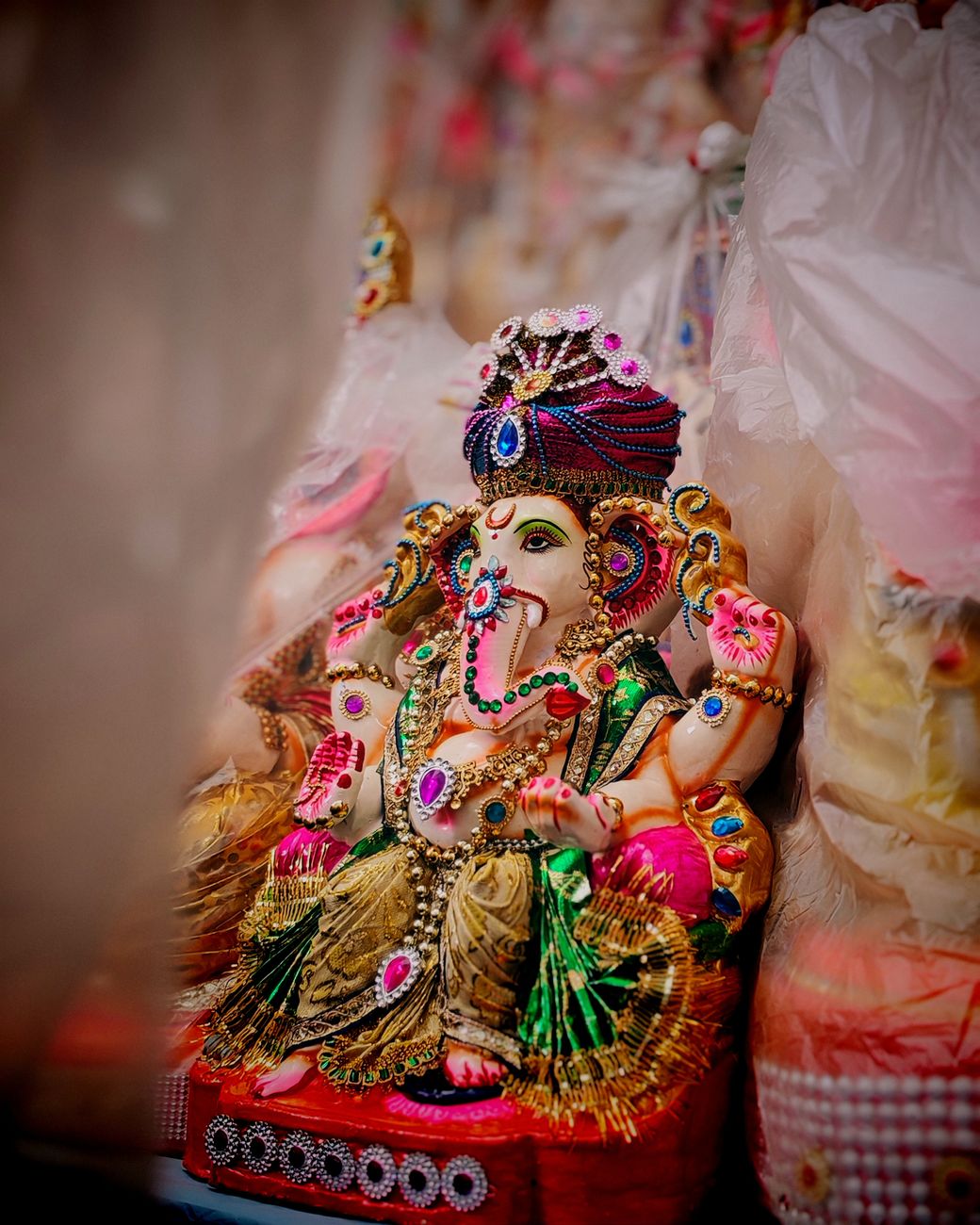
Ganesha Trunk Direction: Left, Right, and Which to Buy
Ganesha Trunk Direction: Left, Right, and Which to Buy
For a home, buy a left-curved trunk, called Vamamukhi. It is the standard household idol and carries ordinary worship requirements.
A right-curved trunk, Dakshinamukhi, is held to require stricter and more exacting observance, which is why temples keep them and households generally do not. It is not dangerous and it is not unlucky, and if you already have one, keep reading rather than replacing it.
What the Two Directions Mean
Vamamukhi, left-curved
Vama means left, and also gentle or favourable. The trunk curves toward the left side of the idol as you face it.
The left is associated with the Ida nadi, the lunar channel, and with the moon: cooling, receptive, forgiving. Our Navgraha guide covers Chandra’s significations, which map onto this.
The practical consequence is that Vamamukhi is regarded as accommodating of imperfect worship. Missed days, shortened rituals and household improvisation are within what it accepts. This is precisely what makes it the domestic idol.
Dakshinamukhi, right-curved
Dakshina means right, and also south. The trunk curves toward the right.
The right is associated with the Pingala nadi, the solar channel: heat, intensity, exactitude. Our weekday deity guide covers Surya’s associations.
Dakshinamukhi is regarded as more potent and correspondingly more demanding, requiring consistent daily worship performed with precision. The reasoning behind keeping it in temples rather than homes is practical: a temple has priests who perform the full ritual daily without fail, and most households do not.
The most famous example is the Siddhivinayak temple in Mumbai, where the idol’s trunk turns right and is one reason the temple is regarded as it is.
Straight trunk
Uncommon, and associated with Sushumna, the central channel, and with meditative practice. It is a form more often kept by practitioners than households, and it is rarely available commercially.
If You Already Own a Right-Trunk Idol
This section exists because the anxiety around it is manufactured and worth defusing.
Nothing bad happens. No traditional source states that keeping a Dakshinamukhi idol brings harm. What the sources describe is a requirement for careful observance, and the failure mode is that the worship falls short of what the form asks, not that misfortune follows.
Anyone telling you otherwise, particularly anyone selling a replacement or a remedy, is running the standard pattern. Our guide to recognising exploitation covers the shape of it: a frightening diagnosis followed by a price.
How to keep one properly: daily worship without gaps, performed at a consistent time, with the full offerings rather than an abbreviated version. Our pran pratishtha guide covers the sixteen offerings.
If you cannot commit to that, the traditional route is to give the idol to a temple or to someone who will keep the observance, rather than to keep it inadequately. Our guide to passing on sacred objects covers how this is done properly, and it is treated favourably rather than as disposal.
For Ganesh Chaturthi Specifically
A festival idol is installed, worshipped for a set number of days and immersed, so the calculation differs from a permanent household idol.
The convention remains to use Vamamukhi for a home installation, and this is what the overwhelming majority of festival idols are, so it is also what you will find.
Our first-time guide covers the whole buying decision, including size and clay versus plaster of Paris, and our duration guide covers how many days to keep it.
The Other Things to Check When Buying
Trunk direction is one of several, and the others matter as much.
Posture. Seated, in lalitasana, is the household form and signifies stability. Standing suggests activity and is used in workplaces. Reclining suggests ease and comfort. Dancing forms are decorative more than devotional. Our guide to choosing a Ganesh idol covers each posture.
The mouse. Mushika should be present, and our symbolism guide covers what the vahana represents, along with the broken tusk, the large ears and the modak.
Material. Clay for festival installation, brass for a permanent household idol. Our brass deity idol collection covers the permanent pieces, which survive daily handling in a way clay and marble do not.
Size. No taller than the span from elbow to fingertips, and considerably smaller works better in a flat.
Condition. An idol with a chip or crack is not installed. If damage happens later, our guide to retiring sacred objects covers what to do, and a broken idol is not an ill omen.
Placement, Once You Have It
North east, east or north of the room, raised, facing east or west. Our vastu guide covers the zones and our room by room guide the wider placements.
Not in a bedroom, not under a staircase, and not facing directly at a bathroom door. Our guide to awkward layouts covers what to do when the ideal placement is unavailable, which is common in flats.
The two-idol entrance convention: where Ganesha is placed at the main door, two idols are set back to back, one facing outward and one inward, so that neither has its back to a space. This is a widely kept practice worth knowing before buying a single idol for a doorway.
For a small or shared space, our guide to Ganpati in a rented flat covers setting up without a dedicated area.
Frequently Asked Questions
Should a Ganesha idol have a left or right trunk for home?
Left-curved, Vamamukhi, is the standard household idol and carries ordinary worship requirements. It is regarded as accommodating of imperfect worship, which is precisely what makes it domestic. Right-curved Dakshinamukhi is held to require stricter observance, which is why temples keep them.
What does a right-trunk Ganesha mean?
Dakshinamukhi is associated with the Pingala nadi, the solar channel, and with heat, intensity and exactitude. It is regarded as more potent and correspondingly more demanding, requiring consistent daily worship performed with precision.
Is it bad to keep a right-trunk Ganesha at home?
No traditional source states that keeping one brings harm. What the sources describe is a requirement for careful observance. Anyone telling you otherwise, particularly while selling a replacement or a remedy, is running a familiar sales pattern.
What should I do if I own a right-trunk idol but cannot maintain daily worship?
The traditional route is to give the idol to a temple or to someone who will keep the observance, rather than to keep it inadequately. Passing on a sacred object to someone who will use it is treated favourably rather than as disposal.
What does a straight-trunk Ganesha signify?
It is associated with Sushumna, the central channel, and with meditative practice. It is a form more often kept by practitioners than households and is rarely available commercially.
Why are two Ganesha idols placed at a main door?
Where Ganesha is placed at the entrance, two idols are set back to back, one facing outward and one inward, so that neither has its back to a space. This is a widely kept convention worth knowing before buying a single idol for a doorway.
Buy Left, and Stop Worrying About It
Vamamukhi for a home, which is what almost every idol on sale is anyway. And if you already own a right-trunk idol, the requirement is careful daily worship rather than a replacement purchase, whatever anyone selling one tells you.
Our idol selection guide covers posture, material and size, our symbolism guide what each element of the form means, and our first-time festival guide the buying decisions for Ganesh Chaturthi. Our brass deity idols, Pooja Essentials and religious gift items cover the range, with cash on delivery across India.
Practices vary considerably by region, community and family; follow your own household tradition where it differs.