✅ Authentic & Original Products | ⭐ Trusted by Thousands | 💵 Cash on Delivery | 🚚 Pan India Delivery | 🔒 Secure Payments
✅ Authentic & Original Products | ⭐ Trusted by Thousands | 💵 Cash on Delivery | 🚚 Pan India Delivery | 🔒 Secure Payments











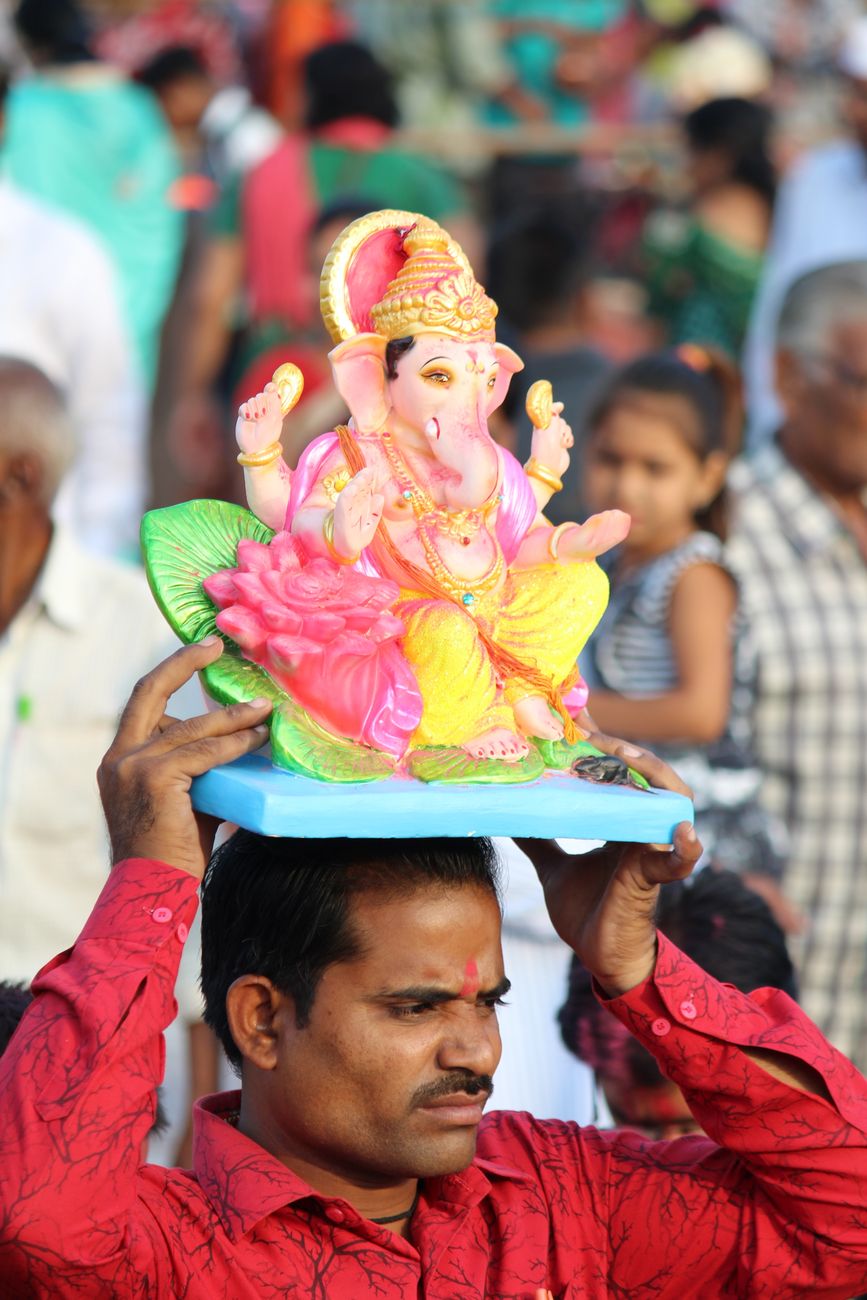
Eco-Friendly Ganesha 2026: Choosing a Clay Idol and Doing Visarjan at Home
Eco-Friendly Ganesha 2026: Choosing a Clay Idol and Doing Visarjan at Home
Ganesh Chaturthi falls on Monday, 14 September 2026, with the main visarjan on Anant Chaturdashi, Friday, 25 September.
More households are choosing clay idols and immersing at home each year, partly from conviction and partly because municipal rules have tightened. This guide covers how to tell a genuine clay idol from a painted plaster one, how home visarjan actually works, and what to do afterwards.
Why Plaster of Paris Became a Problem
Plaster of Paris is calcium sulphate hemihydrate. It is cheap, light, holds fine detail and allows tall idols, which is why it displaced clay across the twentieth century.
It also does not dissolve. A POP idol immersed in a lake or river remains substantially intact for months or years, and the paints used on it have historically carried heavy metals including lead and mercury. Immersion seasons have been followed by fish deaths and measurable water contamination in multiple cities.
Regulation has followed. Central pollution control guidance has moved against POP idols, and municipal bodies including Ahmedabad restrict immersion in natural water bodies, designating artificial tanks instead. Rules change year to year, so check your municipality’s guidance for 2026 before buying rather than after.
How to Tell Clay from Plaster
Sellers describe almost everything as eco-friendly now, so check yourself.
Weight. The most reliable test. Clay is noticeably heavy for its size. POP is light enough that a large idol can be lifted easily by one person, which is exactly why it became popular.
The base. Look at the underside. Clay shows a rough, granular, earthy surface. POP is smooth and chalky.
Scratch it. On the base where it will not show, scratch lightly. Clay gives granular, sandy debris. POP gives fine white powder.
The water test. If a seller allows it, a small chip of clay begins softening in water within minutes. POP does not.
Sound. Tap it. POP rings slightly hollow. Clay gives a duller, denser sound.
Detail and height. Very tall, very intricate, very light idols are almost always POP. Clay is limited by its own weight, which is why traditional clay idols are more modest in size.
Price. Clay costs more, takes longer to make, and requires more skill. A large, elaborate idol at a low price is telling you what it is.
Shadu Mati and the Alternatives
Shadu mati is the traditional riverbed clay used for Ganesh idols, particularly in Maharashtra and Gujarat. It dissolves completely and is the standard eco option.
Natural clay with natural colours. Look for idols coloured with turmeric, geru, indigo and other natural pigments rather than synthetic paint. Unpainted idols are increasingly popular and dissolve cleanest.
Seed Ganesha. Clay idols with seeds embedded in them, immersed in a pot of soil rather than water, so a plant grows from the idol. These have become widely available and are particularly good where children are involved, since the ritual continues visibly for weeks.
Paper and other materials. Papier mache, and idols made from alum or from cow dung, all exist. Check what the dissolving process actually produces before committing.
Home Visarjan, Step by Step
Immersing at home is entirely traditional and has been done for generations where a river was not close. Nothing about it is a compromise.
What you need: a bucket, drum or large vessel, deep enough that the idol is fully covered, filled with clean water.
Before immersion. Perform the final aarti and offer modak. Ask forgiveness for any error in the observance, in the traditional formula. Say the words: Ganpati Bappa Morya, Pudhchya Varshi Laukar Ya.
The immersion. Lower the idol in gently, face toward you rather than away. A small clay idol dissolves within a few hours, a larger one over a day or two. Do not break it up to speed the process.
Afterwards. This is the part people ask about most. Once dissolved, the water and soil should not go down a drain. Pour it at the base of a plant or tree, or into a pot. The soil that settles is used for planting, and many households keep a specific plant for it year after year.
For a seed idol. Place it directly into a pot of soil, water it, and let it break down in place. The seeds germinate over the following weeks.
Nirmalya. The flowers, leaves and organic offerings are composted rather than immersed. Most municipalities now collect nirmalya separately at immersion sites for exactly this reason.
If You Already Have a POP Idol
Practical rather than judgemental, since many households already own one.
Do not immerse it in a natural water body. Use the artificial tanks your municipality designates, which exist precisely for this and where the material is collected afterwards.
Some households keep a permanent metal or stone idol for the annual sthapana instead, performing pran pratishtha and visarjan symbolically with a small clay idol or a supari. This is an accepted practice, and it is what many families have shifted to.
A permanent brass idol also serves the daily puja through the year, since every puja in this tradition begins with Ganesh worship. Our brass deity idol collection covers the range, and Pooja Essentials has the thali requirements.
Doing It Without Making It a Sermon
One last thing, offered plainly. The eco-friendly conversation around Ganesh Chaturthi has a tendency to turn into a lecture, and lectures change fewer minds than examples do.
If your household switches to clay and immerses at home, people notice, and several will ask about it. That works better than telling anyone their idol is wrong. The festival has survived considerable change over two centuries, and this shift is happening steadily on its own.
Frequently Asked Questions
How can I tell if a Ganesha idol is clay or plaster of Paris?
Weight is the most reliable indicator, since clay is noticeably heavy for its size and POP is light. Check the base, which is rough and granular for clay and smooth and chalky for POP. A light scratch gives sandy debris from clay and fine white powder from POP. Very tall, intricate, light and cheap idols are almost always POP.
Can Ganesh visarjan be done at home?
Yes, and it is entirely traditional. Immerse a clay idol in a bucket or drum of clean water deep enough to cover it. A small idol dissolves within a few hours and a larger one over a day or two. Afterwards, pour the water and soil at the base of a plant rather than down a drain.
What should be done with the water after home visarjan?
Pour it at the base of a plant or tree, or into a pot. The soil that settles is used for planting, and many households keep a specific plant for it year after year. It should not go into a drain.
Are plaster of Paris idols banned?
Central pollution control guidance has moved against POP idols and many municipalities, including Ahmedabad, restrict immersion in natural water bodies, designating artificial tanks instead. Rules change year to year, so check your municipality’s guidance for 2026.
What is shadu mati?
The traditional riverbed clay used for Ganesh idols, particularly in Maharashtra and Gujarat. It dissolves completely in water and is the standard material for eco-friendly idols.
What is a seed Ganesha?
A clay idol with seeds embedded in it, immersed in a pot of soil rather than in water, so that a plant grows from the idol over the following weeks. It is particularly popular in households with children, since the observance continues visibly after the festival.
The Idol That Goes Back to Soil
Clay, water, and a pot of earth to pour it into afterwards. The oldest version of the ritual is also the one with nothing left over.
Our Ganesh Chaturthi 2026 guide covers the dates, sthapana muhurat and full puja vidhi.
Ganpati Bappa Morya.
Municipal rules on idol materials and immersion sites vary by city and change year to year; check your local guidance before purchasing. Ritual practices vary by region and family.