✅ Authentic & Original Products | ⭐ Trusted by Thousands | 💵 Cash on Delivery | 🚚 Pan India Delivery | 🔒 Secure Payments
✅ Authentic & Original Products | ⭐ Trusted by Thousands | 💵 Cash on Delivery | 🚚 Pan India Delivery | 🔒 Secure Payments











Ganesh Chaturthi 2026: Date, Sthapana Muhurat and Complete Puja Vidhi
Ganesh Chaturthi 2026: Date, Sthapana Muhurat and Complete Puja Vidhi
Ganesh Chaturthi falls on Monday, 14 September 2026. The Madhyahna Sthapana muhurat, the window for installing the idol, runs from 11:02 AM to 1:31 PM. The festival closes with Ganesh Visarjan on Anant Chaturdashi, Friday, 25 September.
This guide covers the installation, the daily puja, what to offer, when to do visarjan, and the one rule of the day that most people know about but few can explain.
Key Timings
Chaturthi tithi begins: 7:06 AM, 14 September
Chaturthi tithi ends: 7:44 AM, 15 September
Madhyahna Sthapana muhurat: 11:02 AM to 1:31 PM, 14 September
Moon-viewing restriction: 9:01 AM to 8:09 PM, 14 September
Anant Chaturdashi and main visarjan: Friday, 25 September
Sthapana is performed at midday rather than morning, because Ganesha is believed to have been born during Madhyahna kaal. Timings shift slightly by city, so check a local panchang.
Choosing Your Visarjan Day
Not every household keeps Bappa for the full ten days. Tradition allows several options, and all are equally valid.
1.5 days: 15 September
3 days: 16 September
5 days: 18 September
7 days: 20 September
10 days: 25 September, Anant Chaturdashi
Choose before installation rather than deciding partway through, since the sankalpa at sthapana traditionally states how long you will keep the idol. Families often follow whatever their household has always done.
Ganpati Sthapana at Home
Preparing
Clean the house and the space where the idol will sit, ideally in the north east or east. Set up a chowki with a clean red or yellow cloth, and place rice beneath where the idol will rest.
Bring the idol home covered with a cloth, traditionally with the face veiled until installation.
Installation
During the Madhyahna muhurat, place the idol facing east or west, with you facing east or north. Uncover the face. Perform achamana and then the sankalpa, stating your name, place, the purpose, and how many days you will keep the idol.
Perform pranapratishtha, the invocation of life into the idol, reciting Om Gan Ganapataye Namah.
Shodashopachara Puja
The sixteen-step offering follows: seat, water for the feet, water for washing, bathing, cloth, the sacred thread, sandalwood, flowers, incense, lamp, food, betel, offerings, and finally the aarti.
If sixteen steps feels like a lot, the essentials are these: bathe the idol, dress it, offer durva, red flowers, sandalwood and modak, light a diya and incense, and perform the aarti.
What to Offer
Durva grass is the offering most specific to Ganesha. It is presented in bunches of 21, tied in threes, and is considered dearer to him than any flower.
Modak is his favoured sweet. Twenty-one is the traditional count, whether steamed ukadiche modak or fried.
Red flowers, particularly hibiscus, along with red sandalwood and sindoor.
The 21 patri, twenty-one leaves offered by households following the fuller vidhi, including bilva, durva, shami, tulsi, bhringraj, arka, badari and others. Availability varies by region and substitutions are accepted.
Never offer tulsi to Ganesha on its own outside the patri set. There is a well-known story explaining the exclusion, and most households observe it.
Why You Should Not See the Moon
This is the rule of the day that everyone knows and few can explain. On 14 September, viewing the moon between 9:01 AM and 8:09 PM is traditionally avoided.
The story comes from the Puranas. Ganesha, having eaten a great many modak, was riding his mouse when it stumbled at the sight of a snake. Ganesha fell, and his stomach burst open, scattering the modak. He gathered them up and tied the snake around his waist as a belt. Chandra, the moon, watching from above, laughed.
Ganesha cursed him: anyone who looks upon the moon on this day will face false accusation and slander. Chandra repented, and the curse was limited to Chaturthi.
The condition it produces is called Mithya Dosh. If you do see the moon accidentally, the traditional remedy is to recite the Syamantaka Mani story, in which Krishna himself was falsely accused after viewing the moon on this day.
The Days Between
Each morning and evening, perform aarti with a diya and offer fresh flowers, durva and naivedya. Sing Sukhkarta Dukhharta at the evening aarti, which is the near-universal practice.
Keep the idol company. Tradition treats the days as hosting a guest in your home rather than maintaining an installation, and households leave the space occupied rather than empty.
Visarjan
On your chosen day, perform a final aarti and offer modak. Ask forgiveness for any error in the observance, in the traditional formula acknowledging that the puja may have been imperfect. Then say the words the whole country says: Ganpati Bappa Morya, Pudhchya Varshi Laukar Ya.
Carry the idol out with the face toward the house rather than away from it.
On immersion, clay idols dissolve safely, and many households now immerse at home in a bucket or drum and use the resulting soil for a plant. Plaster of Paris idols do not dissolve and are increasingly restricted by municipal rules, so check your local guidance. Ahmedabad and most Gujarati cities designate specific immersion sites.
For the Puja Space
Households that keep a permanent Ganesha idol alongside the seasonal clay one usually choose brass, which lasts and is used through the year for every puja that begins with Ganesh worship. Our brass deity idol collection covers the range, and Pooja Essentials has the thali requirements.
The clay idol installed for the festival is immersed. The brass one stays.
Frequently Asked Questions
When is Ganesh Chaturthi 2026?
Monday, 14 September 2026. The Madhyahna Sthapana muhurat runs from 11:02 AM to 1:31 PM, and the festival concludes with visarjan on Anant Chaturdashi, Friday 25 September.
Why should the moon not be seen on Ganesh Chaturthi?
Chandra laughed at Ganesha after a fall, and was cursed so that anyone viewing the moon on Chaturthi would face false accusation, a condition called Mithya Dosh. In 2026 the restriction runs from 9:01 AM to 8:09 PM on 14 September. The remedy for accidental viewing is to recite the Syamantaka Mani story.
How many days should Ganpati be kept at home?
1.5, 3, 5, 7 or 10 days are all traditional. Decide before installation, since the sankalpa states the duration. Most families follow their own household custom.
What should be offered to Lord Ganesha?
Durva grass in bunches of 21 tied in threes, modak, red flowers particularly hibiscus, red sandalwood and sindoor. Households following the fuller vidhi offer the 21 patri. Tulsi is not offered to Ganesha outside the patri set.
Can visarjan be done at home?
Yes, and it is increasingly common. Clay idols dissolve safely in a bucket or drum, and the resulting soil is often used for a plant. Plaster of Paris idols do not dissolve and are restricted in many municipalities, so check local guidance.
What time should the idol be installed?
During the Madhyahna muhurat at midday, 11:02 AM to 1:31 PM in 2026, since Ganesha is believed to have been born in this period. Timings shift slightly by city.
Ten Days of a Guest at Home
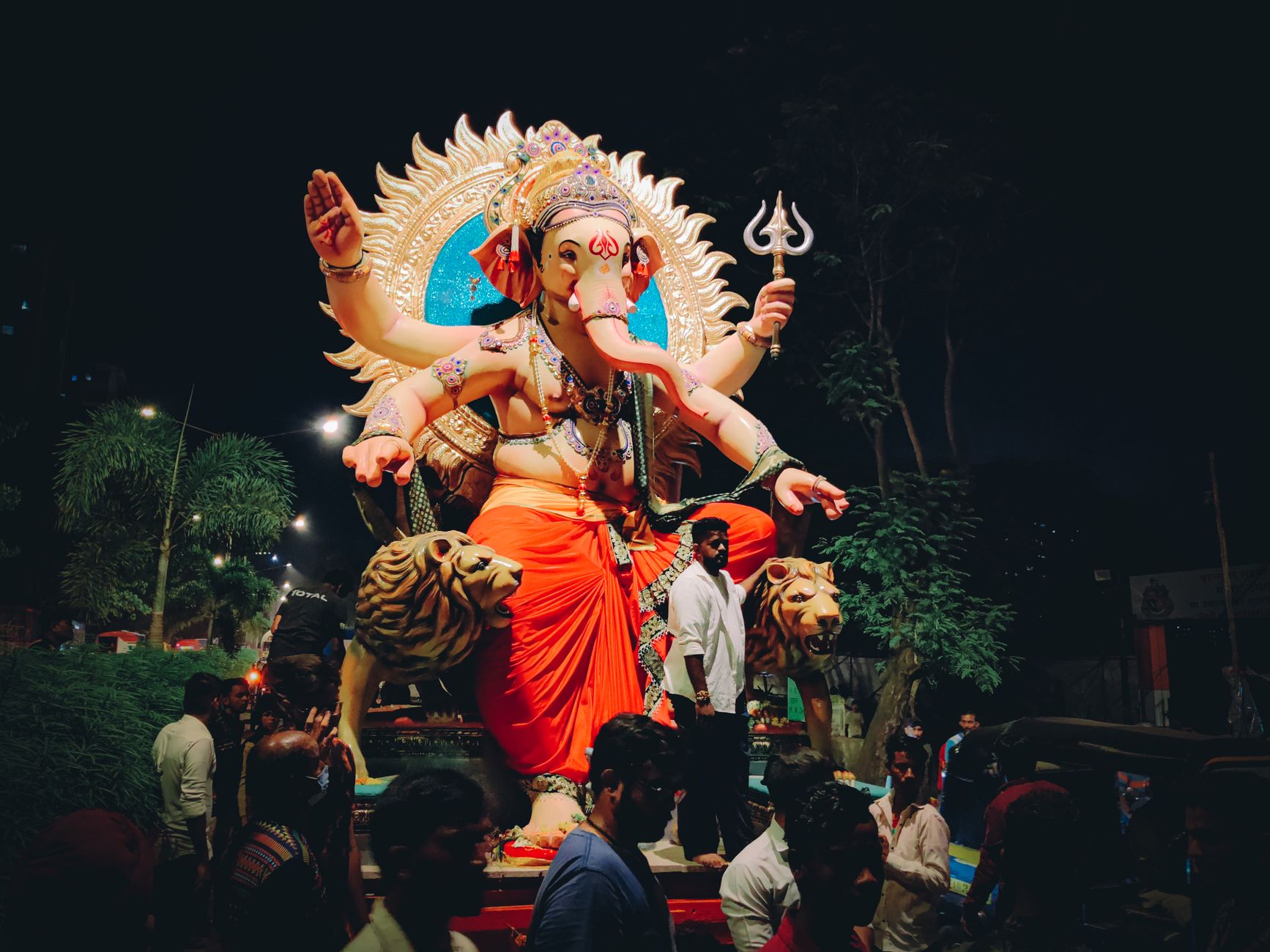
What makes Ganesh Chaturthi distinctive is that it is not a day but a stay. An idol arrives, is fed, sung to, kept company, and then walked out again with a request to return next year.
Our Navratri 2026 guide covers the festival that follows in October.
Ganpati Bappa Morya.
Ritual practices vary by region and family; follow your own household tradition where it differs. Timings follow tithi and vary by city. Please observe your municipality’s guidance on idol materials and immersion sites.