✅ Authentic & Original Products | ⭐ Trusted by Thousands | 💵 Cash on Delivery | 🚚 Pan India Delivery | 🔒 Secure Payments
✅ Authentic & Original Products | ⭐ Trusted by Thousands | 💵 Cash on Delivery | 🚚 Pan India Delivery | 🔒 Secure Payments








Navratri 2026: Complete Day-Wise Guide to the Nine Devi Forms, Crystals and Rudraksha
Navratri 2026: Complete Day-Wise Guide to the Nine Devi Forms, Crystals and Rudraksha
Sharad Navratri 2026 runs from Sunday, 11 October to Monday, 19 October, with Ghatasthapana on the first morning and Vijayadashami, or Dussehra, following on Tuesday, 20 October. Durga Ashtami falls on 18 October and Maha Navami on 19 October.
Nine nights, nine forms of the Goddess, and nine distinct qualities being invoked. Most Navratri guides stop at the ritual calendar. This one goes further, matching each of the nine Navadurga forms with the crystal and the Rudraksha that traditionally correspond to it, so you can carry the intention of each day rather than only observing it.
Navratri 2026 at a Glance
Mahalaya: Saturday, 10 October 2026
Ghatasthapana and Day 1: Sunday, 11 October 2026
Durga Ashtami: Sunday, 18 October 2026
Maha Navami: Monday, 19 October 2026
Vijayadashami (Dussehra): Tuesday, 20 October 2026
A word on precision. Hindu festivals follow tithi rather than the Gregorian calendar, and a tithi can begin and end at any hour of the day. This means the observed date occasionally shifts by one day between cities, and between family traditions. Check your local panchang for Ghatasthapana muhurat timings specific to your city, since sunrise varies considerably between Ahmedabad and Kolkata.
What Navratri Actually Commemorates
The nine nights mark the battle between Goddess Durga and the buffalo demon Mahishasura, who had received a boon making him invincible to any man or god. The loophole was deliberate on his part and fatal in the end, because the gods combined their energies to create Durga, and the battle ran nine nights before she prevailed on the tenth day. That tenth day is Vijayadashami, the victory of the tenth.
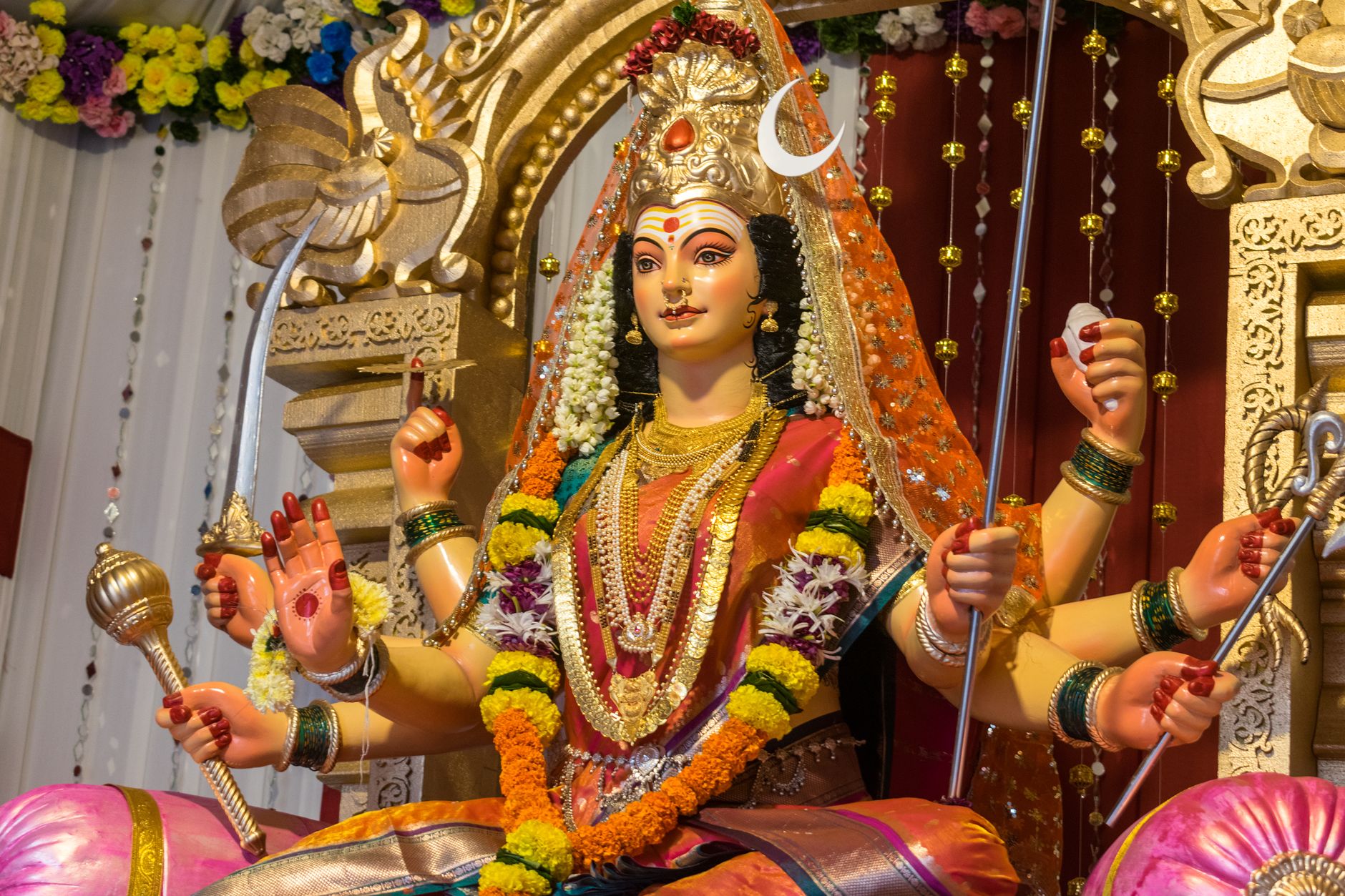
What makes Navratri distinctive among Hindu festivals is its structure. Rather than one deity honoured across nine days, each night is dedicated to a different form of the Goddess, and the sequence moves deliberately: from the grounded and earthly at the start, through fierce and protective in the middle, to the serene and liberating at the end. It is a progression, not a repetition.
The Nine Days, Nine Forms, and What to Wear
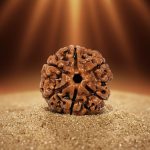
Below is the day-wise calendar for 2026, with the crystal and Rudraksha that correspond to each form. Wear one piece for the full nine days if you prefer simplicity, or rotate daily if you want to follow the progression closely.
Day 1: Sunday, 11 October — Maa Shailputri
The daughter of the mountains, representing rootedness and the beginning of the journey. Ghatasthapana is performed this morning. The traditional colour for day one in 2026 is orange.
Crystal: Red Jasper or Black Tourmaline for grounding. Rudraksha: 5 Mukhi, the everyday bead of Lord Shiva.
Day 2: Monday, 12 October — Maa Brahmacharini
The form of penance, discipline and devotion held through difficulty.
Crystal: Clear Quartz or Amethyst for mental clarity during fasting. Rudraksha: 2 Mukhi, associated with harmony and balance.
Day 3: Tuesday, 13 October — Maa Chandraghanta
The warrior form, bearing the crescent moon, invoked for courage and the removal of fear.
Crystal: Carnelian or Tiger Eye. Our Carnelian bracelet suits this day well. Rudraksha: 3 Mukhi, the Agni bead.
Day 4: Wednesday, 14 October — Maa Kushmanda
The creator of the cosmos, said to have brought the universe into being with a smile. Associated with vitality and warmth.
Crystal: Citrine or Sunstone for solar energy. Rudraksha: 4 Mukhi, the Saraswati bead of knowledge.
Day 5: Thursday, 15 October — Maa Skandamata
The mother of Kartikeya, representing maternal love and protection.
Crystal: Rose Quartz for the heart. A Rose Quartz Maala is ideal if you are doing japa. Rudraksha: 5 Mukhi.
Day 6: Friday, 16 October — Maa Katyayani
The fierce warrior born of the collective anger of the gods, the form that ultimately confronts Mahishasura. Traditionally invoked by those seeking marriage.
Crystal: Red Jasper or Garnet. Our natural Garnet bracelet fits this day. Rudraksha: 6 Mukhi, the Kartikeya bead of courage.
Day 7: Saturday, 17 October — Maa Kalaratri
The darkest and most fearsome form, the destroyer of ignorance and negativity. The night of deepest protection.
Crystal: Black Tourmaline or Black Obsidian. Black Obsidian tumble stones placed around the puja space suit this night, as does a Black Tourmaline Maala. Rudraksha: 8 Mukhi, the Ganesh bead that removes obstacles.
Day 8: Sunday, 18 October — Maa Mahagauri (Durga Ashtami)
The luminous white form representing purity and the washing away of accumulated karma. Kanya Pujan is traditionally performed today.
Crystal: Clear Quartz, Selenite or Moonstone. Our Moonstone bracelet carries the lunar quality of this day. Rudraksha: 7 Mukhi, the Mahalakshmi bead.
Day 9: Monday, 19 October — Maa Siddhidatri (Maha Navami)
The granter of siddhis and spiritual attainment, the completion of the nine-night progression.
Crystal: Amethyst for spiritual connection. Amethyst tumble stones work well on the altar. Rudraksha: Any certified Rudraksha you have worn through the nine days.
On the colour tradition: many households wear a different colour each day. The sequence rotates depending on which weekday Navratri begins, so it differs from year to year. Check a current panchang for the 2026 order rather than reusing last year’s list.
How to Perform Ghatasthapana at Home
Ghatasthapana, or Kalash Sthapana, opens Navratri on the morning of 11 October. It is the invocation of the Goddess into a consecrated pot, and it is simpler than most people expect.
What you need: a clay or brass kalash, clean soil, barley seeds, water, a coconut, mango or ashoka leaves, a red cloth, kumkum, rice, and flowers.
The sequence. Clean the puja area thoroughly and lay a wooden platform. Spread soil in a wide clay bowl and sow barley seeds in it, then water them lightly. Fill the kalash with water, add a coin, rice, kumkum and a supari. Arrange five or seven mango leaves around the rim. Wrap the coconut in red cloth and place it on top of the kalash. Set the kalash in the centre of the sown soil. Invoke Maa Durga with your family’s mantra, light a diya, and keep it burning through the nine days if your tradition calls for an akhand jyot.
The barley will sprout over the nine days, and the height and colour of the shoots are traditionally read as a sign of the year ahead.
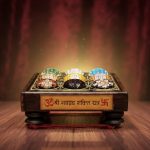
Keep a Shree Yantra on the altar if you have one, since it is considered especially auspicious during Navratri. Our Pooja Essentials collection covers the rest of the setup.
Fasting and Practice Through the Nine Days
Navratri vrat varies enormously by family. Some observe nirjala on the first and last days only, others eat one satvik meal daily, and many simply avoid onion, garlic, grains and non-vegetarian food throughout. All are valid, and the tradition has never insisted on a single form.
A few practical points that hold across approaches. Keep a japa mala within reach, since the nine days are considered a particularly effective period for mantra repetition, and a crystal maala makes counting easier than doing it on fingers. Cleanse any crystals you are wearing before the festival begins, either on a selenite plate overnight or in moonlight. And if you are fasting, keep the practice sustainable rather than severe, because the intention is devotion rather than endurance.
Navratri Gifting
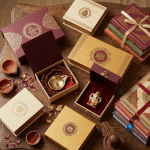
Navratri and Dussehra fall in the middle of India’s gifting season, and spiritual items carry a weight that generic gifts do not.
For family and close friends, a rashi bracelet matched to the recipient’s sign is personal without being expensive. Our guide to choosing the right rashi bracelet explains the correspondences.
For a new home or a griha pravesh timed to the festival, the Navgraha Crystal Tree carries stones for all nine planets, and Navratri is considered an auspicious time to install one. Many households pair it with a guardian at the entrance, which our Kirti Mukh placement guide covers in detail.
For devotional gifting, the brass deity idols and religious gift items collections cover most occasions.
Frequently Asked Questions
When is Navratri 2026?
Sharad Navratri 2026 begins with Ghatasthapana on Sunday, 11 October 2026 and concludes with Maha Navami on Monday, 19 October 2026. Vijayadashami, or Dussehra, falls on Tuesday, 20 October 2026.
When is Durga Ashtami in 2026?
Durga Ashtami falls on Sunday, 18 October 2026, and Maha Navami on Monday, 19 October 2026. Local panchang timings can shift the observance by a day depending on your city.
Which crystal should I wear during Navratri?
If you prefer one piece for all nine days, Clear Quartz or a rashi bracelet matched to your sign works throughout. If you want to follow the progression, rotate through grounding stones early, protective stones in the middle days, and clarity stones towards Navami.
Can I start wearing a new Rudraksha during Navratri?
Navratri is considered one of the most auspicious periods of the year to begin wearing a Rudraksha. Cleanse it first, ideally on the morning of Ghatasthapana or on Durga Ashtami.
What is the difference between Sharad and Chaitra Navratri?
Chaitra Navratri falls in spring, during March or April, and concludes with Ram Navami. Sharad Navratri falls in autumn, during September or October, and concludes with Vijayadashami. Sharad Navratri is the more widely observed of the two.
What should be kept in the Navratri kalash?
Water, a coin, rice, kumkum and a supari, with five or seven mango or ashoka leaves at the rim and a coconut wrapped in red cloth on top. The kalash is placed on a bowl of soil sown with barley seeds.
Preparing for the Nine Nights
Navratri rewards preparation. Cleanse your crystals in the week before Ghatasthapana, arrange your puja items in advance, and decide your fasting approach before the first morning rather than during it.
Everything in our crystal bracelet collection ships with a free raw selenite charging plate, which makes pre-festival cleansing straightforward. Cash on delivery is available across India, and orders placed by the first week of October will comfortably reach you before Ghatasthapana.
Spiritual and astrological benefits described here are based on traditional beliefs and practices. Individual experiences vary according to personal faith, practice and intention. Festival dates follow tithi and may shift by a day depending on your location and family tradition. These products are not intended to diagnose, treat, cure or prevent any medical condition.