✅ Authentic & Original Products | ⭐ Trusted by Thousands | 💵 Cash on Delivery | 🚚 Pan India Delivery | 🔒 Secure Payments
✅ Authentic & Original Products | ⭐ Trusted by Thousands | 💵 Cash on Delivery | 🚚 Pan India Delivery | 🔒 Secure Payments








Ganpati Decoration: Simple Ideas That Cost Very Little
Ganpati Decoration: Simple Ideas That Cost Very Little
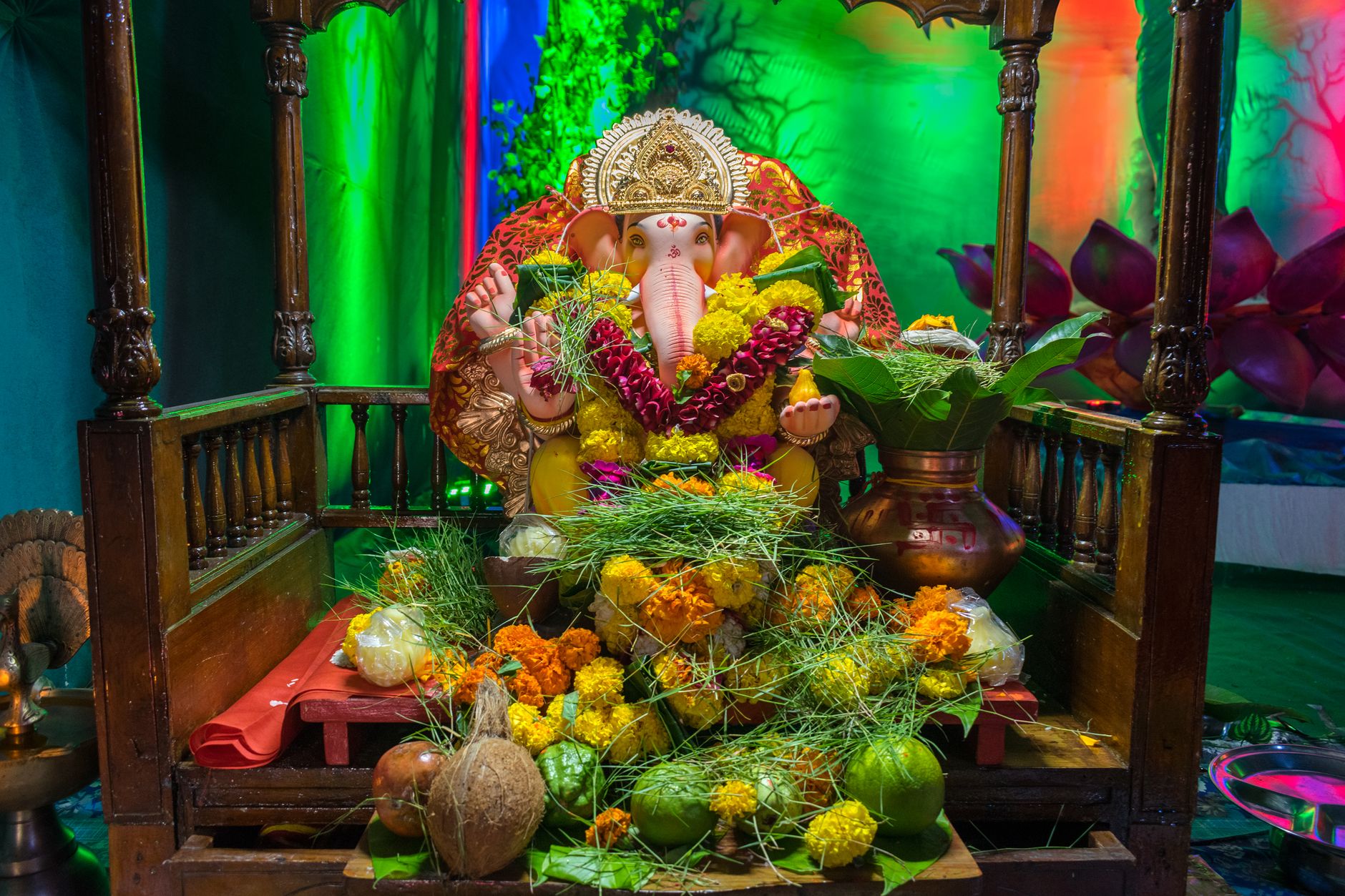
The traditional decoration for this festival is flowers, leaves and a lamp. Everything beyond that arrived later, and a household that decorates with marigold, a mango-leaf toran and a rangoli at the door has decorated properly and completely.
What follows is how to do it well without spending much, and one material worth avoiding entirely.
The Traditional Elements
Toran across the doorway, made of mango leaves and marigold. This is the oldest decorative element in Indian household practice and it costs almost nothing.
Rangoli outside the threshold. Rice flour, haldi, kumkum and flower petals. Our guide to sacred symbols covers the swastik and om motifs and what each means.
Marigold garlands, the standard festival flower, inexpensive and available everywhere during the season.
Banana stems and leaves flanking the installation, which is the classic South Indian and Maharashtrian arrangement.
Diyas, earthen lamps. Cheap, traditional, and better looking than most electric alternatives.
A red or yellow cloth on the chowki, which does more visually than any amount of added decoration.
Our decoration and direction guide covers where lamps and decorative elements belong by direction, and the same principles apply here.
The Makhar
The decorative surround behind and around the idol, and the piece most households focus their effort on.
Cloth. A draped saree or a length of fabric gathered behind the idol is the simplest and one of the best-looking options. Silk or anything with a sheen catches lamp light well.
Cardboard, cut and covered with cloth or paper. Free, and it can be genuinely elaborate with some effort.
Banana stems, traditional and biodegradable.
Bamboo, which is reusable across years and looks considerably better than plastic.
Paper and card, including handmade flowers and cut work, which is what schools and many households do.
A dupatta or an old saree as a backdrop, which almost every household already has.
Why Not Thermocol
The standard makhar material and the one worth avoiding.
Thermocol is expanded polystyrene. It does not biodegrade, it fragments into small pieces that persist indefinitely, and after the festival it goes into landfill or into water. Several states have restricted or banned it, so check your local position before buying.
It is also, practically, a poor material. It breaks during handling, it cannot be reused the following year, and it sheds fragments across the house for days.
Cloth, bamboo, cardboard and paper all cost the same or less and none of them has any of these problems. Our eco-friendly festival guide covers materials and disposal in full.
Lighting
Diyas first, since nothing else looks like an oil lamp.
Warm white string lights rather than multicolour flashing, which suits the setting considerably better and is what most households now prefer.
Fewer lights, better placed. Light behind and above the idol rather than pointed at it directly.
Safety. Keep wiring clear of cloth drapes and never leave lamps burning unattended. In a household with pets or small children this matters more, since an open flame at shelf height is exactly at their level. Our guide to safety around a puja space covers the precautions, and our guide to children and spiritual practice the wider point.
Decorating a Small Space
Where most people actually are.
Go vertical. A cloth backdrop uses wall rather than floor and makes a small setup look considered.
One focal point. In a small room, a single well-lit installation looks better than decoration spread across every surface.
Nothing adhesive on painted walls, which matters for renters. Our guide to Ganpati in a rented flat covers setting up without drilling or damaging anything.
Keep the entrance clear. Decoration at the door is traditional; blocking the door with it is not. Our vastu guide covers why the entrance is the zone vastu is firmest about.
Direction and Placement
Since decoration is placement as much as material.
The installation in the north east, east or north, raised, with the idol facing east or west.
Lamps to the right of the idol.
The kalash to the right as well.
Keep the space in front clear for the offerings and for people to sit.
Our first-time guide covers the full setup and our pran pratishtha guide what happens at the installation itself.
Reusing Across Years
The part that makes the second year cheaper than the first.
Buy the permanent pieces once. A brass diya, a bell, a thali and a good cloth last decades and improve with use. Our Pooja Essentials collection covers these, and our brass deity idols the permanent household pieces.
Store the makhar if it is bamboo or cloth. Fold, wrap and label.
String lights keep for years if wound properly rather than bundled.
Buy fresh only what has to be fresh: flowers, durva, leaves, offerings.
Our guide to storing and passing on sacred objects covers keeping things well between uses.
Clearing Up Afterwards
Nirmalya, meaning the flowers, leaves and durva, is composted or returned to soil rather than binned. Our uttar puja guide covers the handling at the conclusion.
Cloth and bamboo are cleaned and stored.
Paper and card are recycled.
Anything plastic or thermocol is the part that has nowhere good to go, which is the practical argument against it as much as the environmental one.
Frequently Asked Questions
What are the traditional Ganpati decorations?
A toran of mango leaves and marigold at the doorway, rangoli outside the threshold, marigold garlands, banana stems and leaves flanking the installation, earthen diyas, and a red or yellow cloth on the chowki. Everything beyond these arrived later.
What can be used instead of thermocol for a makhar?
Cloth draped behind the idol, cardboard covered with cloth or paper, banana stems, bamboo, or paper and card work. All cost the same or less than thermocol, and bamboo and cloth are reusable across years.
Why should thermocol be avoided?
It is expanded polystyrene, does not biodegrade, and fragments into pieces that persist indefinitely. Several states have restricted or banned it. It is also a poor practical material, since it breaks during handling, cannot be reused and sheds fragments across the house.
How do you decorate for Ganpati in a small home?
Go vertical with a cloth backdrop rather than spreading decoration across surfaces, keep a single well-lit focal point, avoid anything adhesive on painted walls, and keep the entrance clear.
Where should the lamps and kalash be placed?
Both to the right of the idol, with the installation in the north east, east or north of the room, raised and facing east or west. Keep the space in front clear for offerings and for people to sit.
What decoration can be reused next year?
Brass diyas, a bell, a thali and a good cloth last decades. Bamboo and cloth makhars store well if folded and wrapped, and string lights keep for years if wound rather than bundled. Only flowers, durva, leaves and offerings need to be bought fresh.
Flowers, a Lamp, and a Cloth
That was the whole decoration for most of this festival’s history, and it still looks better than most of what replaced it. Everything else is optional, and the one thing worth actively avoiding is the material the market pushes hardest.
Our first-time guide covers the whole setup, our small space guide the renter’s version, and our eco-friendly guide the materials and disposal. Our Pooja Essentials, brass deity idols and religious gift items cover the pieces worth buying once, with cash on delivery across India.
Practices vary considerably by region, community and family. Check local restrictions on decoration materials, which differ by state and municipality.