✅ Authentic & Original Products | ⭐ Trusted by Thousands | 💵 Cash on Delivery | 🚚 Pan India Delivery | 🔒 Secure Payments
✅ Authentic & Original Products | ⭐ Trusted by Thousands | 💵 Cash on Delivery | 🚚 Pan India Delivery | 🔒 Secure Payments










Crystals for Exams and Study: What They’re For, and What They Aren’t
Exam season in India is a serious business, and the market for anything promising an edge is enormous. So let me be straightforward at the start.
A crystal will not make you remember what you did not study. Nothing in the tradition claims otherwise, and anyone who tells you a stone will improve your marks is selling you something the practice itself does not promise.
What the tradition offers is narrower and more useful: an object that sits on your desk and represents an intention you have made. For a lot of students, having something physical attached to a commitment helps them keep it. That is worth having. It is not a shortcut.
With that said, here is what is traditionally used and how.
The Stones Traditionally Used for Study
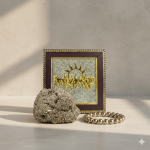
Tiger eye is the usual first recommendation. It is associated with sustained effort rather than short bursts, which is the actual problem most students have. It also suits situational use, worn on the day of an exam or before a long study session, and it takes daily wear without care. Our Tiger Eye AAA bracelet and our tiger eye guide cover it.
Clear quartz is traditionally associated with clarity and is the general-purpose choice. Kept on the desk rather than worn.
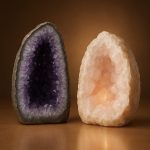
Amethyst for the opposite problem: a mind that will not settle enough to start. It is the traditional stone for quieting rather than driving, which suits students who spend more energy worrying about studying than studying. Our amethyst guide covers it, and tumbled amethyst suits desk placement.
Carnelian for starting. Traditionally associated with the initiative to begin, which is a different problem from continuing. Our carnelian bracelet is the wearable option.
Citrine for confidence going into an exam rather than during preparation.
Black tourmaline for grounding, and commonly kept near the desk simply because most study now happens in front of screens. Our black tourmaline guide covers placement.
Setting Up a Study Desk
Vastu has fairly specific guidance on study spaces, and most of it is practical enough to be worth following regardless of what you make of the framework.
Face east or north while studying. East is associated with clarity and north with opportunity. Practically, both usually mean better natural light.
Put the desk in the west or south west of the room, so that you face east or north when seated.
Do not sit with your back to the door. Vastu treats this as unsettling, and it is, for reasons that need no tradition to explain.
Avoid a beam directly overhead and avoid facing a wall directly, which the tradition describes as obstructing.
Keep the desk clear. This is the one that matters most, and it is where every tradition and every study guide agree.
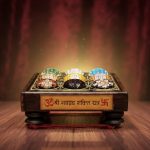
Saraswati is the deity of learning, and a small idol or image kept on or near the desk is the traditional element. Our brass deity idols cover the options.
How Students Actually Use Them
Two approaches, both common.
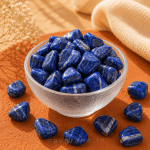
On the desk. A tumbled stone or a small cluster placed where you see it when you sit down. The point is the association: the stone means you are working, in the same way a particular chair or a particular playlist does.
Worn. A bracelet put on when you begin studying and removed when you stop, which builds the same association more strongly because it involves an action.
The second works better for most people, and the reason has nothing to do with the stone. Deliberately marking the start of a work session is a well-known technique, and a bracelet is as good a marker as any.
Vidyarambham and Beginning
If you are starting a course, a new academic year, or a serious preparation cycle, the tradition has a day for it.
Vijayadashami is the traditional day for beginning study, and Vidyarambham, the formal first lesson, is performed on it. Our Dussehra guide covers the observance.
Basant Panchami, dedicated to Saraswati, is the other traditional day, and Thursday, ruled by Guru, is the weekday associated with learning.
None of this is required. But beginning something on a day that means something helps a surprising number of people actually begin it.
An Honest Note for Parents
Since a good number of people reading this will be buying for a child rather than themselves.
A bracelet is a reasonable gift before an exam period. It says you are thinking of them, and that is worth saying. What it should not come with is the suggestion that it will do the work, or the weight of an expectation attached to it.
Indian exam pressure is intense enough without adding the sense that a failure would also be a failure of faith. Give it as a gesture of support and leave it at that.
And if a student is genuinely struggling, not with focus but with the pressure itself, that is worth taking seriously and talking to someone about. A stone is not the answer to that, and no honest seller would suggest it is.
Frequently Asked Questions
Which crystal is best for studying?
Tiger eye is the usual first recommendation, associated with sustained effort rather than short bursts. Clear quartz is the general-purpose choice for clarity, amethyst for a mind that will not settle enough to start, and carnelian for the initiative to begin.
Do crystals actually help with studying?
Not in the sense of improving recall or replacing preparation, and nothing in the tradition claims that. What a stone offers is a physical object attached to an intention, which helps some people mark the start of a work session and keep a commitment. That is genuinely useful and it is not a shortcut.
Where should crystals be kept on a study table?
Where you see them when you sit down, which is the whole point of the placement. On the desk itself for tumbled stones, and near the screen for black tourmaline if your study is screen-heavy. Keep the rest of the desk clear.
Which direction should a study desk face?
East or north while seated, with the desk placed in the west or south west of the room. Avoid sitting with your back to the door, and avoid a beam directly overhead.
When is the traditional day to begin studying something new?
Vijayadashami is the traditional day for beginning study, with Vidyarambham performed on it. Basant Panchami, dedicated to Saraswati, is the other customary day, and Thursday, ruled by Guru, is the weekday associated with learning.
Is a crystal a good gift for a student before exams?
As a gesture of support, yes. It should not come with the suggestion that it will do the work or with an expectation attached, since exam pressure in India is heavy enough without adding to it.
Something on the Desk
The most a stone does for a student is sit where they can see it and mean something. For a fair number of people, that is enough to help them sit down. It is not enough to help them pass, and nothing is except the work.
Our crystal bracelet collection and tumbled stones ship across India with cash on delivery.
Spiritual and astrological beliefs described here follow traditional practice. Individual experiences vary according to personal faith, practice and intention. Nothing here is a substitute for study, and these products are not intended to diagnose, treat, cure or prevent any medical condition. Anyone struggling with sustained pressure or distress should speak to a doctor, counsellor or a trusted adult.