✅ Authentic & Original Products | ⭐ Trusted by Thousands | 💵 Cash on Delivery | 🚚 Pan India Delivery | 🔒 Secure Payments
✅ Authentic & Original Products | ⭐ Trusted by Thousands | 💵 Cash on Delivery | 🚚 Pan India Delivery | 🔒 Secure Payments







Amethyst Benefits, Placement, and Why Most Citrine Is Really Amethyst
Amethyst is the most recognisable purple stone in the world and among the most consistently popular. It is also the stone with the most interesting commercial story attached, since a large share of the citrine sold globally began life as amethyst.
This guide covers what it is traditionally used for, who it suits, where to place it, and how to tell natural material from dyed.
What It Is
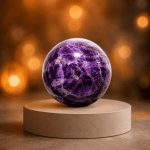
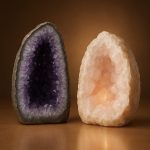
Amethyst is quartz coloured purple by trace iron and natural irradiation. The colour ranges from pale lilac to deep royal purple, and the finest material historically came from Siberia, though Brazil, Uruguay, Zambia and India supply most of the market now.
The name comes from the Greek amethystos, meaning not intoxicated. The Greeks carved drinking vessels from it in the belief that it would prevent drunkenness, which is the oldest recorded use of the stone and the origin of its long association with clarity and sobriety of mind.
Until large Brazilian deposits were found in the nineteenth century, amethyst was as valuable as ruby and emerald and was reserved for royalty and clergy. Its affordability today is a supply story rather than a quality one.
The Traditional Associations
In the chakra framework, amethyst is the primary crown chakra stone. In Vedic tradition purple stones are connected to Shani, and amethyst is used as an accessible substitute where blue sapphire, the classically prescribed Shani gemstone, is unsuitable or unaffordable.
Mental quiet. The most cited use. Traditionally worn by people whose difficulty is an overactive mind rather than a low one.
Sleep. Among the most common practical uses, kept by the bedside or under the pillow.
Spiritual practice. The traditional stone for meditation and for anyone deepening a practice, which is why amethyst malas are common.
Clarity in decision-making. Following from the Greek association, it is traditionally worn when judgement needs to be clear.
Restraint. The old association with sobriety extends in traditional use to habits and compulsions generally, as a support for intention rather than a treatment for anything.
Who It Suits
Aquarius and Capricorn, both ruled by Shani, are the most directly matched signs. Pisces is the other common recommendation, where the intuitive quality is already present and amethyst steadies rather than amplifies it.
Beyond signs, it is traditionally suggested for people who cannot switch off, who sleep badly, who are beginning a meditation practice, or who are working on a habit.
It is also one of the more universally suitable stones, and among the gentler ones, which makes it a common second purchase after a first bracelet.
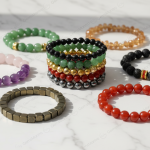
Our amethyst tumble stones suit placement around the home, and the crystal bracelet collection covers wearable options.
Where to Place It
Bedroom. The most common placement. On a bedside table or under the pillow, for sleep and for quieting the mind at the end of the day.
Meditation space or puja room. Traditionally kept where practice happens, and the north east in vastu terms.
Study or workspace. Where sustained concentration is required, though tiger eye is more commonly chosen for active focus and amethyst for calm.
Not on a sunny windowsill. More on this below, but it is the single most common way people ruin an amethyst.
The Citrine Connection
This is worth knowing whether or not you buy citrine.
Natural citrine is genuinely rare. The overwhelming majority of citrine on the market is amethyst that has been heat-treated, which permanently converts the purple to yellow-orange.
This is not a fraud. Heat-treated citrine is real quartz, the process is standard across the trade, and honest sellers disclose it. What is dishonest is selling it as natural citrine at natural citrine prices.
You can usually tell them apart. Heat-treated material shows a distinctive orange-red tone, often with a whitish base where the colour did not take evenly. Natural citrine is paler, more even, and closer to a smoky honey than an orange.
The same heat sensitivity is why amethyst fades in sunlight. Sunlight is doing slowly and unevenly what the treatment does quickly and deliberately.
Natural or Dyed
Colour zoning. The most reliable indicator. Natural amethyst shows uneven colour within a single stone, with deeper and paler areas, because the colour formed unevenly. Perfectly uniform purple across every bead in a bracelet suggests dyed quartz or glass.
Colour depth. Natural amethyst ranges from pale lilac to deep purple. Neon or electric violet is dye.
Drill holes. Dye concentrates around the hole and shows as a darker ring. Check several beads.
Temperature and weight. Natural stone feels cool and warms slowly, and is heavier than it looks.
Bubbles. Air bubbles visible against a light mean glass.
Our crystal identification guide covers these checks in full.
Care, and the One Rule That Matters
Keep amethyst out of sunlight. Prolonged direct sun fades deep purple to pale grey-lilac and eventually to a brownish yellow, and none of it comes back.
This rules out sunlight as a cleansing method entirely, and it means a windowsill is the wrong place to keep it however good it looks there.
Cleanse monthly with selenite overnight, moonlight, or incense smoke. Every bracelet we ship includes a raw selenite plate, and our cleansing guide covers the methods.
Amethyst is quartz and reasonably hard, so it takes daily wear well otherwise.
Frequently Asked Questions
What are the benefits of amethyst?
It is traditionally associated with mental quiet, sleep, spiritual practice and meditation, clarity in decision-making, and restraint, the last from its ancient association with sobriety. In the chakra framework it is the primary crown chakra stone, and in Vedic tradition it is connected to Shani.
Who should wear amethyst?
Aquarius and Capricorn, both ruled by Shani, are most directly matched, with Pisces also commonly recommended. Beyond signs it is traditionally suggested for people with an overactive mind, poor sleep, a beginning meditation practice, or a habit they are working on.
Does amethyst help with sleep?
Sleep is among its most common traditional uses, and it is customarily kept on a bedside table or under the pillow. This is traditional practice rather than a medical claim, and persistent sleep difficulty is worth raising with a doctor.
Is citrine really heat-treated amethyst?
Most of it, yes. Natural citrine is rare, and the majority on the market is amethyst heat-treated to convert the purple to yellow-orange. Heat-treated citrine is real quartz and the process is standard, so what matters is disclosure rather than the treatment itself.
Why does amethyst fade?
Amethyst’s colour is heat and light sensitive, which is what allows it to be converted to citrine deliberately. Prolonged sunlight does the same thing slowly and unevenly, fading deep purple to pale lilac and eventually brownish yellow. The change is permanent.
How can I tell if amethyst is natural or dyed?
Look for colour zoning, meaning uneven colour within a single stone, which natural amethyst shows and dyed material does not. Perfectly uniform purple across every bead, neon violet colour, or a darker ring around the drill holes all indicate dye.
The Stone That Became Affordable
Amethyst was once as valuable as ruby, and the only reason it is not now is that a great deal of it was found. The stone itself is unchanged.
Our tumbled stone range and bracelet collection cover the options, with a free raw selenite charging plate included and cash on delivery across India.
Spiritual and astrological benefits described here are based on traditional beliefs and practices. Individual experiences vary according to personal faith, practice and intention. These products are not intended to diagnose, treat, cure or prevent any medical condition.