✅ Authentic & Original Products | ⭐ Trusted by Thousands | 💵 Cash on Delivery | 🚚 Pan India Delivery | 🔒 Secure Payments
✅ Authentic & Original Products | ⭐ Trusted by Thousands | 💵 Cash on Delivery | 🚚 Pan India Delivery | 🔒 Secure Payments










Black Tourmaline: Benefits, Where to Place It, and How to Tell It from Glass
If you ask most practitioners for one protective stone, this is the answer. Black tourmaline has become the default grounding and shielding stone across nearly every tradition that works with crystals, and it holds that position for a specific reason.
Where several stones are described as reflecting negativity back toward its source, black tourmaline is traditionally understood to absorb it instead. That distinction matters, and it is why the stone is placed at doorways and in corners rather than facing outward like a mirror.
What It Is
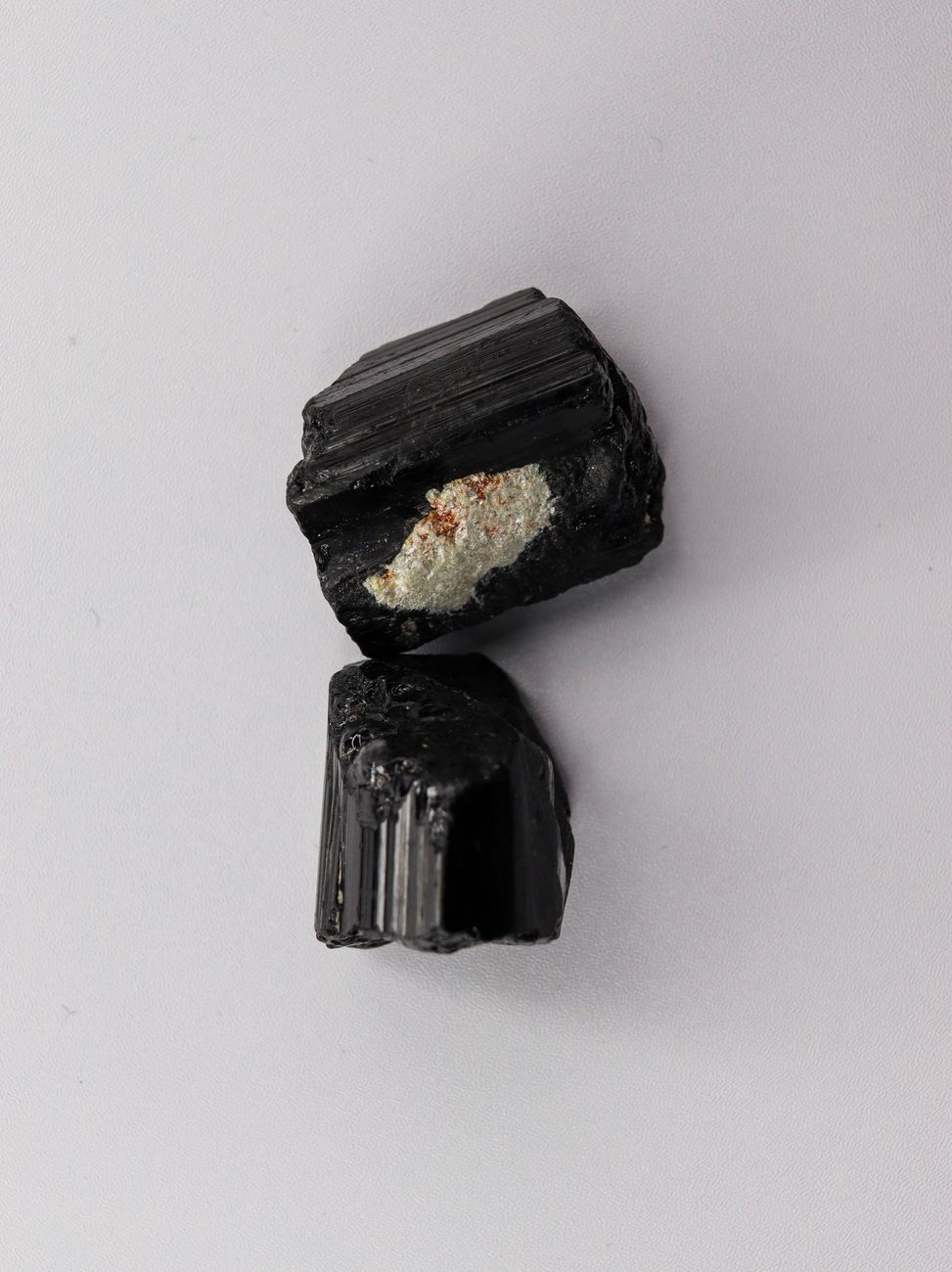
Black tourmaline, mineralogically schorl, is the most abundant member of the tourmaline family. It forms in long striated crystals, opaque black, and the vertical striations along its length are its most recognisable feature.
It carries a genuine physical peculiarity: it is pyroelectric and piezoelectric, meaning it develops an electrical charge when heated or placed under pressure. Whatever one makes of the traditional claims, that property is measurable, and it is often cited as the physical basis for the stone’s reputation.
Brazil, Africa, Pakistan and Afghanistan are the principal sources.
The Traditional Associations
Absorbing negativity. The primary use. Traditionally placed where unwanted energy is thought to enter, so that it meets the stone before it meets the household.
Grounding. Associated with the root chakra and with the quality of being settled. It is the stone most commonly recommended to people who describe themselves as scattered or ungrounded.
Protection from nazar. Widely used in Indian practice for drishti dosh and the effects of ill-wishing attention.
Shani. In Vedic tradition black stones are associated with Shani, and black tourmaline is commonly worn during Sade Sati or a difficult Shani period. Note that blue sapphire is the classically prescribed gemstone for Shani, and it is prescribed only after a chart reading because it is regarded as a powerful and unpredictable stone. Black tourmaline as a general practice carries none of that caution.
Boundaries. A more modern framing, but consistent: the stone is worn by people whose difficulty is absorbing other people’s states rather than maintaining their own.
Where to Place It at Home
This is where black tourmaline differs from most stones, since it is used in the home at least as often as it is worn.
The main entrance. The most important placement. Beside the door, inside or out, so it meets what arrives. Our Kirti Mukh guide covers the entrance-guardian tradition, and Kirti Mukh is most commonly made in black tourmaline for exactly this reason.
Corners of rooms. A piece in each of the four corners of a room is the traditional grid layout, particularly in a bedroom or a room where someone has been unwell.
Near electronics. A modern application, placed by routers, televisions and workstations.
The workspace. On a desk, particularly in a shared or high-pressure environment.
South and west. In vastu these are the directions associated with Shani and with heavier energies, and black stones are traditionally placed there.
Our black obsidian tumbles are used the same way for corner placement, and the Vastu and Feng Shui collection covers the range.
Black Tourmaline or Black Obsidian?
The two are constantly confused and they behave differently.
Black tourmaline is a crystalline mineral, opaque, with visible striations. It absorbs, and it works steadily and gently. It is the safer choice for continuous daily wear and for a household.
Black obsidian is volcanic glass, smooth and reflective, with a conchoidal fracture. It is traditionally described as confronting rather than absorbing, surfacing what has been avoided. Many practitioners find it intense and use it deliberately rather than continuously.
If you want protection without a process, tourmaline. If you want something more confronting, obsidian.
How to Wear It
Right wrist is often recommended for tourmaline, unusually. The right is the projecting side, and a shielding stone projecting outward is the logic. That said, left-wrist wear is equally common and neither is wrong.
Saturday is the traditional day to begin, being ruled by Shani.
Daily wear suits it well, since it is among the gentler protective stones. A Black Tourmaline Maala carries the same stone into a japa practice for anyone who keeps one.
Pairing. Works well with clear quartz, hematite and smoky quartz. It also pairs sensibly with any stone whose quality you want grounded rather than amplified.
Cleansing Matters More With This Stone
Because the tradition describes black tourmaline as absorbing rather than deflecting, it is held to accumulate what it takes in, which makes regular cleansing more important here than with most stones.
Cleanse at least monthly, and sooner after illness in the house, a difficult period, or heavy travel.
Selenite overnight is the simplest method, and every bracelet we ship includes a plate. Moonlight works, as does incense smoke. Do not soak it for long periods, and keep it out of prolonged direct sunlight.
If a piece cracks or breaks, traditional practice holds that it has taken as much as it can and should be respectfully retired, usually returned to soil rather than thrown away.
Telling It from Glass
Black glass and dyed stone are sold as tourmaline routinely.
Striations. The clearest test. Genuine black tourmaline shows fine parallel lines running along the length of the crystal. Glass has none.
Surface. Tourmaline has a slightly duller, more textured lustre. Glass is uniformly glossy.
Bubbles. Look closely at the beads. Air bubbles mean glass.
Weight and temperature. Stone is heavier for its size and feels cool, warming slowly.
The drill holes. On dyed material, colour concentrates around the hole, showing as a darker ring.
Frequently Asked Questions
What are the benefits of black tourmaline?
It is traditionally associated with absorbing negativity, grounding, protection from nazar or drishti dosh, and with maintaining boundaries. In Vedic tradition it is connected to Shani and is commonly worn during Sade Sati.
Where should black tourmaline be placed at home?
Beside the main entrance is the most important placement, so it meets what arrives. Also in the corners of rooms, near electronics, on a work desk, and in the south and west, the directions associated with Shani in vastu.
Which hand should black tourmaline be worn on?
The right wrist is often recommended, since the right is the projecting side and a shielding stone projecting outward is the logic. Left-wrist wear is equally common and neither is considered wrong.
What is the difference between black tourmaline and black obsidian?
Black tourmaline is a crystalline mineral with visible striations, traditionally described as absorbing negativity, working steadily and suiting continuous daily wear. Black obsidian is volcanic glass, smooth and reflective, traditionally described as confronting rather than absorbing, and many practitioners use it deliberately rather than continuously.
How often should black tourmaline be cleansed?
At least monthly, and more often than most stones, because the tradition describes it as absorbing rather than deflecting. Cleanse sooner after illness in the house, a difficult period or heavy travel. A selenite plate overnight is the simplest method.
How can I tell if black tourmaline is genuine?
Look for fine parallel striations running along the length of the crystal, which glass does not have. Genuine stone has a slightly duller, textured lustre, feels heavier for its size, and is cool to the touch. Air bubbles visible in the beads indicate glass, and a darker ring around the drill hole indicates dye.
The Stone at the Door
Black tourmaline is the least dramatic stone in most collections and the one most people end up keeping. It does one thing, does it steadily, and asks only that you clean it occasionally.
Our crystal bracelet collection ships with a free raw selenite charging plate, and the Kirti Mukh guide covers entrance protection in detail.
Spiritual and astrological benefits described here are based on traditional beliefs and practices. Individual experiences vary according to personal faith, practice and intention. These products are not intended to diagnose, treat, cure or prevent any medical condition.