✅ Authentic & Original Products | ⭐ Trusted by Thousands | 💵 Cash on Delivery | 🚚 Pan India Delivery | 🔒 Secure Payments
✅ Authentic & Original Products | ⭐ Trusted by Thousands | 💵 Cash on Delivery | 🚚 Pan India Delivery | 🔒 Secure Payments


Navratri Colours 2026: All Nine Days, with the Goddess, the Bhog and the Rule Behind the Order
Navratri Colours 2026: All Nine Days, with the Goddess, the Bhog and the Rule Behind the Order
Sharad Navratri 2026 runs from Sunday, 11 October to Monday, 19 October. The nine colours this year are orange, white, red, royal blue, yellow, green, grey, purple and peacock green, in that order.
Below is the full day-wise list, along with something most colour guides leave out: why the order changes every year, and what decides it.
Navratri 2026 Colours, Day by Day
Day 1, Sunday 11 October, Maa Shailaputri: Orange. The opening day, with Ghatasthapana in the morning. Bhog of pure ghee. Orange for warmth and beginning.
Day 2, Monday 12 October, Maa Brahmacharini: White. The form of penance and discipline. Bhog of sugar. White for stillness and purity.
Day 3, Tuesday 13 October, Maa Chandraghanta: Red. The warrior form bearing the crescent moon. Bhog of kheer or milk. Red for courage.
Day 4, Wednesday 14 October, Maa Kushmanda: Royal Blue. The creator of the cosmos. Bhog of malpua. Royal blue for clarity and depth.
Day 5, Thursday 15 October, Maa Skandamata: Yellow. The mother of Kartikeya. Bhog of banana. Yellow for warmth and wellbeing.
Day 6, Friday 16 October, Maa Katyayani: Green. The fierce form who confronts Mahishasura. Bhog of honey. Green for growth and grace.
Day 7, Saturday 17 October, Maa Kalaratri: Grey. The darkest and most protective form. Bhog of jaggery. Grey for the dissolving of fear.
Day 8, Sunday 18 October, Maa Mahagauri: Purple. Durga Ashtami, the luminous white form. Bhog of coconut. Purple for aspiration.
Day 9, Monday 19 October, Maa Siddhidatri: Peacock Green. Maha Navami, the granter of attainment. Bhog of sesame seeds. Peacock green for completion.
Vijayadashami follows on Tuesday, 20 October.
Why the Order Changes Every Year
This is the part that causes annual confusion, and the explanation is simple once you see it.
The colours are assigned by weekday, not by day number. Each weekday carries a colour tied to its ruling planet:
Sunday: orange, ruled by Surya
Monday: white, ruled by Chandra
Tuesday: red, ruled by Mangal
Wednesday: royal blue, ruled by Budh
Thursday: yellow, ruled by Guru
Friday: green, ruled by Shukra
Saturday: grey, ruled by Shani
Navratri runs nine days across a seven-day week, so two weekdays repeat. Those repeated days receive purple and peacock green, with pink substituting in some years and traditions.
Because Navratri 2026 begins on a Sunday, day one is orange. Had it begun on a Thursday, day one would be yellow and the whole sequence would shift.
This is why last year’s list is useless this year, and why so many published lists contradict each other. If you see a sequence that doesn’t match the weekday rule, check it against the calendar.
Regional variation does exist, and some communities follow a different assignment entirely. Where your family or local sangathan publishes its own list, follow that.
How Strictly Is This Followed?
Worth saying plainly: the daily colour tradition is popular rather than scriptural. It has grown considerably in the last two decades, driven partly by Garba communities coordinating outfits and partly by media publishing the list each year.
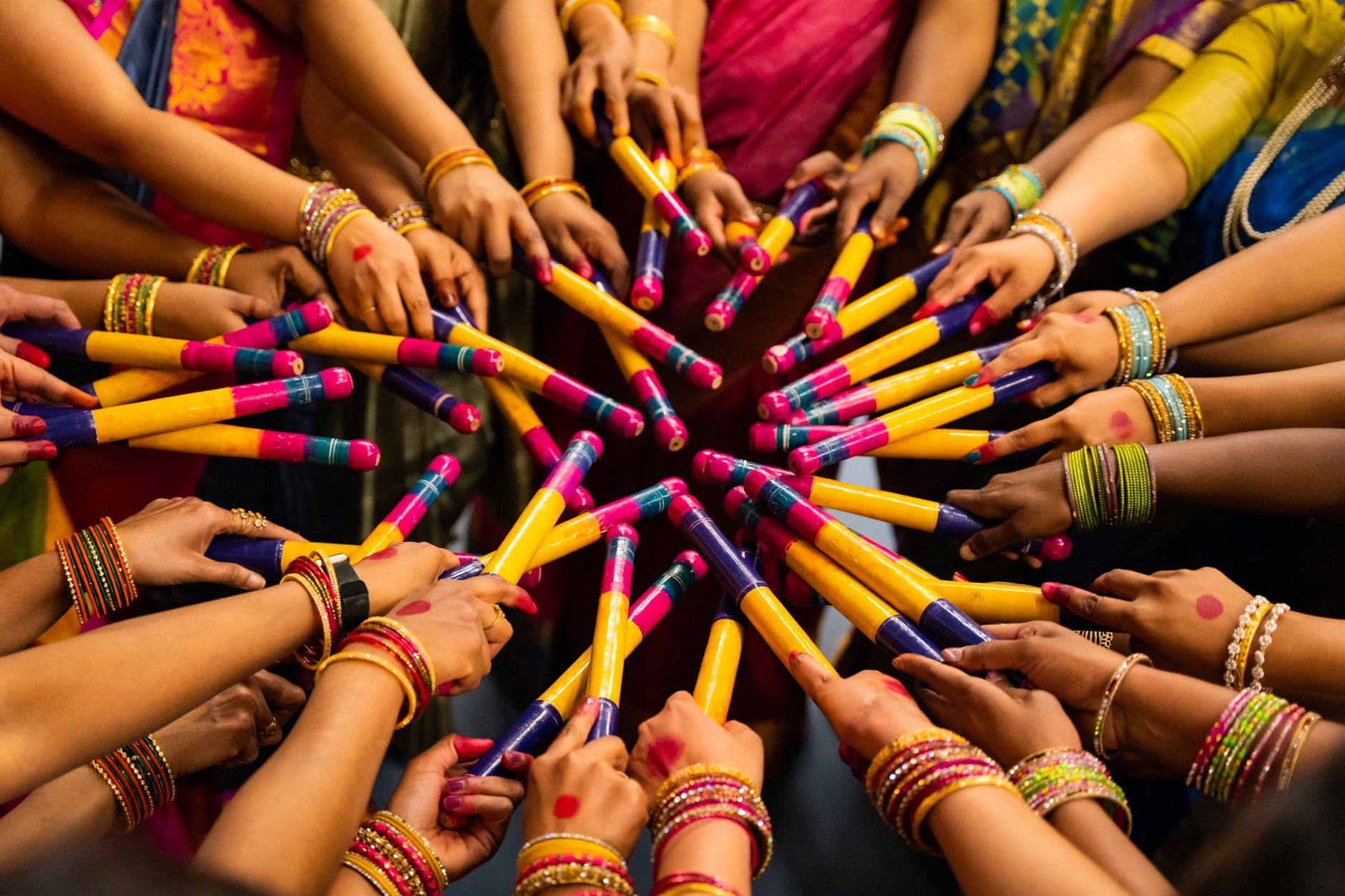
That does not make it meaningless. It gives a nine-day festival a visible shared rhythm, and in Gujarat entire Garba grounds turn a single colour each night, which is a genuinely striking thing to see.
But nobody’s observance is incomplete for wearing the wrong shade. Treat it as participation rather than obligation.
Working the Colours Practically
A few notes for anyone planning nine outfits.
You do not need nine new garments. Most people work with accessories: a dupatta, a bandhani, bangles, or a chunari in the day’s colour over a neutral base.
Grey on day seven is the one people struggle with, since few wardrobes hold festive grey. Silver-grey, or grey with mirror work, is the usual solution, and Kalaratri’s association makes a darker palette appropriate anyway.
Peacock green on the last day is treated loosely, and teal or deep green is widely accepted.
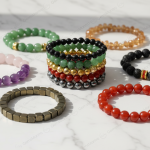
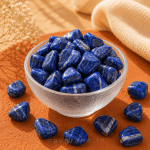
For jewellery and accessories, stones matched to the day are an easy way to follow the colour without changing the outfit. Carnelian for orange, moonstone or clear quartz for white, red jasper for red, lapis for royal blue, citrine for yellow, green aventurine for green, black tourmaline or grey agate for grey, amethyst for purple. Our crystal bracelet collection covers most of these, and our Navratri crystals guide matches stones to each of the nine Devi forms rather than to the colours.
Frequently Asked Questions
What are the 9 colours of Navratri 2026?
Orange on 11 October, white on the 12th, red on the 13th, royal blue on the 14th, yellow on the 15th, green on the 16th, grey on the 17th, purple on the 18th and peacock green on the 19th.
Why do the Navratri colours change every year?
Because they are assigned by weekday rather than by day number. Sunday is orange, Monday white, Tuesday red, Wednesday royal blue, Thursday yellow, Friday green and Saturday grey, each tied to the weekday’s ruling planet. Since nine days span a seven-day week, two weekdays repeat and receive purple and peacock green.
What colour should be worn on Navratri day 1 in 2026?
Orange. Navratri 2026 begins on Sunday, 11 October, and Sunday’s colour is orange, ruled by Surya.
Is wearing the daily colour compulsory?
No. The daily colour tradition is popular rather than scriptural and has grown considerably in recent decades. No observance is incomplete for wearing a different shade.
What bhog is offered on each day of Navratri?
Pure ghee on day one, sugar on day two, kheer or milk on day three, malpua on day four, banana on day five, honey on day six, jaggery on day seven, coconut on day eight and sesame seeds on day nine.
What if my community follows a different colour list?
Follow your own. Regional variation exists, and where a family or local sangathan publishes its own assignment, that takes precedence over any national list.
Nine Nights, Nine Shades
The colours give a long festival a visible shape, and in Gujarat they turn an entire Garba ground a single shade each night.
Our Navratri 2026 crystals guide covers the nine Devi forms and the stones traditionally matched to each, and the Dussehra guide covers the tenth day.
Colour assignments vary by region and community. Festival dates follow tithi and may vary by a day depending on your local panchang. These products are not intended to diagnose, treat, cure or prevent any medical condition.