✅ Authentic & Original Products | ⭐ Trusted by Thousands | 💵 Cash on Delivery | 🚚 Pan India Delivery | 🔒 Secure Payments
✅ Authentic & Original Products | ⭐ Trusted by Thousands | 💵 Cash on Delivery | 🚚 Pan India Delivery | 🔒 Secure Payments





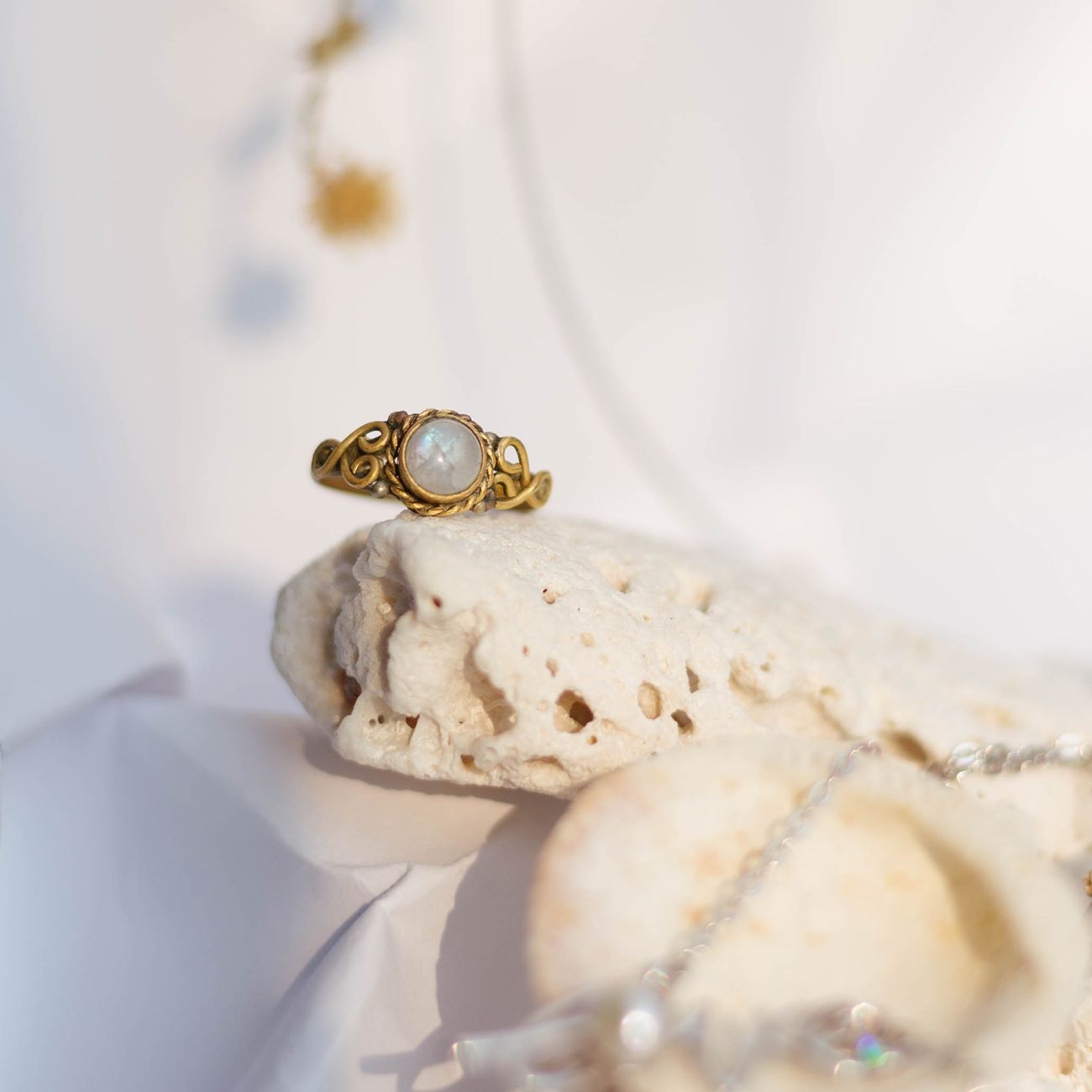
Moonstone Benefits: Who It Suits, How to Wear It, and How to Spot a Fake
Moonstone has become one of the most sought-after semi-precious stones of the last few years, and the reason is partly visual. Turn a good piece in the light and a blue-white shimmer moves across the surface, appearing to float just beneath it rather than sitting on it.
That effect has a name, adularescence, and it is caused by light scattering between microscopic layers within the feldspar. It is also why the stone acquired its lunar association long before anyone could explain the optics.
What Moonstone Is
Moonstone belongs to the feldspar family, and the varieties differ more than most people realise.
White moonstone is the classic, with a milky body and blue or white sheen.
Rainbow moonstone is technically a labradorite rather than a true moonstone, showing flashes of blue, gold and violet. It is the most popular variety in bracelets.
Peach moonstone carries a warmer body colour and a softer sheen.
Grey and black moonstone are darker bodied with a more subtle shimmer.
India, Sri Lanka and Madagascar are the principal sources, and Indian moonstone has been traded for centuries.
The Traditional Associations
In Vedic tradition the stone is connected to Chandra, the Moon, which governs the mind, emotion and the receptive faculties. Everything traditionally attributed to moonstone follows from that connection.
Emotional steadiness. The association most commonly cited, particularly for people whose moods swing with circumstance rather than settling.
Intuition. The Moon in this framework governs perception that arrives without reasoning, and moonstone is the stone traditionally worn to support it.
The feminine principle. Not gender specifically, but the receptive quality set against the assertive solar one. Moonstone is traditionally associated with cycles, with waiting, and with what unfolds in its own time.
New beginnings. Long carried by travellers, and given at the start of ventures and journeys.
Sleep and dreams. Placed under the pillow or worn at night in traditional practice.
Who It Suits
Moonstone is one of the more generally suitable stones, which is part of its appeal.
Cancer is the sign ruled by Chandra, making moonstone its most directly matched stone. Pisces is the other natural fit, where the intuitive quality is already strong and moonstone supports rather than amplifies it. Scorpio and Libra are also commonly recommended.
Beyond the signs, it is traditionally suggested for anyone whose difficulty is emotional volatility rather than emotional flatness, for people beginning something uncertain, and for anyone who sleeps poorly.
Our Moonstone crystal bracelet uses natural stone, and our rashi bracelet guide covers which stones belong to which sign if you want the sign-matched option.
A Word of Caution from Vedic Astrology
Worth stating plainly, because it is usually left out.
In classical Vedic astrology, pearl rather than moonstone is the prescribed gemstone for Chandra, and it is prescribed only after a chart reading, since a strong lunar influence is not always what a chart needs. Someone with an already dominant Moon may be advised against strengthening it further.
That caution applies to prescribed gemstones worn as remedies. A crystal bracelet worn as a general practice sits in a different category, closer to a daily intention than to an astrological remedy, and is not treated with the same restriction.
If you want a stone chosen against your chart rather than generally, consult an astrologer first and look at our certified gemstone range rather than a bracelet.
How to Wear It
Left wrist for receiving the stone’s qualities, which is what most people want from moonstone. The right wrist is for projecting outward and suits assertive stones better.
Monday is the traditional day to begin wearing it, being ruled by Chandra. A full moon night, or Sharad Purnima specifically, is the other traditional starting point.
Daily wear rather than occasional. Remove it for bathing and sleeping, though some traditions specifically recommend wearing it at night for dreams.
Pairing. Moonstone sits well with rose quartz and clear quartz. Pairing it with strongly solar stones such as citrine or sunstone works against the lunar quality you are wearing it for.
Telling Natural Moonstone from Imitation
Opalite is the most common substitute, and it is manufactured glass. It is sold widely as moonstone, often knowingly.
The sheen behaves differently. Natural moonstone’s adularescence moves as you turn the stone, appearing to float beneath the surface. Opalite has a fixed, even glow that sits on the surface and does not shift.
Look for imperfection. Natural moonstone contains inclusions, tiny internal cracks called centipede inclusions, and variation between beads. Perfectly uniform, flawless beads are usually glass.
Colour behaviour. Opalite shows orange when held against a light and blue against a dark background, which is a manufacturing characteristic rather than adularescence.
Temperature. Natural stone feels cool and warms slowly. Glass matches room temperature almost at once.
Price. A large, flawless, brilliantly shimmering moonstone bracelet at a very low price is opalite.
Care and Cleansing
Moonstone is softer than quartz and scratches more easily, so store it separately rather than loose with other bracelets.
Cleanse roughly monthly. Moonlight is the traditional method and the obvious one for this stone, and a full moon night is ideal. Selenite works equally well and needs no moon, which is why every bracelet we ship includes a raw selenite plate.
Avoid prolonged direct sunlight, which dulls the sheen, and avoid soaking it, since feldspar is more porous than quartz.
Frequently Asked Questions
What are the benefits of moonstone?
Moonstone is traditionally associated with emotional steadiness, intuition, the receptive or feminine principle, new beginnings and travel, and with sleep and dreams. The associations follow from its connection to Chandra, the Moon, in Vedic tradition.
Who should wear moonstone?
Cancer is the sign ruled by Chandra and is the most directly matched, with Pisces, Scorpio and Libra also commonly recommended. Beyond the signs it is traditionally suggested for anyone dealing with emotional volatility, beginning something uncertain, or sleeping poorly.
Which hand should moonstone be worn on?
The left wrist, the receiving side, which suits what most people want from moonstone. The right wrist is for projecting outward and suits more assertive stones.
How can I tell real moonstone from opalite?
Natural moonstone’s sheen moves as you turn the stone and appears to float beneath the surface, while opalite has a fixed even glow sitting on the surface. Opalite also shows orange against a light and blue against a dark background. Natural stone contains inclusions and variation between beads; flawless uniformity at a low price indicates glass.
Which day should I start wearing moonstone?
Monday, ruled by Chandra, is the traditional day. A full moon night, and Sharad Purnima in particular, is the other customary starting point.
How do I cleanse a moonstone bracelet?
Moonlight is the traditional method and suits this stone particularly, with a full moon night ideal. A selenite plate overnight works equally well. Avoid prolonged direct sunlight, which dulls the sheen, and avoid soaking, since feldspar is porous.
A Stone That Waits
Moonstone is not a stone that pushes. Almost everything traditionally attributed to it concerns receiving, noticing and settling rather than driving forward, which is why it suits some people immediately and leaves others cold.
Our crystal bracelet collection ships with a free raw selenite charging plate and delivers across India with cash on delivery. The Sharad Purnima guide covers the full moon night traditionally used to begin wearing it.
Spiritual and astrological benefits described here are based on traditional beliefs and practices. Individual experiences vary according to personal faith, practice and intention. These products are not intended to diagnose, treat, cure or prevent any medical condition.