✅ Authentic & Original Products | ⭐ Trusted by Thousands | 💵 Cash on Delivery | 🚚 Pan India Delivery | 🔒 Secure Payments
✅ Authentic & Original Products | ⭐ Trusted by Thousands | 💵 Cash on Delivery | 🚚 Pan India Delivery | 🔒 Secure Payments









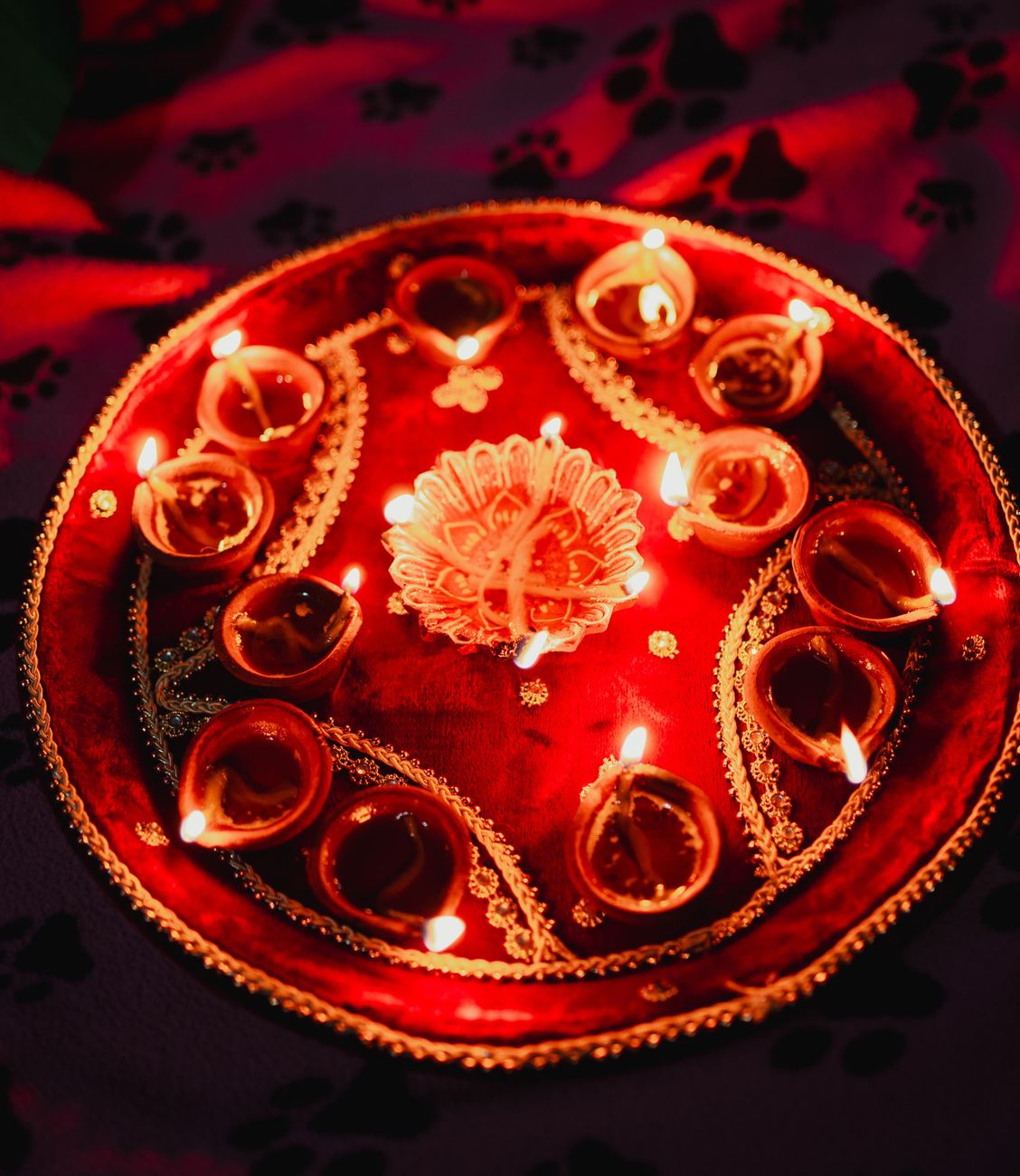
Karwa Chauth 2026: Date, Moonrise Time, Sargi & Puja Vidhi
Karwa Chauth 2026: Date, Moonrise Time, Sargi and Complete Puja Vidhi
Karwa Chauth 2026 falls on Thursday, 29 October. It is a nirjala vrat, kept without food or water from before sunrise until the moon is sighted in the evening, and for most families the day turns entirely on one question: when will the moon rise here?
This guide covers the timings, what goes into the sargi thali, the puja vidhi step by step, the story behind the fast, and how the observance has changed in recent years.
Karwa Chauth 2026 Timings
Date: Thursday, 29 October 2026
Chaturthi tithi begins: 1:06 AM, 29 October
Chaturthi tithi ends: 10:09 PM, 29 October
Sargi: before sunrise, roughly 4:00 AM to 6:00 AM
Fast begins: at sunrise, around 6:30 AM
Puja muhurat (Delhi): approximately 5:38 PM to 6:56 PM
Moonrise (Delhi): approximately 8:17 PM
Moonrise is the timing that matters most, and it is the one that varies. Because the earth rotates west to east, eastern cities see the moon earlier and western cities later. Kolkata sights it well before Delhi, while Ahmedabad, Mumbai and Rajkot follow some minutes after. Differences of thirty to forty minutes between cities are normal, so check a panchang for your own city rather than relying on a national figure.
One point that causes genuine confusion. In North America, Karwa Chauth 2026 is observed on Wednesday, 28 October, because Chaturthi is current at local moonrise there a day earlier. If you are in the United States or Canada, follow your local temple’s date rather than the Indian one.
What Karwa Chauth Is
Karwa Chauth falls on the Chaturthi of Krishna Paksha in the month of Kartik, the fourth day after the full moon, roughly ten days before Diwali. Married women keep a fast from dawn until moonrise for the long life and wellbeing of their husbands.
The name comes from the karwa, the earthen pot with a spout used in the ritual, and chauth, the fourth day. The pot is not incidental. It is offered, exchanged and used to give arghya to the moon, and in many families the same karwa is kept and reused across years.
The deities honoured are Shiva and Parvati, along with Ganesha and Kartikeya, and Chauth Mata or Karwa Mata. Parvati’s own austerity to win Shiva is the model the fast follows, which is why brass Shiva-Parvati idols are so often kept on the puja thali.
The Stories Behind the Fast
Several accounts circulate, and most families know one of them.
Queen Veeravati is the most widely told. Newly married and keeping her first Karwa Chauth, she grew faint with hunger. Her seven brothers, unable to watch her suffer, created a false moon with a mirror and a fire beyond the trees. She broke her fast on seeing it, and word came immediately that her husband had died. Refusing to accept it, she kept vigil until Goddess Parvati appeared, told her what her brothers had done, and instructed her to keep the fast properly. She did, and her husband was restored.
Savitri and Satyavan appears in many tellings, where Savitri follows Yama to reclaim her husband’s life through sheer persistence, and eventually wins it.
Draupadi is said to have kept the fast on Krishna’s counsel while the Pandavas faced danger, connecting the observance to the Mahabharata.
Sargi: The Pre-Dawn Meal
Sargi is eaten before sunrise and is traditionally sent by the mother-in-law to her daughter-in-law, which makes it as much a gesture of the relationship as a meal.
What typically goes into the thali: fresh fruit, dry fruits including almonds and cashews, coconut, mathri, a sweet such as halwa or a laddoo, and often a light savoury dish. Milk or a milk-based drink is common. Many families include a fenia or seviyan preparation.
The reasoning behind the composition is practical. Dry fruits and coconut release energy slowly, fruit provides water content, and the meal is kept light enough to sit comfortably through a long day. Salty or heavily spiced food is generally avoided, since it increases thirst during a fast where no water is taken.
A sensible note: a fourteen-hour nirjala fast is demanding. Anyone who is pregnant, unwell, or managing a condition that makes fasting inadvisable should speak to their doctor, and the tradition has always allowed adaptation in such cases. Many families keep a phalahar version with fruit and water instead.
The Day and the Puja Vidhi
Morning
Sargi before sunrise, then a bath and clean or new clothes. Many women wear red, maroon or the colours of their wedding, and apply mehndi in the days before.
Through the Day
The fast holds without food or water. Traditionally the day is kept free of heavy household work, and women gather at a neighbour’s or relative’s home in the afternoon.
Evening Puja
The puja is performed during the muhurat, before moonrise.
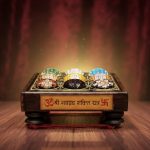
Prepare the thali with a diya, roli, rice, water in a lota, flowers, fruit, sweets, a karwa filled with water, and the chalni, the sieve. Place images or idols of Shiva, Parvati, Ganesha and Kartikeya. Many households keep a brass deity idol reserved for festival use.
The women gather in a circle, and the karwas are passed around while the Karwa Chauth vrat katha is recited. In many communities the thalis are rotated seven times as the katha is told, each woman passing hers to the next.
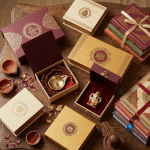
Elders are then touched for blessings, and in most families the mother-in-law receives the baya, a set of gifts including sweets, dry fruits, clothing or jewellery.
Moonrise
This is the moment the day is built around.
When the moon appears, the woman views it through the chalni, offers arghya by pouring water from the karwa toward it, and then turns the same sieve to look at her husband’s face through it. He offers her the first sip of water and the first bite of food, and the fast ends.
The sieve carries meaning. One reading holds that it filters the gaze, softening it before it falls on the beloved. Another traces it directly to the Veeravati story, where the false moon taught the lesson of looking carefully before accepting what you are shown.
How the Observance Is Changing
Karwa Chauth today looks different from a generation ago, and the changes are worth noting without judgement.
Many husbands now keep the fast alongside their wives, framing it as mutual rather than one-directional. Unmarried women in some families keep it for a future partner, adapting the older Kunwara Chauth tradition. Working women commonly keep a modified fast with water. And the evening gathering has in many places become as much a social occasion as a ritual one.
None of this is a departure so much as a continuation. The observance has always adapted to the households keeping it.
Karwa Chauth Gifting
Gifts pass in several directions on this day: from mother-in-law to daughter-in-law in the sargi and baya, and from husband to wife in the evening.
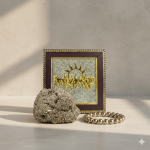
Moonstone is the most fitting stone of the day for obvious reasons. A festival that turns on the sighting of the moon pairs naturally with a stone named for it and traditionally associated with intuition and emotional balance. Our Moonstone crystal bracelet is the obvious choice for the evening.
Rose Quartz is the traditional stone of the heart and of love held gently. A Rose Quartz Maala suits someone who keeps a daily japa practice.
A rashi bracelet matched to her zodiac sign is more personal than a generic gift and costs no more. Our guide to choosing the right rashi bracelet explains which stones belong to which sign, and the full range sits in the zodiac bracelet collection.
For the puja itself, our Pooja Essentials and religious gift items collections cover thali requirements and gifting for the baya.
Order by the third week of October to be comfortable, since delivery across India takes three to six working days and cash on delivery is available.
Frequently Asked Questions
When is Karwa Chauth 2026?
Karwa Chauth 2026 falls on Thursday, 29 October in India. In North America it is observed a day earlier, on Wednesday, 28 October, because Chaturthi is current at local moonrise there on that date.
What is the moonrise time on Karwa Chauth 2026?
Around 8:17 PM in Delhi. Eastern cities such as Kolkata see the moon earlier and western cities such as Ahmedabad and Mumbai later, with differences of thirty to forty minutes being normal. Check a panchang for your own city.
What should be kept in the sargi thali?
Fresh fruit, dry fruits such as almonds and cashews, coconut, mathri, a sweet such as halwa or laddoo, and milk or a milk-based drink. Salty and heavily spiced food is generally avoided since it increases thirst during a fast where no water is taken.
Why is a chalni used on Karwa Chauth?
The sieve is used to view the moon and then the husband’s face. One interpretation is that it softens the gaze before it falls on the beloved. Another connects it to the Veeravati story, in which a false moon taught the lesson of looking carefully at what one is shown.
Can unmarried women keep Karwa Chauth?
Yes. Many unmarried women keep the fast for a future partner, adapting the older Kunwara Chauth tradition. The fast is usually kept with water rather than as a full nirjala vrat.
Can the fast be kept with water?
Traditionally it is nirjala, without food or water. Many households keep a modified phalahar version with fruit and water, particularly where health, pregnancy or work makes a full fast unsuitable. The tradition has long allowed this adaptation.
Waiting for the Moon
For all the preparation that goes into Karwa Chauth, the day comes down to a small moment: a sieve raised, a moon found, water poured, and a face seen through the mesh. Everything before it is waiting.
If you are choosing something to mark the day, our crystal bracelet collection ships with a free raw selenite charging plate and delivers across India with cash on delivery. Our Navratri 2026 guide covers the festival season leading up to it.
Spiritual and astrological benefits described here are based on traditional beliefs and practices. Individual experiences vary according to personal faith, practice and intention. Festival dates and moonrise timings follow tithi and local sunrise, and vary by city. Fasting practices are described as tradition rather than as health guidance; anyone who is pregnant, unwell or managing a medical condition should consult a doctor before keeping a nirjala fast. These products are not intended to diagnose, treat, cure or prevent any medical condition.