✅ Authentic & Original Products | ⭐ Trusted by Thousands | 💵 Cash on Delivery | 🚚 Pan India Delivery | 🔒 Secure Payments
✅ Authentic & Original Products | ⭐ Trusted by Thousands | 💵 Cash on Delivery | 🚚 Pan India Delivery | 🔒 Secure Payments








How to Identify Real Crystals: Seven Checks You Can Do Yourself
A large share of what is sold as natural crystal in India is dyed quartz, reconstituted stone, or plain glass. It is sold at markets, at temple stalls, on marketplaces, and by a good number of online sellers, often at prices close to the genuine article.
This guide gives you seven checks you can run yourself, the specific giveaways for the stones most commonly faked, and what an honest seller should be willing to tell you. Use it on us as readily as on anyone else.
The Seven Checks
1. Look for Imperfection
The most reliable indicator overall. Natural stone contains inclusions, cloudiness, fractures and variation between beads. It formed underground over a very long time and it shows.
Glass and reconstituted material are uniform. If every bead on a bracelet is identical in colour, clarity and pattern, that uniformity is manufactured.
The instinct most buyers have is exactly backwards: flawless is the warning sign, not the selling point.
2. Check the Temperature
Hold the piece against the inside of your wrist or your cheek. Natural stone feels distinctly cool and warms slowly, because minerals conduct heat away from the skin.
Glass and plastic sit at room temperature and warm almost immediately.
This is quick, free, and works on almost everything.
3. Weigh It in Your Hand
Natural stone is denser than it looks. A stone bracelet has a heft that a glass one does not, and plastic is unmistakable once you have handled the real thing.
If you have a genuine piece already, compare directly. Hand feel is a better test than most people expect.
4. Examine the Drill Holes
The single most useful check on any beaded bracelet, and the one sellers do not expect buyers to know.
When stone is dyed, the dye penetrates unevenly and concentrates where the material is most porous, which is around the drilled hole. A darker ring at the hole, or colour visibly deeper inside than on the surface, means dye.
Look at several beads. Natural colour is consistent from surface to hole.
5. Be Sceptical of Impossible Colours
Learn what each stone actually looks like in nature, and vivid colour becomes an immediate flag.
Natural rose quartz is pale and cloudy, not hot pink. Natural amethyst ranges from pale lilac to deep purple, not neon violet. Natural turquoise is muted, not electric blue. Natural citrine is pale yellow to smoky amber, not bright orange.
Very saturated, very even colour in any of these is treatment.
6. Look for Bubbles
Hold the beads to a light and look into them. Air bubbles form in molten glass as it cools and cannot occur in crystalline stone.
A bubble is conclusive. It is glass.
7. Ask About the Colour Under the Surface
On a chipped or scratched bead, or on the base of a carved piece, look at whether the colour goes all the way through. Surface-dyed material shows pale or white beneath.
Do not scratch a piece you have already paid for and want to keep. Do it on the underside where it will not show, or ask the seller to demonstrate before purchase.
Stone-by-Stone Giveaways
Rose quartz. Should be pale and slightly cloudy. Saturated even pink is dyed. Check the drill holes.
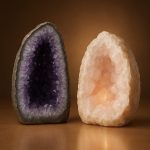
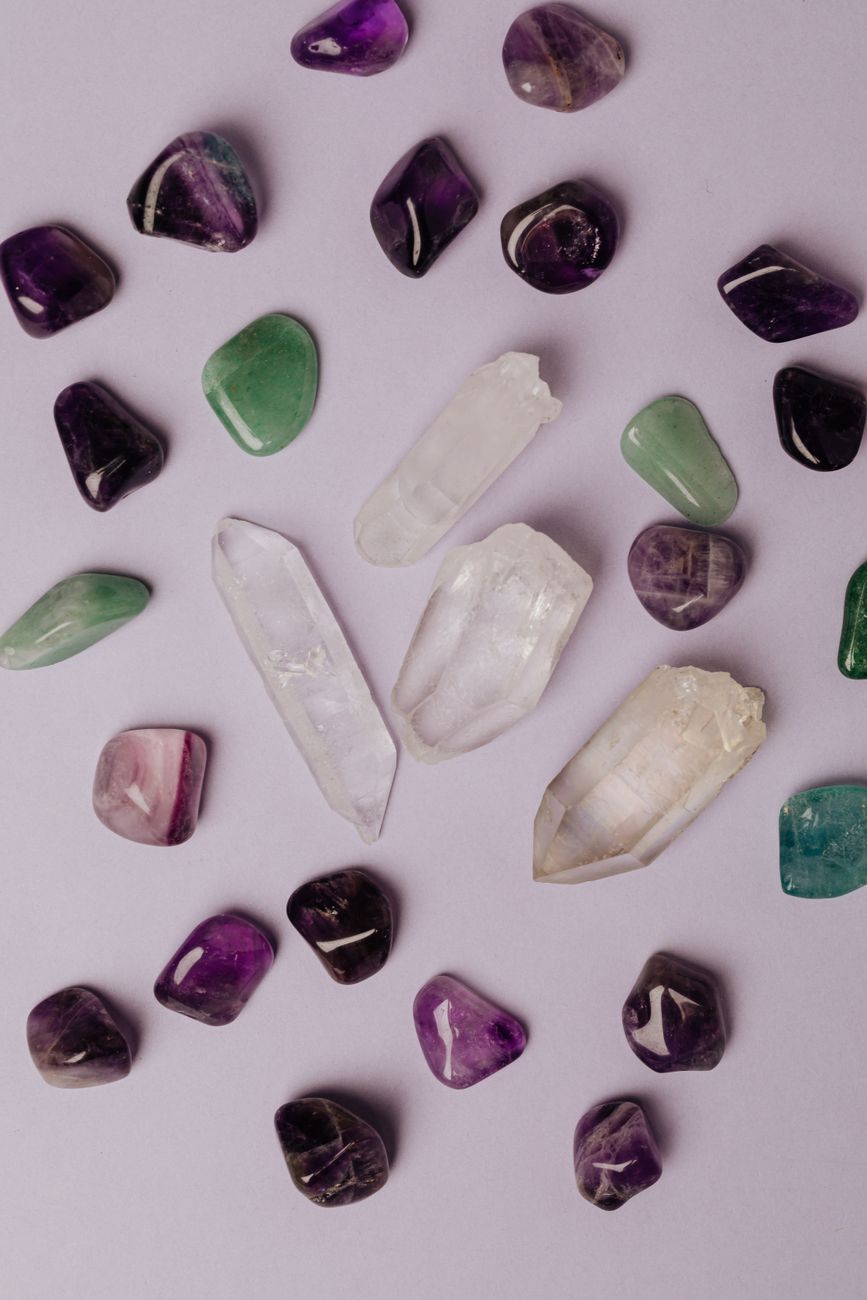
Amethyst. Natural material shows colour zoning, with areas of deeper and lighter purple within the same stone. Perfectly even purple across every bead suggests dyed quartz or glass. See our amethyst tumbles for what natural variation looks like.
Moonstone. The sheen must move as you turn the stone. A fixed glow that sits on the surface is opalite, which is manufactured glass.
Black tourmaline. Look for fine parallel striations along the crystal’s length. No striations means it is probably glass or another black stone.
Turquoise. Among the most faked stones in existence. Most inexpensive turquoise is dyed howlite, which is white with grey veining in its natural state. If the veining looks painted on, it is.
Citrine. The great majority of citrine on the market is heat-treated amethyst, which is legal and disclosed by honest sellers. Heat-treated material shows a distinctive orange-red tone and often a white base, where natural citrine is paler and more even.
Tiger eye. The chatoyant band should move across the surface as you turn it. A fixed stripe means a fibre-optic glass imitation.
Pyrite. Genuinely difficult to fake convincingly, since the crystal habit is distinctive. Our pyrite guide covers what to look for.
Treated Is Not the Same as Fake
An important distinction that gets lost in this conversation.
Some treatments are standard and accepted across the trade. Heat-treated citrine is real quartz. Stabilised turquoise is real turquoise with resin added for durability. Neither is a fraud.
What makes something dishonest is non-disclosure. A seller who tells you a stone is heat-treated is being straight with you. One who sells heat-treated amethyst as natural citrine at natural citrine prices is not.
Ask. The answer, and the willingness to answer, tells you what you need to know.
What to Ask a Seller
Five questions that separate serious sellers from the rest.
Is this stone treated or dyed in any way? A straight answer either way is a good sign. Evasion is not.
Where is it sourced from? Sellers who know their supply chain can answer. Others cannot.
Can I see photographs of the actual piece? Stock photography hides variation. Real photographs of real stock show it.
What is your return policy if I am not satisfied? A seller confident in their material will take it back.
Will you tell me if a stone is not suitable for what I want? The most revealing question of the five. Anyone who says every stone suits every purpose is selling rather than advising.
On Price
Genuine natural stone has a floor price set by extraction, cutting, drilling and transport.
A large, flawless, brilliantly coloured crystal bracelet at a very low price is telling you what it is made of. That does not mean expensive guarantees genuine, since plenty of glass is sold at stone prices, but implausibly cheap is reliably informative.
Frequently Asked Questions
How can I tell if a crystal is real?
Check for natural imperfection and variation between beads, since uniformity indicates manufacture. Natural stone feels cool and warms slowly, and is heavier than it looks. Examine the drill holes for a darker ring, which indicates dye. Look into the beads against a light for air bubbles, which mean glass.
Which crystals are most commonly faked?
Turquoise is the most faked, usually as dyed howlite. Moonstone is widely substituted with opalite, which is manufactured glass. Citrine on the market is largely heat-treated amethyst. Rose quartz and amethyst are commonly dyed, and tiger eye is imitated with fibre-optic glass.
Does a darker ring around the drill hole mean a crystal is fake?
It means the stone has been dyed. Dye penetrates unevenly and concentrates around the drilled hole, where the material is most porous. Natural stone shows consistent colour from surface to hole.
Is heat-treated citrine fake?
No. Heat-treated citrine is real quartz, and the treatment is standard and accepted in the trade. What matters is disclosure. A seller who tells you a stone is heat-treated is being straight; one who sells it as natural citrine at natural citrine prices is not.
Does the scratch test work on crystals?
It can indicate hardness, but it damages the piece and is unnecessary for most buyers. Checking temperature, weight, drill holes and bubbles gives you the answer without harming the stone. If you do test, do it on an underside that will not show.
Does a low price mean a crystal is fake?
Genuine natural stone has a floor price set by extraction, cutting, drilling and transport, so an implausibly cheap large flawless piece is reliably a warning. A high price does not guarantee authenticity, however, since glass is often sold at stone prices.
Check Us Too
Everything above works on our stock as readily as on anyone else’s. Hold a bracelet against your wrist and feel whether it stays cool. Look at the drill holes. Look for variation between beads.
Every stone we sell is natural, cleansed before dispatch, and available with cash on delivery, which means you can run these checks with the piece in your hand before you pay for it. If something does not pass, send it back.
Our crystal bracelet collection and tumbled stones cover the range, and our guides to moonstone, black tourmaline and rose quartz go into the specific tests for each.
Identification guidance here covers common commercial treatments and imitations and is not a substitute for laboratory testing where a high-value stone is concerned. For certified gemstones prescribed as astrological remedies, buy certified.