✅ Authentic & Original Products | ⭐ Trusted by Thousands | 💵 Cash on Delivery | 🚚 Pan India Delivery | 🔒 Secure Payments
✅ Authentic & Original Products | ⭐ Trusted by Thousands | 💵 Cash on Delivery | 🚚 Pan India Delivery | 🔒 Secure Payments











Why the Moon Is Not Viewed on Ganesh Chaturthi
Why the Moon Is Not Viewed on Ganesh Chaturthi
The custom is that the moon is not looked at on Ganesh Chaturthi. The restriction runs through the evening and night of Monday, 14 September 2026.
If you have already seen it, there is a stated remedy and it takes about a minute. It is at the end of this article, and the situation is considerably less alarming than most pages on this subject suggest.
The Story Behind It
The custom comes from the Syamantaka Mani episode, and it is worth telling properly because the ending is the part that matters and the part usually left out.
Ganesha, having eaten well at a devotee’s home, was travelling at night when his mount stumbled and he fell. The moon, watching, laughed at him.
Ganesha’s response was to declare that anyone who looked at the moon on that tithi would face a false accusation, an unearned blemish on their reputation. The moon, contrite, asked for the curse to be softened, and it was limited to that one day of the year.
The second half of the story is what most retellings omit. Krishna, who had seen the moon on that day, was accused of stealing the Syamantaka gem after its owner was killed. He was innocent. He went and found the gem, traced what had actually happened, and returned it, and the accusation was publicly cleared.
So the traditional account is not a story about being ruined by a false accusation. It is a story about a false accusation being disproved, which is a rather different message and the one the tradition actually preserved.
What the Restriction Covers
The tithi, Bhadrapada Shukla Chaturthi, which in 2026 runs from roughly 7:06 AM on 14 September to around 7:44 AM on 15 September.
Practically, the concern is the evening and night of the 14th, since that is when the moon is visible. Some panchangs publish a specific avoidance window; check yours for local timings.
The day before is treated with caution in some traditions, on the reasoning that the tithi may overlap. Practice varies.
What it does not cover: moonlight itself, being outdoors at night, or a photograph. The custom concerns looking directly at the moon.
How Households Handle It
Practically rather than anxiously.
Keep curtains drawn on the evening of the 14th, and avoid balconies and terraces after dark.
Tell everyone in the house, particularly children, before the evening rather than after.
Do the evening aarti indoors, which most households do anyway. Our aarti guide covers the practice.
If you are travelling that evening, keep your eyes on the road and the horizon rather than the sky, which is the whole of it.
Do not make it frightening for children. A quiet “we do not look at the moon tonight, there is a story about it” is the appropriate handling. Making a child anxious about an accidental glance is worse than the glance. Our guide to spiritual practice and children covers the general principle of not attaching fear to observance.
If You Have Already Seen It
The section people actually arrive here for.
Nothing bad is happening to you. Start there, because the anxiety is the actual problem in most cases, not the sighting.
The tradition provides a remedy, which tells you something in itself: a custom that expected people to slip up built the correction into the practice.
The remedy is to recite the traditional Syamantaka shloka, which recalls Krishna’s own experience of the false accusation and its clearing. Reciting it is held to remove the mithya dosha, the blemish of false accusation.
The alternative remedy, where the shloka is not known: listen to or read the Syamantaka Mani story. Hearing the account is itself the traditional prescription, and this is stated in the sources rather than being a modern convenience.
A further customary practice in some communities is to have a small stone thrown lightly onto a neighbour’s roof, provoking a mild scolding, on the reasoning that a small real reproach discharges the larger unearned one. It is a folk remedy rather than a scriptural one and it is mentioned here because people ask about it.
What is not required: a puja, a priest, a payment, or a purchase. Anyone selling you a remedy for having seen the moon is selling you something the tradition does not ask for. Our guide to remedies that cost nothing covers this pattern, and our guide to recognising exploitation covers how to spot it.
Where This Sits in the Wider Tradition
Worth some context, since the moon carries a great deal of significance elsewhere in Hindu practice and this restriction is an exception rather than a pattern.
The moon is Chandra, one of the nine planets, and it governs the mind and emotional life. Our Navgraha guide covers Chandra’s significations, and our guide to moon signs covers why the rashi in Vedic astrology is the moon sign rather than the sun sign.
Moon-related observances elsewhere are positive rather than restrictive. Sharad Purnima celebrates moonlight directly, and our Sharad Purnima guide covers it. Monday belongs to Chandra, which our weekday deity guide covers.
So this single day’s restriction is specific and unusual, and it is tied to one story rather than to any general view of the moon as inauspicious.
A Note on Proportion
Content on this subject tends toward the dramatic, and it is worth setting against what the tradition actually does with it.
The custom exists, it is widely kept, and keeping it is a reasonable thing to do. It also comes with a stated remedy that takes a minute, applies to one day a year, and resolves in a story where the falsely accused party is cleared.
A tradition that regarded an accidental glance as catastrophic would not have provided a one-minute correction for it.
Frequently Asked Questions
Why should you not see the moon on Ganesh Chaturthi?
The custom comes from the Syamantaka Mani story. The moon laughed at Ganesha after a fall, and Ganesha declared that anyone who viewed the moon on that tithi would face a false accusation. The curse was then limited to that one day of the year.
What time should the moon be avoided on Ganesh Chaturthi 2026?
The tithi runs from roughly 7:06 AM on 14 September to around 7:44 AM on 15 September, so practically the concern is the evening and night of the 14th when the moon is visible. Some panchangs publish a specific avoidance window; check yours for local timings.
What should I do if I accidentally saw the moon on Ganesh Chaturthi?
Recite the traditional Syamantaka shloka, which is held to remove the mithya dosha. Where the shloka is not known, listening to or reading the Syamantaka Mani story is itself the traditional prescription. No puja, priest, payment or purchase is required.
Does the restriction apply to moonlight or photographs?
The custom concerns looking directly at the moon. It does not cover moonlight itself, being outdoors at night, or a photograph.
How did the Syamantaka story end?
Krishna, who had seen the moon on that day, was accused of stealing the Syamantaka gem. He was innocent, traced what had actually happened, returned the gem, and the accusation was publicly cleared. The story’s resolution is a false accusation being disproved.
Should children be told about the moon restriction?
Tell them before the evening rather than after, calmly and as a story rather than a warning. Making a child anxious about an accidental glance is worse than the glance itself.
Draw the Curtains, and Do Not Worry
Keep curtains drawn on the evening of the 14th, mention it to the household before dark rather than after, and if someone looks anyway, the remedy takes a minute. That is the whole of it.
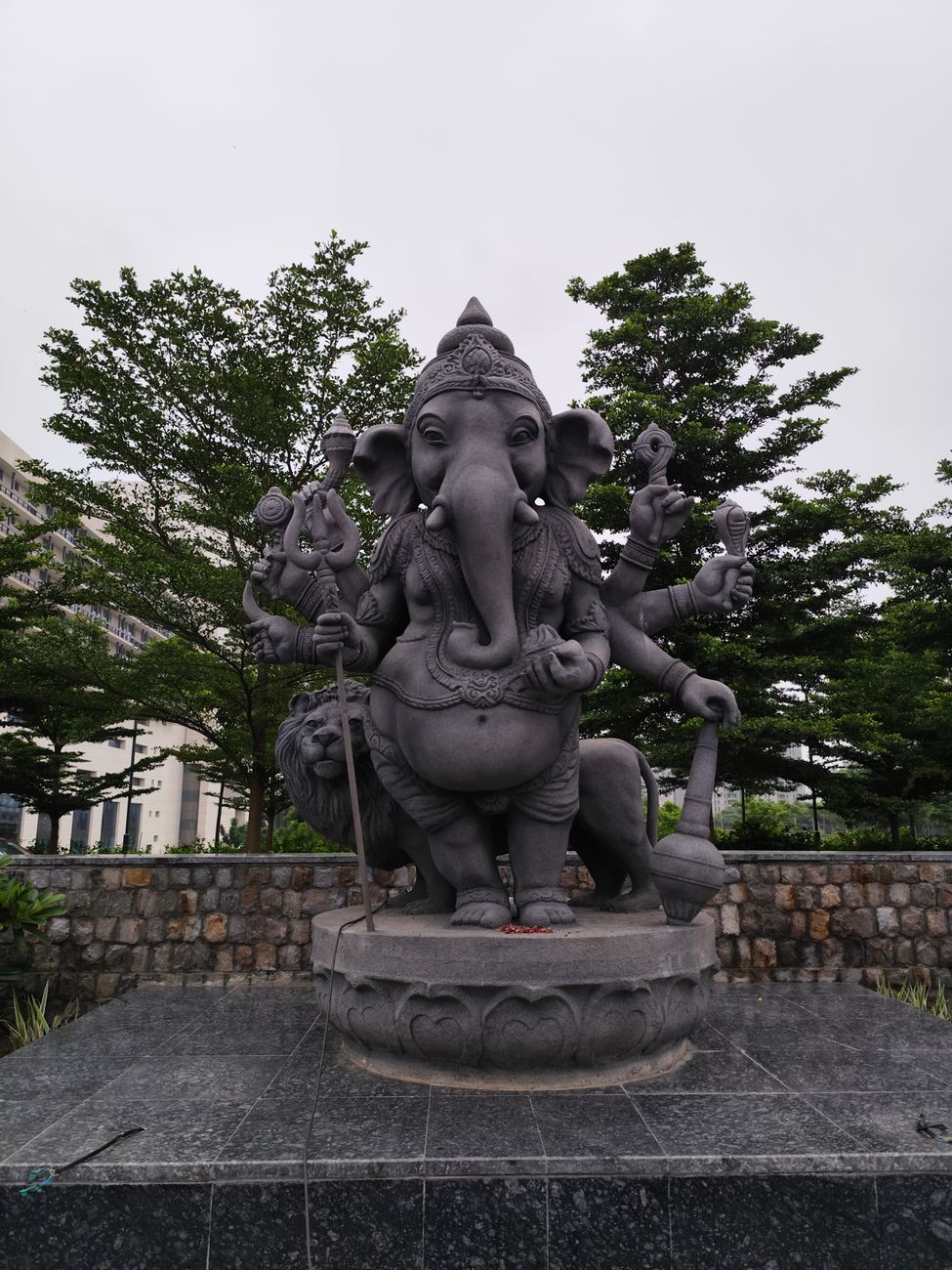
Our main Ganesh Chaturthi guide covers the festival, our first-time guide the ten days at home, and our Ganesha symbolism guide the stories behind the form, of which this is one of the better known.
Practices and remedies vary by region, community and family; follow your own household tradition. Tithi timings vary by city; confirm against a local panchang.