✅ Authentic & Original Products | ⭐ Trusted by Thousands | 💵 Cash on Delivery | 🚚 Pan India Delivery | 🔒 Secure Payments
✅ Authentic & Original Products | ⭐ Trusted by Thousands | 💵 Cash on Delivery | 🚚 Pan India Delivery | 🔒 Secure Payments












Gita Jayanti 2026: What the Day Marks and How to Actually Begin Reading
Gita Jayanti 2026: What the Day Marks and How to Actually Begin Reading
Gita Jayanti falls on Sunday, 20 December 2026, on Mokshada Ekadashi in Margashirsha. It marks the day Krishna spoke the Bhagavad Gita to Arjuna on the field at Kurukshetra.
Most households own a copy. Considerably fewer have read it. This guide covers what the day commemorates, how it is observed, and a practical route in for anyone who has meant to start and never has.
The Setting
What gives the Gita its force is where it happens.
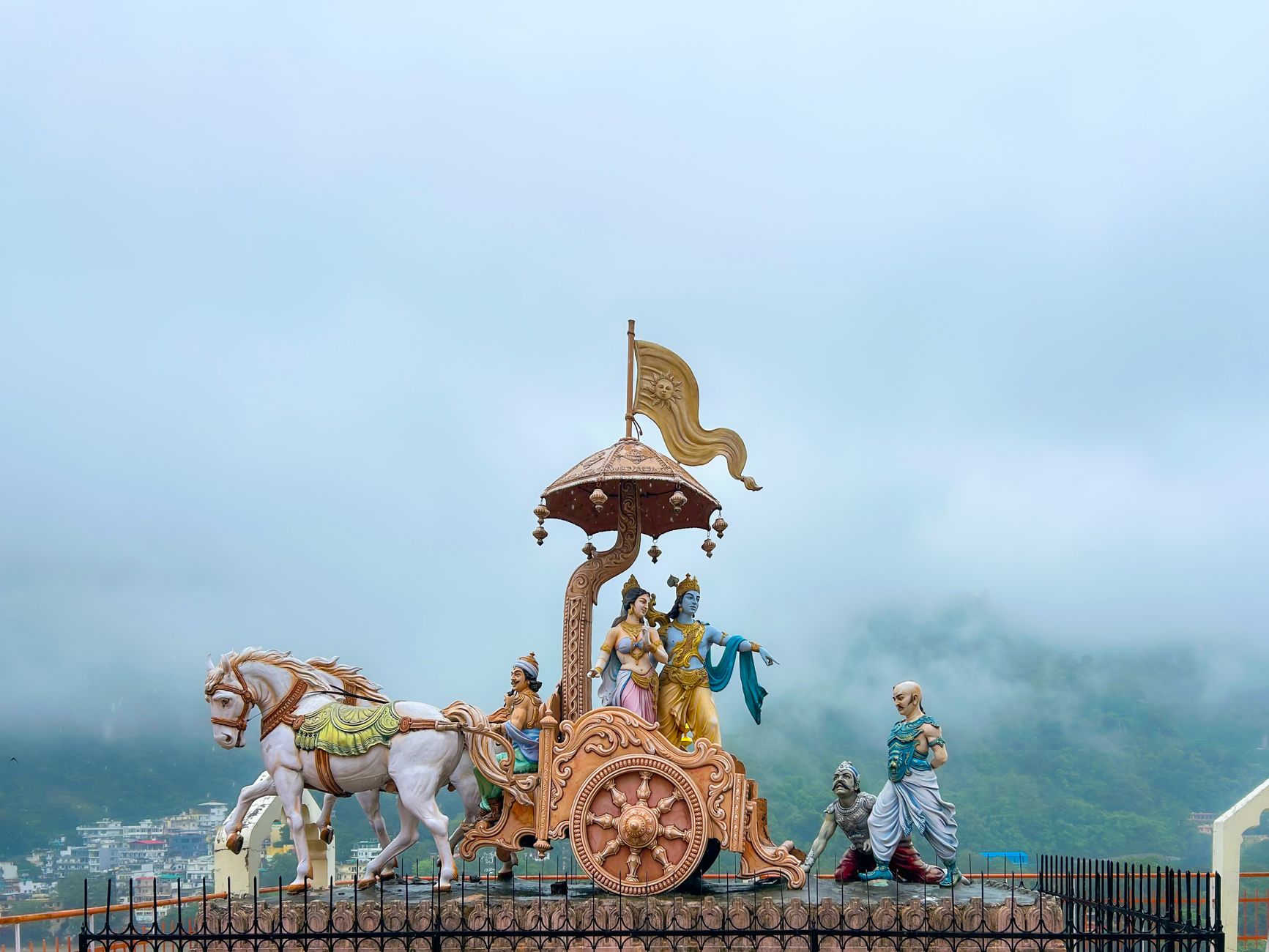
Two armies face each other. Arjuna asks Krishna, acting as his charioteer, to drive him into the space between them so he can see who he is about to fight. He looks across and sees his cousins, his teachers, his grandfather, the people who raised him.
And he refuses. He puts down his bow and says he will not do it, that no kingdom is worth this, that he would rather be killed than kill them.
Everything that follows is Krishna’s response. Seven hundred verses across eighteen chapters, spoken in the gap between two armies waiting to begin, to one man who has decided he cannot go on.
The text does not resolve the difficulty by making it smaller. It answers a man in genuine crisis, which is why it has been read for two and a half thousand years by people who have never held a bow.
Why Margashirsha
The month itself carries the association. In the Gita, Krishna says of the months that he is Margashirsha, which the tradition has taken as a marking of the month above the others.
Margashirsha runs roughly through December, after the wedding season peak and before Makar Sankranti, and is treated as a period suited to study and practice rather than celebration.
How the Day Is Observed
Gita Path. The complete recitation of all eighteen chapters, performed in temples and homes, often collectively with participants taking chapters in turn. A full reading takes several hours.
Mokshada Ekadashi vrat. The day is also an Ekadashi, kept by many with a fast from grains and beans, broken the following morning at the prescribed parana time.
Kurukshetra. The largest observance takes place at Kurukshetra in Haryana, where the Gita Mahotsav runs for several days around the date.
Study. Many households mark the day by beginning a reading practice rather than completing one, taking a chapter or a few verses daily from here.
A Practical Way to Begin
The usual failure is starting at Chapter 1 and stopping somewhere in Chapter 2. Here is a route that works better.
Start with Chapter 2. Chapter 1 is scene-setting: Arjuna’s despair and the naming of warriors on both sides. Chapter 2, the Sankhya Yoga, is where Krishna begins to answer, and it contains the core of the teaching. Many teachers recommend it as the entry point for exactly this reason.
Then Chapter 12. Bhakti Yoga, the shortest chapter, twenty verses, describing what a person of devotion actually looks like in ordinary conduct. It is the most immediately usable chapter in the text.
Then Chapter 3. Karma Yoga, on acting without attachment to the outcome, which is the idea the Gita is best known for and most often misquoted on.
Then the rest in order. By this point you have the shape of it and Chapter 1 reads differently.
On translations. Choose one with the Sanskrit, a transliteration, a word-by-word gloss and a commentary. Read the verse before the commentary rather than after, so you meet the text before you meet the interpretation. Several respected translations exist from very different traditions, and reading two in parallel is instructive.
On pace. A few verses daily sustains far better than a chapter a sitting. The text is dense enough that speed works against it.
The Line Everyone Knows
The most quoted verse of the Gita is the one about having the right to your action but not to its fruits, and it is also the most commonly flattened.
It is usually read as a counsel of detachment or indifference. The text is doing something more specific: distinguishing between the effort, which is yours, and the result, which depends on far more than you control. The instruction is to act fully and completely while releasing the grip on the outcome, which is close to the opposite of not caring.
Whether or not one reads the Gita devotionally, that distinction has practical use.
For a Reading Practice
Households that keep a daily reading or japa practice often mark Gita Jayanti as the day they begin one.
A crystal maala or a certified Rudraksha is the traditional accompaniment for japa, and beginning on an auspicious day is customary. Tulsi is the classical mala of the Vaishnava tradition specifically.
None of it is required. A copy of the text and fifteen minutes is the whole practice.
Frequently Asked Questions
When is Gita Jayanti 2026?
Sunday, 20 December 2026, on Mokshada Ekadashi in Margashirsha Shukla Paksha. Confirm with a local panchang, as Ekadashi observance dates occasionally differ between traditions.
What does Gita Jayanti mark?
The day Krishna spoke the Bhagavad Gita to Arjuna between the two armies at Kurukshetra, before the Mahabharata war began. It is the birth anniversary of the text rather than of a person.
How many chapters and verses are in the Bhagavad Gita?
Eighteen chapters and approximately seven hundred verses, forming part of the Bhishma Parva of the Mahabharata.
Where should a beginner start reading the Gita?
Chapter 2, the Sankhya Yoga, where Krishna begins answering and the core of the teaching appears. Then Chapter 12, the shortest at twenty verses, then Chapter 3 on action without attachment, then the remainder in order. Chapter 1 is scene-setting and reads better once the rest is familiar.
What is Mokshada Ekadashi?
The Ekadashi of Margashirsha Shukla Paksha, on which Gita Jayanti falls. It is kept with a fast from grains and beans, broken the following morning at the prescribed parana time.
Is the Gita recited fully on Gita Jayanti?
Gita Path, the complete recitation of all eighteen chapters, is performed in temples and homes on the day, often collectively with participants taking chapters in turn. A full reading takes several hours.
Between Two Armies
The Gita is not spoken in a temple or an ashram. It is spoken in a chariot, between two armies, to a man who has just decided he cannot do the thing in front of him. That setting is the point, and it is why the text has stayed useful to people whose difficulties look nothing like Arjuna’s.
Our Makar Sankranti 2027 guide covers the festival that follows in January.
Festival dates follow tithi and may vary by a day depending on your local panchang and tradition. Interpretations of the text vary considerably across commentarial traditions; the reading suggested here is one route among many.