✅ Authentic & Original Products | ⭐ Trusted by Thousands | 💵 Cash on Delivery | 🚚 Pan India Delivery | 🔒 Secure Payments
✅ Authentic & Original Products | ⭐ Trusted by Thousands | 💵 Cash on Delivery | 🚚 Pan India Delivery | 🔒 Secure Payments












Durva Grass and Ganesha: Why Twenty-One Blades
Durva Grass and Ganesha: Why Twenty-One Blades
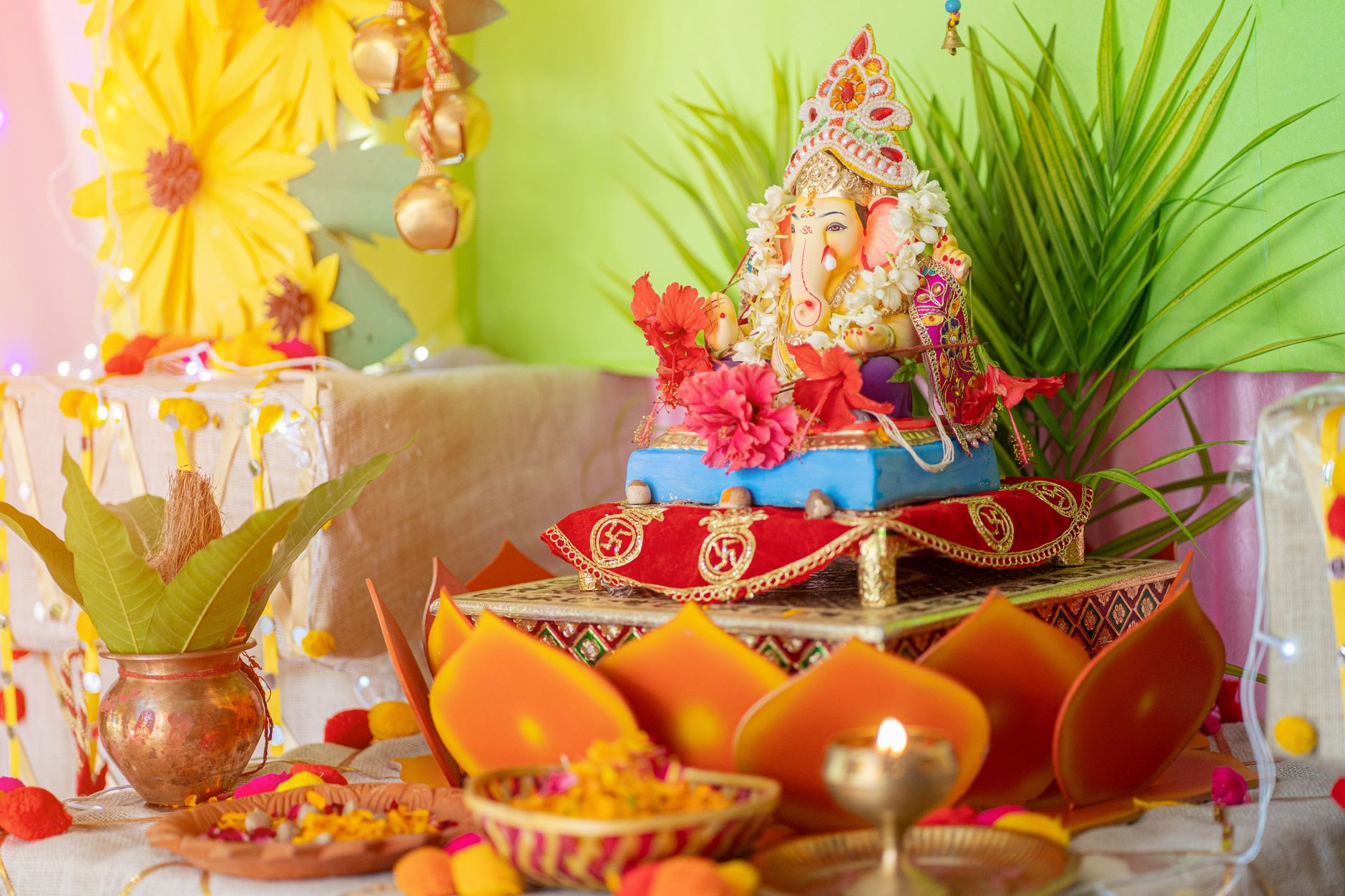
Durva is Ganesha’s particular offering, the way tulsi belongs to Vishnu and bilva to Shiva. It is offered in bunches of three or five blades, traditionally twenty-one bunches or twenty-one blades depending on the household’s practice.
There is a story behind it, and it explains why a common grass carries this place.
The Analasura Story
A demon named Analasura was consuming everything in his path, burning what he touched, and the devas were unable to contain him.
Ganesha confronted him and swallowed him whole. The demon was contained, but the burning did not stop; it continued inside Ganesha, and nothing brought relief. Various remedies were tried without effect.
A group of sages then offered him twenty-one blades of durva grass. The heat subsided immediately.
From this comes the offering, and from this comes the number. Durva is offered because it cooled what nothing else could, which is a considerably more interesting reason than most offerings carry.
Why Twenty-One
The number recurs throughout Ganesh worship: twenty-one durva, twenty-one modak, twenty-one namaskars, twenty-one patri leaves in the fuller puja.
The usual explanation counts the five organs of perception, the five organs of action, the five pranas, the five elements and the mind. Twenty-one, taken together, stands for the whole of the person being offered.
Other accounts trace it to the Analasura story directly, the number simply being what the sages offered. Both readings are traditional and neither displaces the other.
Identifying Durva
The practical question, since a great many people have never been shown it.
Durva is Bermuda grass, known as doob or hariyali. It is the common lawn and roadside grass across most of India, which surprises people who expect something rare.
What to look for: thin, flat, pointed blades, bright green, growing low and spreading along the ground rather than in upright tufts. The blades come off the stem in pairs at each node.
The traditional preference is for blades with three tips or three-pronged tips, described as tri-dala durva, though ordinary durva is offered widely and the distinction is not universally observed.
Where it grows: gardens, parks, roadsides, cracks in pavements. It is genuinely everywhere.
Where not to gather it: beside a road with heavy traffic, from anywhere treated with pesticide, from a drain edge, or from a cremation ground. Common sense governs.
Flower vendors sell durva in bundles during the festival, which is what most urban households use and is entirely proper.
How to Offer It
Wash it in clean water and let it drain.
Bundle it, three or five blades tied or held together as one unit. Twenty-one bundles is the fuller practice; twenty-one individual blades is the common household version.
Offer it during the pushpa stage of the sixteen offerings, alongside the flowers. Our pran pratishtha guide covers where that falls in the sequence.
Place it on the idol, traditionally on the head and at the feet, rather than only in front.
Recite while offering where you keep that practice. Our Ganesh mantras guide covers the names recited with each offering.
Fresh each day. Durva is replaced every morning during the festival rather than left for the duration. Yesterday’s goes into the nirmalya.
When You Cannot Find It
Genuinely difficult in some flats and some cities, particularly in high-rise areas with no accessible ground.
Buy it. Flower vendors stock it through the festival, and it costs very little.
Substitute a clean green leaf where durva is unavailable. Shami leaves are the traditional alternative, and any clean unblemished leaf is accepted.
Offer what you have. The Gita’s list of a leaf, a flower, a fruit or water is a complete offering, and no observance is defective for want of a specific grass. Our guide to what the tradition actually requires covers the sources on this.
Grow it, which is the long-term answer for a household that keeps Ganesh worship regularly. Durva grows readily in a shallow pot on a balcony, needs little water, and spreads on its own. Our indoor plants guide covers keeping plants in a flat.
Our guide to keeping a practice abroad covers substitutions for offerings that are unavailable outside India, and durva is among the more commonly missed.
Beyond Ganesh Chaturthi
Durva is not only a festival offering, which is worth knowing.
Sankashti Chaturthi, the monthly observance, uses the same offering. Our Sankashti guide covers the fortnightly and monthly Chaturthi observances.
Vinayaka Chaturthi, the shukla paksha counterpart.
Wednesday, which belongs to Budh and is associated with Ganesha in household practice. Our weekday deity guide covers what belongs to each day.
Daily worship in any household keeping a Ganesh idol.
Durva also appears in wider Hindu practice beyond Ganesha, in griha pravesh, weddings and Ayurvedic use, where it is regarded as a plant of endurance because it survives conditions that kill most grasses. Our griha pravesh guide covers its use there.
Frequently Asked Questions
Why is durva grass offered to Ganesha?
The Analasura story: Ganesha swallowed a demon who continued burning inside him, and nothing gave relief until sages offered twenty-one blades of durva, at which the heat subsided. Durva is offered because it cooled what nothing else could.
How many durva blades should be offered?
Twenty-one, either as twenty-one individual blades in the common household version or as twenty-one bundles of three or five blades in the fuller practice. The number is usually explained as the five organs of perception, five of action, five pranas, five elements and the mind.
What does durva grass look like?
Durva is Bermuda grass, known as doob or hariyali, and it is the common lawn and roadside grass across most of India. Look for thin, flat, pointed bright green blades growing low and spreading along the ground, coming off the stem in pairs at each node.
What can I offer if durva grass is not available?
Flower vendors stock it through the festival and it costs very little. Where it is genuinely unavailable, shami leaves are the traditional alternative and any clean unblemished green leaf is accepted. No observance is defective for want of a specific grass.
Where should durva not be gathered from?
Beside a road with heavy traffic, from anywhere treated with pesticide, from a drain edge, or from a cremation ground.
Should durva be changed daily during the festival?
Yes, it is replaced fresh every morning rather than left for the duration, and the previous day’s goes into the nirmalya.
The Commonest Grass in India
There is something worth noticing in the fact that Ganesha’s particular offering is the grass growing in every crack in every pavement in the country. Nothing about this observance was ever meant to be difficult to obtain.
Our guide to what is never offered covers the exclusions, our pran pratishtha guide the full offering sequence, and our Sankashti guide the monthly observance. Our Pooja Essentials and brass deity idols cover the pieces, with cash on delivery across India.
Practices vary considerably by region, community and family; follow your own household tradition where it differs.