✅ Authentic & Original Products | ⭐ Trusted by Thousands | 💵 Cash on Delivery | 🚚 Pan India Delivery | 🔒 Secure Payments
✅ Authentic & Original Products | ⭐ Trusted by Thousands | 💵 Cash on Delivery | 🚚 Pan India Delivery | 🔒 Secure Payments





Crystal Trees: Which One to Choose, and Where It Actually Belongs
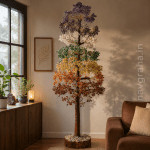
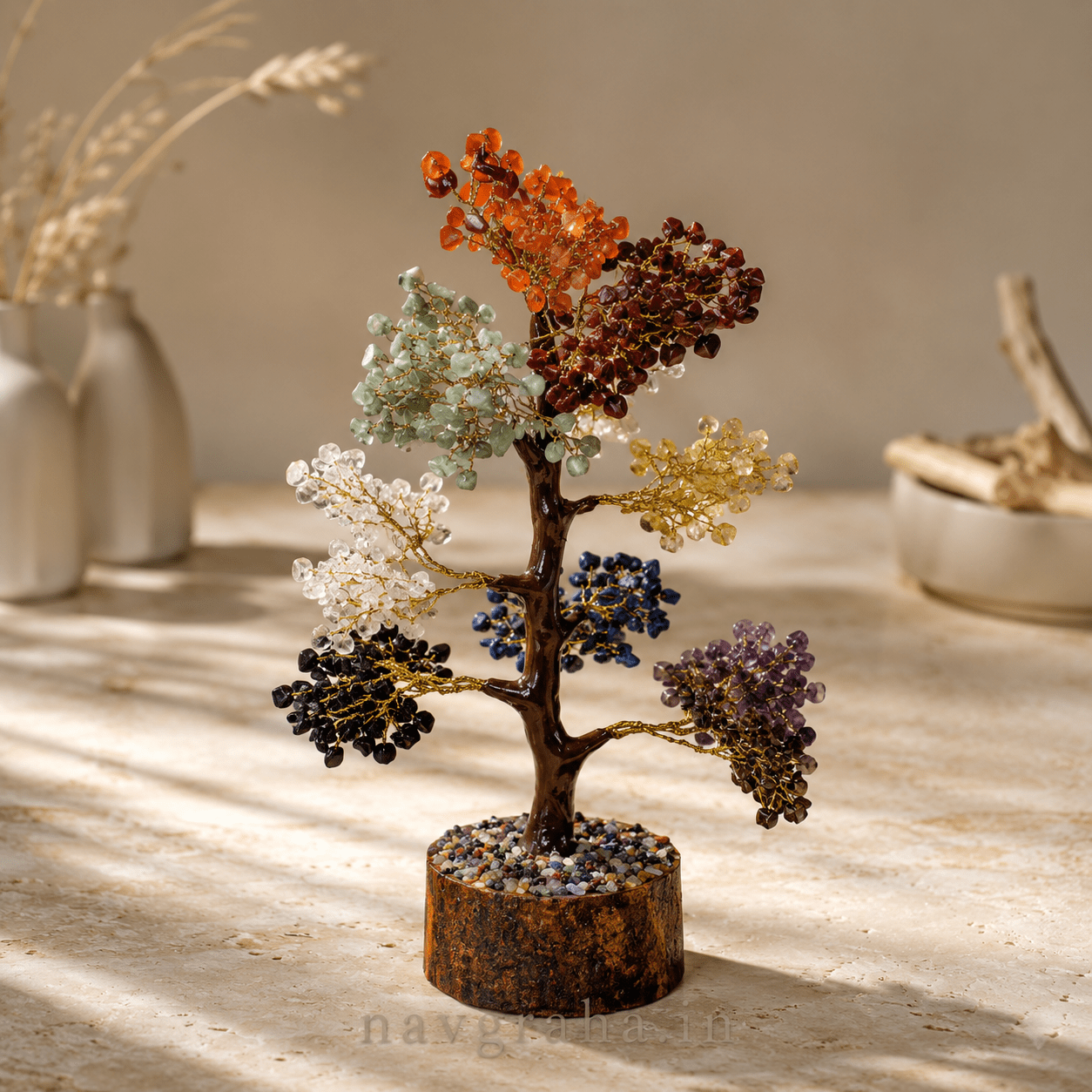
A crystal tree is a wire frame holding dozens or hundreds of small tumbled stones, usually set on a base of raw crystal or wood. They have become one of the most common vastu and feng shui objects in Indian homes, and they are also among the most casually placed.
Which is a shame, because placement is most of what the tradition says about them.
Why a Tree
The form is not decorative in origin. The tree is one of the oldest symbols in Indian thought, appearing as the Kalpavriksha, the wish-fulfilling tree that emerged from the churning of the ocean, and as the Ashvattha in the Bhagavad Gita, rooted above and branching below.
The symbolism is growth: something that takes root, extends, and continues producing. A crystal tree carries that meaning into an object small enough for a shelf, with the stones supplying the specific quality intended.
The form itself came into wide use through Chinese feng shui, where the money tree is a standard prosperity object, and the two traditions have merged comfortably in Indian practice.
Choosing by Stone
The stone determines what the tree is for, and this is the choice that matters.
Green aventurine is the classic prosperity and growth tree, associated with opportunity and with steady rather than sudden increase. It is the most common choice for a home or a business.
Amethyst for a meditation space, a bedroom, or a study, where the intention is calm rather than increase.
Rose quartz for the bedroom or a family living area, where the intention concerns relationships.
Citrine and pyrite for wealth specifically, and the common choice for a business premises or near a cash box.
Black tourmaline for protection, usually placed nearer an entrance than the others.
Tiger eye for a workspace, associated with sustained effort.
Mixed or seven-chakra trees carry stones for each chakra and are chosen where no single intention dominates.
Navgraha trees carry stones for all nine planets and are the traditional choice for general household harmony rather than a specific aim. Our Navgraha Crystal Tree carries 500 beads across the nine planetary stones, and is the piece most households choose when they want one tree covering everything rather than several covering specifics.
The full range sits in our crystal tree collection.
Where to Place It
This is the part most people get wrong, and the tradition is fairly specific.
North is the direction of Kubera, and the placement for prosperity trees: green aventurine, citrine, pyrite. This is the standard position for a money tree.
North east is the most auspicious zone in vastu, associated with the divine. Amethyst, clear quartz and Navgraha trees belong here, and it is where a tree near a puja space sits.
South east is associated with wealth flow and with Lakshmi in some readings, and is an alternative for prosperity trees.
South west is associated with relationships and stability, and is the placement for rose quartz.
East for health and new beginnings.
Living room generally, where the household and visitors both see it, which is where most trees end up regardless of direction.
Placements traditionally avoided: bathrooms, directly under a staircase, on the floor rather than a raised surface, and in a bedroom for prosperity-intent trees, since wealth objects are not traditionally kept where you sleep.
Installing One
A tree is traditionally installed rather than simply put down, and the ritual is brief.
Clean the surface where it will sit. Cleanse the tree itself with incense smoke or by wiping it with a dry cloth. Place it on a raised surface, never directly on the floor, ideally on a small cloth.
Light a diya and incense beside it, and state the intention plainly, whatever it is. Diwali, Dhanteras, Navratri, Akshaya Tritiya and a griha pravesh are the traditional occasions for installing one, though any Friday or Thursday is considered suitable.
Many households place a Shree Yantra alongside where the intention is prosperity, and our Dhanteras guide covers the traditional acquisition day for both.
On Bead Count
Trees are sold by bead count, commonly 100, 200, 300, 500 or more, and the number is treated as significant in feng shui practice, where higher counts are associated with fuller effect.
Practically, bead count determines size and density more than anything else. A 300-bead tree suits a shelf or a desk. A 500-bead tree is a living room object. Choose by the space rather than by the number.
What matters more is whether the beads are natural stone, which brings us to the part worth checking.
Natural Stone or Dyed Glass
Crystal trees are frequently made with dyed or glass beads, and because the beads are small, buyers rarely examine them.
Look at colour variation. Natural tumbled stone varies bead to bead in shade, clarity and pattern. A tree where every bead is identical is glass or heavily dyed.
Check weight. A natural stone tree is noticeably heavy for its size. Glass beads make a light tree.
Look at the beads against light. Air bubbles mean glass.
Beware impossible colours. Bright blue, neon green and vivid pink beads on a tree sold cheaply are dyed.
Check the base. A base of genuine raw crystal or agate slice looks and feels different from resin moulded to imitate it.
Our crystal identification guide covers these checks in full.
Care
Dust it weekly with a soft dry brush, which matters more than people expect, since a neglected dusty vastu object is traditionally considered worse than none at all.
Do not wash it. Water loosens the wire wrapping and damages any porous stones.
Cleanse energetically once a month with incense smoke, or by placing a selenite piece at the base. Our cleansing guide covers the methods.
Straighten bent branches gently with your fingers rather than pliers, which crack the wire wrapping.
Frequently Asked Questions
Where should a crystal tree be placed?
North for prosperity trees such as green aventurine, citrine and pyrite, being the direction of Kubera. North east for amethyst, clear quartz and Navgraha trees, being the most auspicious zone. South west for rose quartz, associated with relationships. Always on a raised surface rather than the floor, and never in a bathroom or under a staircase.
Which crystal tree is best for money?
Green aventurine is the classic prosperity and growth tree, associated with opportunity and steady increase. Citrine and pyrite are chosen where the intention is wealth specifically, and are common on business premises or near a cash box. All are traditionally placed in the north.
How many beads should a crystal tree have?
Bead count determines size and density more than anything else, though feng shui practice treats higher counts as fuller. A 300-bead tree suits a shelf or desk and a 500-bead tree suits a living room. Choose by the space, and check that the beads are natural stone.
What is a Navgraha crystal tree?
A tree carrying stones for all nine planets rather than a single stone, chosen for general household harmony rather than one specific intention. It is the usual choice where a household wants one tree covering everything instead of several covering specifics.
Do crystal trees need cleansing?
Yes, monthly, with incense smoke or by placing a selenite piece at the base. Do not wash a tree, since water loosens the wire wrapping and damages porous stones. Dust it weekly with a soft dry brush, as a neglected dusty vastu object is traditionally considered worse than none.
How can I tell if a crystal tree uses real stone?
Natural tumbled stone varies bead to bead in shade, clarity and pattern, while glass is uniform. A natural stone tree is noticeably heavy for its size. Check the beads against a light for air bubbles, which mean glass, and be wary of bright blue, neon green or vivid pink beads on a cheap tree.
An Object That Stays
A crystal tree is among the few spiritual purchases that becomes part of a room rather than something worn and eventually put away, which is why it is the most common gift in this category for a new home.
Our crystal tree collection and the Navgraha Special Combo, which pairs a tree with a matching bracelet and selenite plate, are available with cash on delivery across India.
Spiritual, astrological and vastu beliefs described here follow traditional practice and vary by region and school. Individual experiences vary according to personal faith, practice and intention. These products are not intended to diagnose, treat, cure or prevent any medical condition.